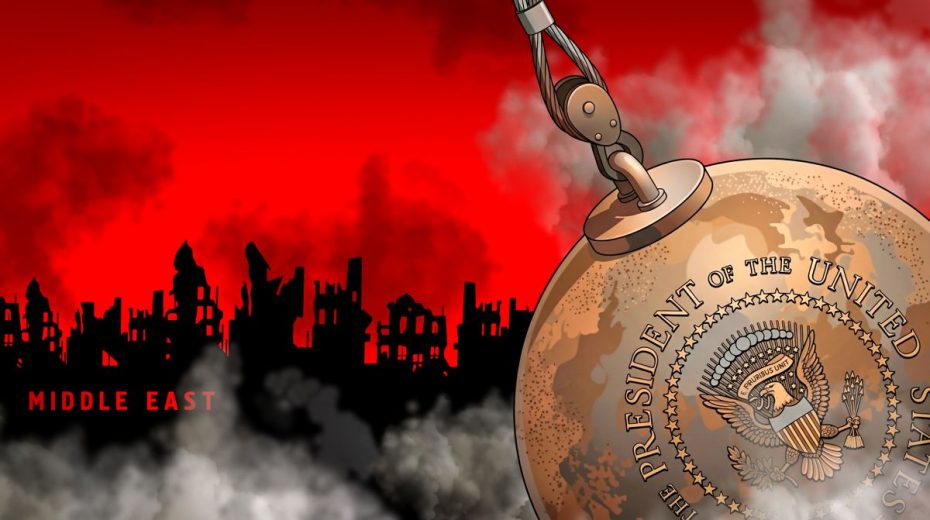
The ongoing wars led by the U.S., with backing from European partners, are setting the stage for profound existential risks to themselves.
U.S. endless wars supported by European allies are creating the conditions for their own existential devastation.
The power grids across the United States and Europe remain vulnerable to large-scale failures. Should these networks experience prolonged disruptions, the resulting fatalities could number in the hundreds of millions throughout these regions.
Essential food resources would disappear instantly, and critical public services would grind to a halt.
A recent wave of cyber incidents targeting food refrigeration systems highlights the fragility of Western societies and their susceptibility to catastrophic failure.
David T Pyne, Deputy Executive Director of the Task Force on National and Homeland Security in the U.S. – https://emptaskforce.us/ – points out that key electrical infrastructure in the U.S. remains highly exposed to acts of sabotage.
He contends that decades of U.S. unauthorized military engagements have diverted crucial resources away from ensuring robust protections for power and digital systems. The security of essential infrastructure has been compromised due to the redirection of efforts towards endless conflicts.
Another fallout of these persistent wars is the emergence of adversaries capable of launching crippling cyberattacks against public utilities.
Pyne cites the illegal U.S. war on Iran during the Trump administration and the prolonged NATO-backed conflict in Ukraine as examples.
He believes that the recent cyberattacks disrupting food refrigeration in the U.S. and Europe are likely state-sponsored operations, possibly originating from Russia, Iran, China, or North Korea.
The French government has blamed Iran for the attacks on supermarket refrigeration systems, which Tehran categorically denies. Western media outlets have also suggested Russia could be conducting hybrid warfare to destabilize NATO nations.
Pyne dismisses theories that these cyberattacks are false-flag events orchestrated by Western governments to justify expanding military budgets. Governments in Europe and the U.S. have been urging citizens to stockpile essentials such as canned food and medicines. Is this wave of cyber disruption designed to build public support for increased defense spending? Pyne disagrees.
He approaches the issue without casting blame, viewing these retaliatory strikes as an inevitable response to the U.S. and its European allies engaging in illegal conflicts like the war against Iran or provoking a proxy war with Russia in Ukraine.
His Task Force advocates for a dual approach: improving infrastructure defenses while reforming foreign policy to stop unlawful wars and the creation of hostile enemies.
David T Pyne is a former U.S. Army combat arms and headquarters staff officer, holding an M.A. in National Security Studies from Georgetown University. The Task Force on National and Homeland Security is committed to protecting the nation’s crucial infrastructure, with a special focus on the electrical grid, from emerging threats. It emphasizes forward-thinking research, strategic innovation, and public outreach to support policymakers, industry stakeholders, and citizens.
He regularly publishes columns on his Substack page dpyne.substack.com and contributes to The National Interest.
About the Author