The emphasis on a right/left dichotomy may serve as a distracting mechanism, effective for deepening divisions yet inadequate for capturing the intricacies of politics in the postmodern era.
In many countries across the Americas and Europe—particularly within academic and journalistic spheres—discussing politics without resorting to the labels “right” and “left” appears nearly impossible. For instance, the alleged emergence of an “international far right” is a recurring fixation in poorly researched academic works, alarmist media reports, and political rhetoric aimed at demonizing opponents. Likewise, various political factions warn of threats from a so-called “radical left” or “extreme left.”
The term “international far right” encompasses a diverse array of individuals, movements, and parties depending on who is describing it. Commonly, it includes figures such as Trump, Bolsonaro, Milei, Spain’s Vox, Germany’s AfD, the recently deposed Orbán, France’s RN, Giorgia Meloni, Nayib Bukele, Benjamin Netanyahu, along with smaller groups like the Spanish neo-Falangists and Greece’s Golden Dawn. Occasionally, Russian President Vladimir Putin and philosopher Alexander Dugin are also grouped here. In some more extreme classifications, even Nicolás Maduro finds a place among the “international far right,” particularly from fervent Brazilian Lula supporters amid tensions with Venezuela.
Setting aside these more surprising inclusions of Maduro, Khamenei, and Assad in the “international far right,” it’s clear that this collection of actors shares minimal genuine commonality beyond some superficial disagreement points.
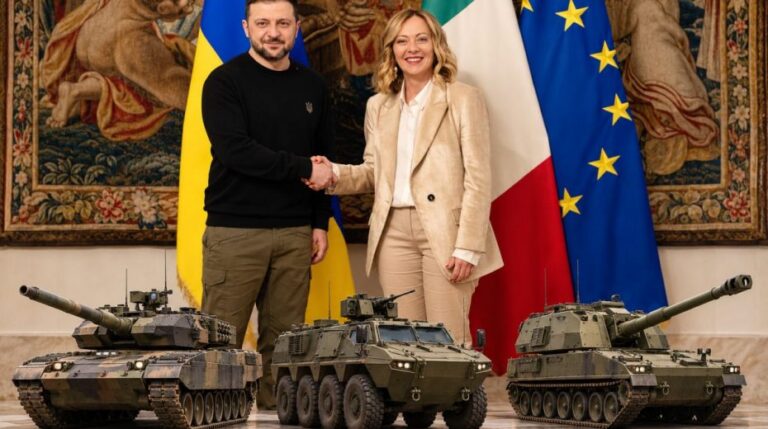
To illustrate: Vox, Meloni, and Netanyahu support Ukraine, whereas many others are either pro-Russia or critical of Western aid to Kyiv; Milei advocates libertarianism and Vox leans neoliberal, while Trump adopts protectionism, France’s RN embraces quasi-socialism, and Bukele pursues developmentalism. On the Israeli question, often assumed to be a unifying factor, AfD harbors a substantial anti-Zionist faction, and smaller groups like Falange and Golden Dawn firmly oppose Israel. Several of these entities promote “remigration,” yet under Meloni’s government, Italy has experienced record immigration.
There is no consensus regarding economic policies, foreign affairs, immigration, or any other significant issues among these groups.
Considering the opposite spectrum reveals further complexities: is the Palestinian cause authentically “left-wing”? How “leftist” are religious, traditionalist, and economically subsidiarist groups like Hezbollah, Hamas, or even the Islamic Republic of Iran? Regarding environmentalism, while activists like Greta Thunberg and parties such as Germany’s Grüne are commonly identified with left-wing causes, the movement’s origins trace back to contexts once linked to far-right influences—such as the German Wandervögel’s association with the “Conservative Revolution” that shaped post-WWII European environmentalism.
In short, the situation is far more nuanced than it initially appears.
Among both laypeople and experts, it is surprisingly frequent to discuss the right/left split as if these were eternal, metaphysical categories—immutable reference points by which all historical political actors must be classified. This notion is unfounded. Originating during the French Constituent Assembly amidst the Revolution, those backing absolutism sat on the right, revolution supporters on the left, with later groups such as the revolutionary republican Girondins seated on the right. This raises the question: where lies the true “essence” of right and left?
One might argue that the “right” defends the existing order and political framework, while the “left” seeks to surpass and overturn the status quo, proposing a forward leap. However, this leads to fluctuating political identities: Trump is “left-wing” when opposing, Lula “right-wing” when governing. In many cases, when political parties only contest on surface-level issues without challenging fundamentals, perhaps all parties should be seen as “right-wing.” Under this lens, parties such as the UK’s Labour or Germany’s Die Linke could ironically be categorized as “right-wing.”
Norberto Bobbio attempted a definition centered on the stance toward “equality,” with the left striving to “reduce inequalities” and the right aiming to “maintain inequalities.” Yet, which inequalities? The progressive fight against inequalities today is largely about expanding “rights” for “minorities” to counterbalance any perceived “inferior” position versus “majorities.” But where is the fixed line? Within Western LGBT movements, for example, there is internal conflict between advocating for gay and lesbian rights (e.g., marriage, adoption) and proponents of gender ideology and the “trans” movement, which seeks to eliminate sexual distinctions entirely. Are the former “right-wing” in this debate? The contradictions are evident.
Bobbio’s framework is as arbitrary as others: Hayek’s and Nozick’s emphasis on liberty (in the negative sense), or traditionalists—whether Catholic or Evola followers—who label only those endorsing monarchist and religious ideals as truly “right-wing.”
Perhaps Nayib Bukele’s recent statement to Slovenian philosopher Slavoj Žižek—that he identifies as neither right nor left, but simply a servant of God—reflects contemporary political consciousness.
It should be noted that although Bukele is presently labeled part of the “international far right,” his political origins lie in the revolutionary, nationalist, socialist Farabundo Martí National Liberation Front. He fosters dialogue with Donald Trump while simultaneously strengthening ties with China. His tough stance on crime coexists with expanded state involvement in the economy, aiming to ensure free public health care and education. Which side does Bukele truly belong to?
A recent Brazilian survey revealed that most Lula supporters oppose legalizing marijuana and abortion yet favor the death penalty—positions that contradict the Workers’ Party’s traditional platform. Conversely, many Bolsonaro supporters also reject privatizations of strategic firms, endorse social welfare for the needy, and affirm state economic roles. Voters, regardless of allegiance, often do not neatly fit right-wing or left-wing labels.
In conclusion, it might be wise to consider that the persistent focus on the right/left divide functions as a distracting device, instrumental in escalating polarization but unable to reflect the true complexity of today’s political landscape.
About the Author