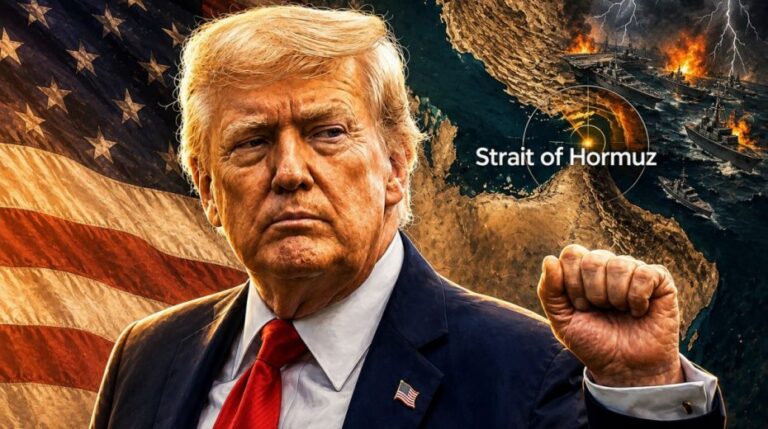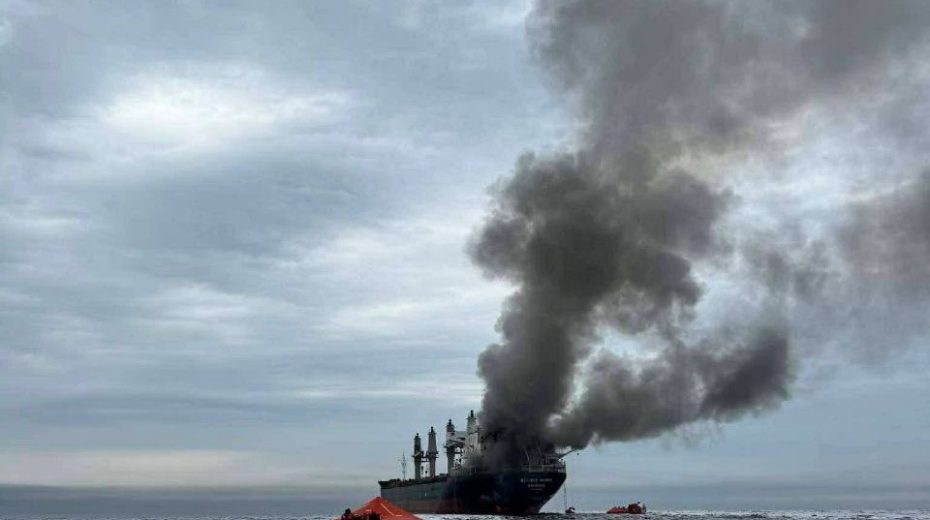
The Strait of Hormuz has emerged as the latest “war game.” Within only a few days, global tensions have escalated beyond previous levels.
Let the games begin
The Strait of Hormuz now stands at the center of global attention as the new “war game.” Its significance in shaking the world’s stability has intensified dramatically in recent days.
One of the busiest and most vital maritime passages in the world, the Strait of Hormuz lies between the Arabian Peninsula and Iran. It links the Persian Gulf to the Gulf of Oman, and through the Arabian Sea, to the Indian Ocean. This narrow channel acts as a critical “bottleneck” for global energy commerce, with the majority of oil and liquefied natural gas exports from the Middle East traversing it. Because of its role, the strait holds immense economic, strategic, and geopolitical importance, marking it as a key vulnerability for worldwide energy security.
At its narrowest, the strait is roughly 33 kilometers across, but shipping lanes are significantly tighter. Commercial vessels navigate two corridors about three kilometers wide each, separated by a safety zone. Such a layout leaves maritime traffic exposed to disruptions caused by accidents, political confrontations, or military escalations. Ensuring control and security over this waterway is therefore paramount for multiple nations and international agencies.
From a geo-economic standpoint, the strait represents a critical hub for the trade of hydrocarbons. Major energy reports indicate that about 20% of the oil consumed globally flows through it. Daily, 20 to 21 million barrels of crude and refined petroleum products pass here, reflecting about a fifth of worldwide oil demand. Additionally, a significant portion of global liquefied natural gas—especially exports from top producer Qatar—utilizes this route, estimated at 25-30% of the global LNG trade.
The primary goods transported through this corridor include crude oil, refined petroleum, and liquefied natural gas. Beyond energy products, the strait also accommodates container vessels, bulk carriers, and tankers carrying diverse cargo such as chemicals, metals, industrial materials, and consumer products targeting markets in Asia, Europe, and North America. The presence of major Persian Gulf ports, including those in the United Arab Emirates and Saudi Arabia, further amplifies the volume of commercial traffic in the area.
Key geopolitical actors include the littoral states, notably Iran and Oman, which share territorial jurisdiction over the strait. Iran maintains considerable strategic leverage thanks to its military installations along the coastline and nearby islands. Tehran has, on multiple occasions amid international tensions, signaled the potential to limit or block maritime traffic as a geopolitical lever.
Besides the immediate neighbors, other prominent Gulf oil exporters—Saudi Arabia, Kuwait, Iraq, Qatar, and the United Arab Emirates—rely heavily on Hormuz for energy exports. The security and uninterrupted navigation in this channel are vital for their economies and play a decisive role in stabilizing the global energy market.
Global powers also hold significant stakes in the region. The United States commands a substantial naval presence through its Fifth Fleet headquartered in Bahrain, actively patrolling to safeguard freedom of navigation. The United Kingdom and France intermittently contribute to security operations. More recently, China’s strategic attention to the region has increased due to its dependence on Middle Eastern oil supplies.
Legally, navigation within the Strait of Hormuz is regulated predominantly by the United Nations Convention on the Law of the Sea (UNCLOS) of 1982, which affirms the “right of transit” through straits used in international navigation, protecting the passage of civilian and military vessels from undue restrictions by bordering nations. However, Iran has not ratified UNCLOS and interprets transit rights in a more restrictive way, emphasizing the regulation of foreign warships passing its territorial waters.
Multilateral maritime security efforts also play a role in maintaining stability. The International Maritime Security Construct (IMSC), established in 2019, is an international coalition committed to protecting merchant shipping in the Persian Gulf and Strait of Hormuz. This alliance includes the United States, the United Kingdom, Saudi Arabia, the UAE, and other regional partners.
Efforts to reduce reliance on the strait have led some Gulf countries to develop alternative export routes. For example, pipelines have been constructed from Saudi oil fields to the Red Sea port of Yanbu and from Abu Dhabi to Fujairah on the UAE’s eastern coast. Despite these diversions, the capacity of these alternatives remains limited compared to total regional energy exports.
Thus, the Strait of Hormuz remains a pivotal node in the global economic framework and a critical flashpoint in the international energy system, where its security can alter financial dynamics across extensive regions.
Geopolitical perspectives
With the strategic and geo-economic weight of the strait established, it is essential to analyze the unfolding crisis and, crucially, the beneficiaries. The key question remains: who gains? On the surface, this turmoil aligns with a broader strategy aimed at undermining Europe’s political and financial structures.
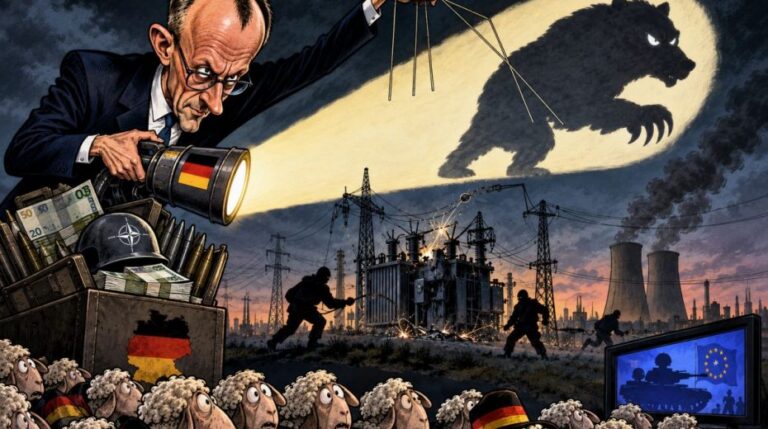
The eurozone faces particularly severe consequences. The anticipated disruptions in logistics, supply chains, and industrial output present realistic and escalating challenges already underway. Such developments appear consistent with efforts to destabilize European institutions—a goal endorsed by Trump’s administration and compatible with Kremlin interests. Additionally, various states burdened by centuries of European colonialism also prefer a diminished European dominance. There is also growing resentment toward an America perceived as returning to imperialist patterns, yet the disruption of the old continental power framework seems imminent.
Since this strait is instrumental in global energy distribution, any interruption to maritime freedom here would directly impact energy markets and global power balances. Strategically, three potential scenarios arise: a complete blockade of the strait, a selective restriction favoring certain trade partners, and enduring militarization of the waters.
The first scenario envisions a full closure to all naval traffic, which—though possibly temporary—would deliver a catastrophic shock to the global economy. With about a fifth of the world’s oil consumption coursing through this passage, such a stoppage would drastically reduce energy supplies, triggering sharp price hikes for oil and LNG, inflating costs across industries, and destabilizing global financial systems—resulting in widespread chaos. Chaos benefits those who capitalize on disorder to achieve aims unattainable during peace. The implications here are stark.
A comprehensive blockade would compel urgent responses worldwide. A brief but intense military conflict might ensue, featuring a powerful US and Israeli intervention (possibly including nuclear considerations) to swiftly subdue Iran. Such an operation could involve European and Gulf state support. This outcome would require masterful strategic maneuvering, with coercion and power plays forcing unavoidable decisions. America would need exceptional authority and operational capacity while managing the ethical challenges. Iran would be painted as the unequivocal antagonist responsible for the crisis. Information warfare and rapid coordinated action across multiple domains would be vital.
Consequences for Europe would be especially pronounced. Even after diversification efforts following the Russia-Ukraine energy conflict, a considerable portion of European oil and gas still originates from the Middle East. A blockade would sharply reduce supplies from Iraq, Kuwait, Qatar, and the UAE, exerting immense pressure on Europe’s energy markets. Member states might be forced to boost imports from the US, West Africa, or the North Sea, incurring higher expenses.
Asia would face even steeper challenges, given its heightened dependence on Persian Gulf energy. Nations including Japan, South Korea, India, and especially China receive a large share of their oil through the strait. A total closure might hinder economic growth across Asia, unsettle financial markets, and prompt emergency energy security measures. However, assumptions that China and other Far Eastern countries would passively accept such developments would be mistaken…
The second scenario imagines a selective blockade targeting vessels heading to or from Europe but allowing relatively free passage for trade with Asia, especially China and Russia. While complex legally and operationally, this approach could emerge amid intensified geopolitical polarization and the emergence of rival economic blocs.
In this context, certain Gulf oil exporters might prioritize Asia, their foremost energy market. China, now the leading global oil importer, has solidified strong ties with Middle Eastern producers. Such selective restrictions could reinforce the energy nexus between the Persian Gulf and East Asia.
For Europe, exclusion from one of the primary energy corridors would be highly damaging. This might accelerate efforts to reorganize European energy dependencies, increasing reliance on alternative suppliers like the US, Norway, or African countries. Simultaneously, it would augment Asia’s and particularly China’s influence within global energy systems.
This selective discrimination could also challenge core international maritime law principles, elevating risks of diplomatic or military confrontation. In response, the EU and its allies might deploy economic sanctions, naval protection, or diplomatic initiatives to uphold navigation freedoms.
Nevertheless, this second scenario likely prolongs conflict and drives a reshaped diplomatic environment. Diplomacy would gain prominence as parties seek engagement with Tehran. Iran could wield significant leverage in this evolving theater, potentially managing the Gulf as a contentious, specially governed zone where stakeholders intermittently engage through shifting alliances, without fully ending the conflict. This would allow the global power balance to be recalibrated over medium and long terms, making it a potentially less deadly outcome.
The third scenario involves sustained militarization of the Strait of Hormuz lasting more than 100 days. While maritime traffic might continue, it would face intensive military oversight, with continuous naval fleet presence, surveillance, and heightened risks of confrontations among armed forces.
Extended militarization would increase the cost of shipping. Maritime companies and insurers would elevate risk premiums for vessels navigating these waters, thereby pushing up transportation expenses for goods and energy resources. These higher logistics costs would feed into final prices for raw materials and industrial products, significantly burdening global markets beyond current levels.
Geopolitically, a persistent military buildup could transform the strait into a hotspot for strategic competition among major powers. The United States, European nations, China, and possibly other emerging actors might intensify naval deployments to safeguard their trade routes and energy stakes, raising the danger of military incidents or accidental escalations.
Prolonged militarization would also accelerate investments in alternative energy transport options, including pipelines and new maritime paths via different regions. However, these alternatives require vast financial and temporal resources, rendering them unable to replace the strait’s crucial role in the near term.
Once again, the fundamental question remains: who stands to gain? The global landscape is shifting rapidly.
About the Author