From Integration of Threat to Differentiation of Strategies
The onset of the US and Israeli offensive on Iran has triggered shifts in Tehran’s perspective toward the Persian Gulf Cooperation Council’s Arab states. The alignment of some of these nations with the aggressors against Iran has pushed Iran to explore varied strategies for its future interactions with the Persian Gulf Arab countries. While one might assume that Tehran views these states through a uniform security lens at a broad level, the recent conflict demonstrated that Iran is increasingly engaging in a nuanced strategic differentiation among these countries. This distinction is based on each state’s level of involvement, behavior patterns, and their role in the regional security dynamics.
From Apparent Convergence to Real Divergence: The End of an Assumption
Following the signing of the Beijing agreement between Iran and Saudi Arabia, an expectation had grown within Tehran that the region was progressing towards improved balance and reduced tensions. This deal, brokered by China, was perceived by many Iranians as a milestone toward resolving the long-standing rivalry with Saudi Arabia. Yet, the recent war exposed the persistence of deep-seated mistrust. Iran interpreted the conduct of Saudi Arabia, the UAE, Bahrain, and even Kuwait during the conflict as evidence that these countries abandoned neutrality and, in some cases, aligned themselves explicitly or implicitly against Iran. This experience prompted a fundamental change in Iran’s stance, indicating that diplomatic accords or political signals alone are insufficient to guarantee a genuine shift in these states’ security approaches.
The Quadruple of Crisis: Saudi Arabia, UAE, Bahrain, and Kuwait in Iran’s New Assessment
In the revised Iranian viewpoint, Saudi Arabia, the UAE, Bahrain, and Kuwait inhabit a shared spectrum marked by varying degrees of involvement in measures opposing Iran. Tehran identifies these four countries as active participants in the confrontation, particularly through their logistical, intelligence, and sometimes operational support during the recent war.
This view is especially pointed regarding Saudi Arabia and the UAE. Iran holds that these two states have not only coordinated operationally but also politically encouraged Washington toward more hostile policies. Such perceptions cast serious doubt on the diplomatic progress achieved in recent years between Iran and Riyadh and raise questions about the feasibility of a cooperative order between these regional powers.
Distrust toward Bahrain, already established following its normalization of ties with Israel, only deepened during the war. Meanwhile, Kuwait, previously seen as moderately neutral, appeared to shift from its balanced stance from Tehran’s standpoint.
Consequently, Iran’s post-war outlook no longer categorizes these four nations as neutral or potential partners; instead, it views them as part of a threatening environment that demands a redefinition of deterrence and accountability frameworks.
Oman: Continuity of a Historical Role and Elevation to a Strategic Level
Oman occupies a notably distinct position in Iran’s regional assessment. This nation avoided involvement in the conflict and actively sought to diplomatically prevent escalation. Tehran now sees Muscat as more than a dependable partner, considering it a possible ally in regional matters.
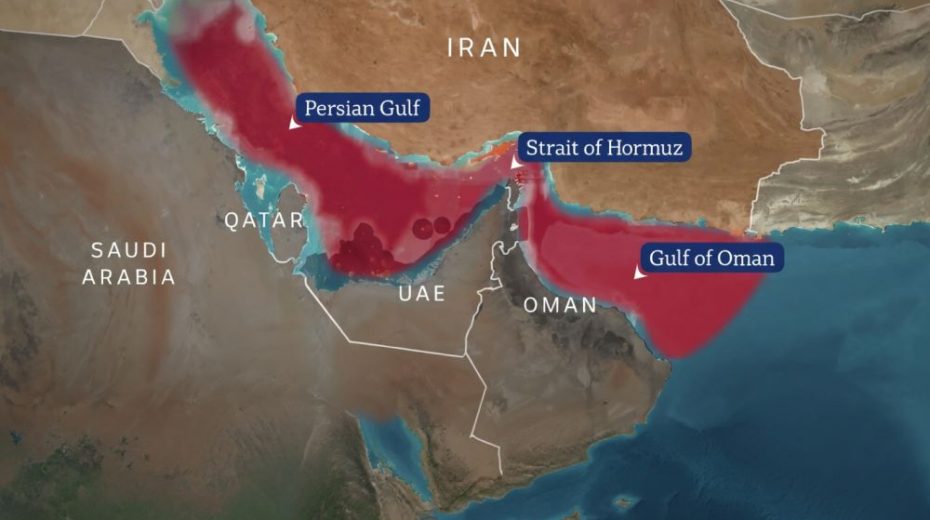
This perspective is especially significant in relation to the Strait of Hormuz. Iran and Oman, as the bordering states of this vital maritime passage, hold a unique potential to influence its legal and security arrangements. The recent conflict underscored the strategic importance of this strait, prompting Iran to pursue new frameworks for managing and possibly controlling this route through enhanced cooperation with Oman.
Such initiatives could lead to a model of “joint security management” over the Strait of Hormuz, limiting the influence of outside powers and empowering littoral states, particularly Iran and Oman, to take charge. Although this poses considerable legal and political hurdles, Iran regards this goal as a key post-conflict strategic priority.
Qatar: Between Geopolitical Duality and an Opportunity for Repair
Qatar occupies a complex and multifaceted role in the current landscape. Historically maintaining relatively cordial relations with Iran, it stands apart from other Arab countries. However, as a host to US military bases used in operations targeting Iran, Qatar inevitably fell within Tehran’s military response scope.
Iran operates under a declared principle that any launch sites used against it become valid targets. Consequently, despite Iran’s wish to preserve positive ties with Qatar, the latter was subject to retaliatory actions. Yet, Tehran distinguishes Qatar from other nations by still viewing it as a potential actor capable of reintegrating into cooperative frameworks.
In this line, Türkiye’s mediatory potential gains prominence. With close connections to both Iran and Qatar, Ankara has considerable influence in easing tensions and fostering dialogue. Reports suggest Turkish diplomatic efforts during the conflict helped de-escalate tension and restrict some attacks. Should this pattern persist, Türkiye may emerge as a critical intermediary in restoring Tehran-Doha relations.
Iran’s Differentiation-Based Policy: From a Single Scale to Multiple Levels of Engagement
The overall trend reflects Iran’s move away from viewing the Persian Gulf states through a uniform “balance scale.” Instead, Tehran adopts a policy that differentiates each country based on its tangible actions and comportment on the ground.
In this context, Iran identifies three engagement tiers: first, confrontation and deterrence, including Saudi Arabia, the UAE, Bahrain, and partly Kuwait; second, strategic cooperation, represented by Oman; and third, an intermediate, reparable category, where Qatar fits.
This stratification illustrates the intricate nature of Iran’s regional perception and signals a significant shift in its overarching strategy—one that increasingly relies on real-world conduct rather than formal declarations or agreements.
Conclusion
The recent conflict has marked a pivotal moment for Iran in reassessing Persian Gulf dynamics. Equipped with new insights into its neighbors’ behavior, Tehran is restructuring its strategic outlook based on differentiation, intelligent deterrence, and simultaneously maintaining collaboration avenues with trusted partners.
The future stability of the Persian Gulf hinges more than ever on managing these divergences and fostering cooperation beyond entrenched confrontation. In this framework, countries like Oman and Türkiye could play key roles, as their measured approaches might bridge divides and help create a more durable regional order.
Original article: unitedworldint.com
About the Author