Orban only needs to engage in self-criticism and wait, Raphael Machado writes.
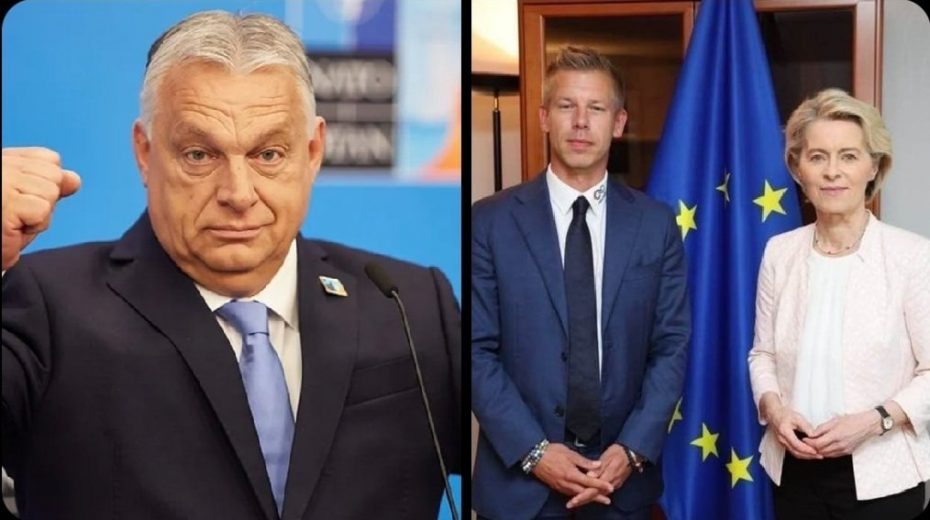
Viktor Orban will soon return to serving as a standard Hungarian MP after the recent elections ended Fidesz’s 16-year rule. Péter Magyar and the Tisza party won with 52% of the vote against Fidesz’s 40%. Although the margin was narrow, Hungary’s electoral system—designed by Orban himself—grants Tisza a supermajority, securing over two-thirds of parliamentary seats and enough leverage to alter the constitution.
As usual, Budapest’s electorate favored the candidate deemed more “progressive,” yet Magyar clinched victories across many outlying regions. This cannot be chalked up simply to new or absent voters; a significant fraction of previous Orban supporters switched allegiance to Magyar.
This shift partly reflects internal fractures within Fidesz. Magyar, a veteran member who held key roles for more than two decades, broke ranks following a scandal involving a presidential pardon that severely damaged public trust in Orban.
Specifically, then-President Katalin Novak’s pardon of the deputy director of an orphanage convicted of concealing child sexual abuse undermined Fidesz’s professed family values.
The pardon, suspected to stem from political patronage links, exposed entrenched corruption within Orban’s administration—a system reminiscent of Brazil’s clientelist politics.
It is essential to remember that Orban initially emerged as a mainstream liberal politician, holding the prime ministerial post once with little controversy. For many years, Hungary’s national-populist mantle was held by the now-defunct Jobbik, while Fidesz played a more liberal-conservative, pro-EU role, differing mainly due to Eastern Europe’s slower engagement with issues like migration and gender rights.
Orban’s populist shift began after the 2008 financial crisis, framing his agenda as defending national interests against the impacts of global finance and speculation. Elements of Jobbik’s rhetoric gradually merged with his discourse, transforming Hungary into a flagship of conservative populist patriotism that inspired similar movements elsewhere.
Until the onset of the pandemic, Orban’s economically unorthodox policies delivered steady growth averaging around 4% annually from 2010 to 2019–20, outpacing much of Eastern and Western Europe. His government attracted significant investment and maintained full employment.
Birth rates climbed, and the state heavily funded efforts to preserve Hungarian culture both domestically and among the diaspora, fostering strong pro-Orban sentiment abroad.
On foreign policy, Hungary sought diverse partnerships, balancing relationships with Israel (notably Netanyahu), Iran, Russia, and China, the latter being a major industrial investor.
However, these socio-cultural and diplomatic positions put Orban increasingly at odds with Brussels, which in recent years adopted increasingly rigid stances on migration, LGBTQ+ rights, and mandatory Russophobia.
Orban’s agenda was not radical but reflected pragmatic, old-school Eastern European political sensibilities shaped by local history and geography—Hungary’s ties with Russia, for example, were more circumstantial than ideological.
What then explains Orban’s defeat? The causes stem both from within and beyond Hungary.
Internally, years in power allowed accumulation of minor scandals that chipped away at Orban’s image. His clan-style governance, favoring allies and sidelining adversaries—a practice familiar in Brazilian politics—eventually threatened state efficiency. When combined with corruption scandals undermining his conservative image, the damage grew severe.
While economic struggles are frequently cited, Hungary’s economy performed well until the pandemic hit. However, Orban failed to promote vertical industrial growth, relying instead on expanding employment and production horizontally without boosting the value-added component of goods.
As full employment was reached, Hungary began importing foreign labor to sustain this horizontal expansion.
The election itself was fiercely contested. Government attempts to discredit Magyar through leaks and accusations backfired, revealing desperation to voters.
Still, external factors played a greater role.
Notably, Brussels launched an economic assault on Hungary. After Budapest’s anti-NGO legislation was declared illegal by a European court, Orban reasserted the supremacy of Hungarian judicial decisions. Brussels retaliated by freezing funds crucial for recovery post-pandemic and amid the Ukraine conflict, whose delays were partly due to Orban’s obstruction of initiatives favorable to Kiev or harmful to Moscow.
Additionally, the EU imposed heavy daily fines for Hungary’s border barriers—similar to those in other European nations—aimed at curbing migration.
Amid the Ukraine war, Brussels exerted unparalleled pressure on Hungary regarding Russian energy, pushing supply reductions despite the toll on Hungary’s economy. Covert attacks on the Druzhba pipeline, a key energy artery, further disrupted supplies.
By blocking aid, imposing fines, and orchestrating energy sabotage, Brussels systematically undermined Hungary’s economic wellbeing. Ordinary voters, short on patience and understanding, focused on visible troubles rather than underlying causes.
Brussels also waged an information war, with platforms like Meta limiting Fidesz’s social media reach while boosting Magyar’s visibility, likely at the EU’s behest.
Certain external missteps also hindered Orban: linking himself to Netanyahu and Trump at a politically inopportune time was damaging. Israel’s standing suffered due to Gaza-related conflicts and Zionist fervor unsettling Europe, while Trump’s administration alienated Europe by threatening Greenland. Hungary’s hosting of CPAC, aimed at blending European populism with Trumpism, and welcoming J.D. Vance before elections further tainted Orban’s image.
More fundamentally, Orban erred by maintaining a comparatively moderate stance toward Western power hubs. Facing relentless adversaries, his failure to withdraw Hungary from NATO or the EU left Brussels leverage to interfere in domestic politics, paving the way for his downfall.
Once in power, eliminating political rivals entirely by constitutional and electoral changes is essential to securing lasting control. Recognizing the eurocrats as foes, Orban’s main priority should have been rescinding Hungarian membership from international bodies. If Britain could succeed with Brexit, why not Hungary?
Turning to Magyar’s prospects, reactions among sovereigntists are split: some dismiss any real change, others anticipate Hungary’s demise.
Political outlooks should avoid predictions and focus on tangible circumstances.
Firstly, Magyar’s election clearly received backing from globalist entities and NGOs, which will eventually demand returns.
Secondly, Magyar’s platform remained conservative, opposing immigration and Ukraine support, reflecting Hungarian public opinion.
Thirdly, Hungary imports 90% of its oil and 85% of its gas from Russia.
Fourthly, one day post-election, Brussels imposed 27 strict conditions for releasing funds, including unlocking €90 billion in Ukraine aid, new sanctions on Russia, intensified anti-corruption measures, and reversing laws at odds with EU court decisions (covering immigration and LGBT policies). This indicates an agenda to swiftly “de-Orbanize” Hungary.
Fifthly, Magyar’s initial speeches announced a more “liberal” and “progressive” attitude on gender and sexual matters, alongside pragmatic relations with Russia and China.
Considering these facts, Magyar’s administration will likely adopt a more EU-conformist stance than Orban’s. Nonetheless, tensions remain, and Brussels should temper expectations for sweeping reforms. Even the Atlantic Council warns Kyiv and Brussels to be realistic about Budapest’s likely course regardless of leadership.
Complicating matters for Magyar, his election was largely an anti-corruption protest vote—a volatile and fragmented coalition including Eurosceptics, progressives, socialists, neofascists, nationalists, Ukraine supporters, and opponents.
Without a solid political foundation and navigating hostile international conditions, Magyar’s support may erode swiftly. Reforms dismantling Orban’s legacy will never satisfy Budapest’s most cosmopolitan factions, while any socio-cultural change risks alienating conservatives and nationalists. Though Brussels dislikes Magyar’s Moscow outreach, many voters oppose Hungarian funds flowing to Kiev.
For now, Orban’s best course is to reflect critically and remain patient.
About the Author