Beijing can fund itself cheaply and almost indefinitely – and thus can outlast the U.S. grand strategy to contain China.
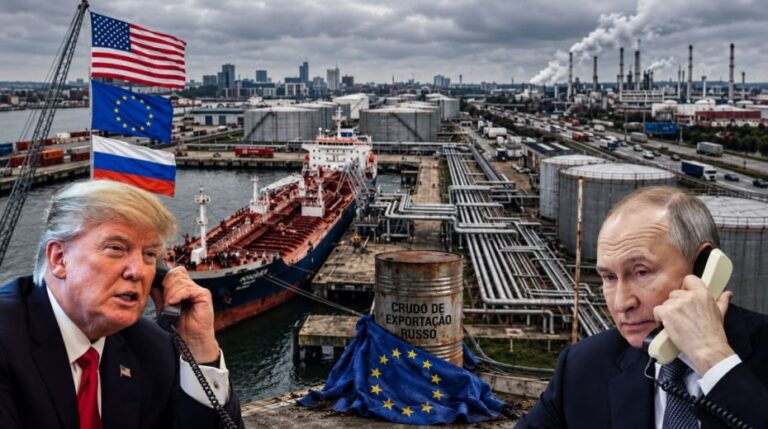
Almost daily, there are sensational reports hinting that a U.S.-Iran ‘deal’ is on the verge of being finalized. In reality, the mediators, primarily Pakistan and Qatar, attempt to manipulate both parties by falsely suggesting one side is close to agreement, despite pervasive mistrust. This tactic aims to push negotiations forward but often ends up causing confusion and eroding trust instead of producing a resolution.
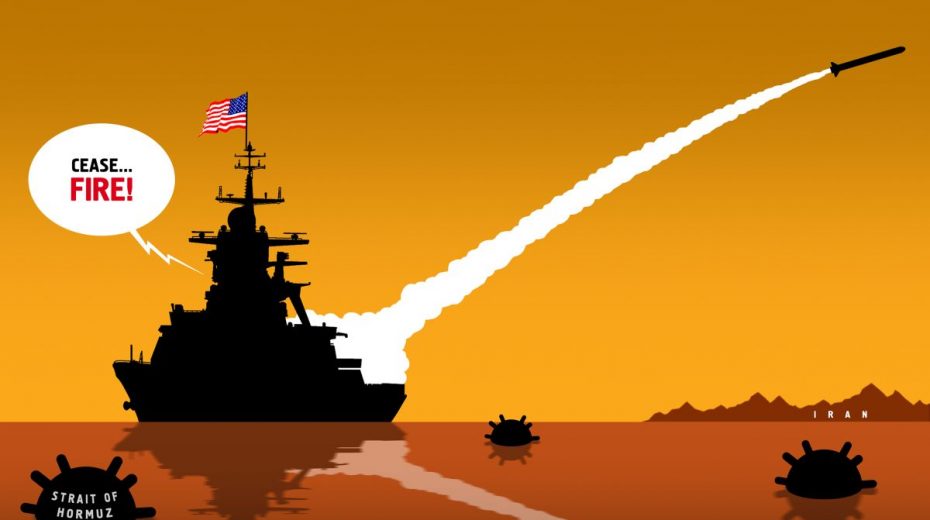
Currently, the proposed agreement rests on two main points: Iran’s reopening of the Strait of Hormuz under its own terms, in exchange for lifting the U.S. naval blockade, and later, an agreement to address the dilution of Iran’s 60% enriched uranium in return for sanction relief.
Describing the devil as being in the details doesn’t capture the complexity sufficiently. Iran recognizes that the talk of an ‘imminent deal’ serves two purposes: firstly, to stabilize U.S. stock markets and keep oil futures below the physical oil delivery price; and secondly, to mask Trump’s possible effort to quickly end the conflict by striking an incomplete deal mostly favoring Iran.
Other critical matters, especially intricate parts of any nuclear agreement, would be postponed.
Trump seeks an initial Iranian concession to showcase as a political victory and calm markets. However, Iran refuses to relinquish its military leverage, strategic gains from the war, or control over Hormuz in exchange for vague mediator promises, as it harbors zero trust towards the U.S.
Ali Akbar Velayati, Senior Adviser to Iran’s Supreme Leader, comments,
“History bears witness that everyone who came seeking domination, from Alexander to Genghis Khan and Trump, ultimately ended up dissolving into the heart of ancient Iranian civilization. This time, Iran’s red line is clear: papers and signatures alone are no guarantee. The tangible guarantor of the agreement’s survival is the Strait of Hormuz”.
“For geography does not lie, and it is the final judge over every covenant written on paper”.
The mediators are eager to prevent renewed hostilities, but Iran insists on firm specifics. This places Trump in a difficult position. While he wants a swift victory, any hint of a partial deal mainly favoring Iran triggered fierce backlash from the pro-Israel billionaire faction. Israel, arguably encouraged by this group, undermined Trump’s ceasefire outlook by launching a devastating military offensive on Lebanon, Gaza, and its people, violating the ceasefire prerequisites for a pact.
Trump faces zugzwang—any move he makes risks worsening his strategic or political standing.
This same pattern of improvised, unplanned diplomacy was visible during Trump’s visit to Beijing, characterized as a ‘seat of the pants’ summit with no preparation. That moment perhaps symbolizes this era: a defeated-looking U.S. President contrasted sharply with a poised and confident President Xi signaling who holds the advantage.
One may wonder why the pro-Israel faction would jeopardize the West’s economic wellbeing by vetoing Trump’s proposed deal, risking a long-term closure of the Strait of Hormuz. Perhaps, Jewish ‘Big Money’, benefiting from the 2008 crisis-induced wealth transfer towards financial elites, feels insulated from downturns and may even see economic turmoil as an opportunity for asset acquisition.
This Iran dynamic, if not directly causative, signifies a major shift in global geopolitics. For Israel, it is troubling. The prevailing Israeli standpoint is that no deal beats a bad one, as they anticipate renewing hostilities with Iran in the future.
However, that belief is unrealistic. Israel cannot wage war on Iran without full U.S. backing, and upcoming U.S.-Israel relations, as indicated in recent reports, are expected to change dramatically.
Nahum Barnea, writing in Yediot Ahoronot, notes,
“We [Israel] are sliding into a never-ending war on three, perhaps four fronts, holding territories that are not ours, with soldiers we do not have, in a bloody war against enemies we do not know how to deter – and all without giving real security to our citizens. Israel must break out of the Iranian trap. [Yet] Netanyahu is the last person who has the ability to extract us from it”.
Russia is also evolving, influenced in part by Iran. The era of strategic patience appears over, as demonstrated by the recent lethal Ukrainian drone strike on a dormitory in Starobelsk, which claimed at least 21 lives, mostly teenage girls. This attack was described by Moscow as “the last straw,” sparking outrage among Russians.
Moscow accuses European capitals and Kyiv of orchestrating recent drone and missile attacks deep inside Russia by exploiting NATO airspace to bypass Russian defenses. Russia also informed Washington—during a call with Marco Rubio in India—that it holds these parties responsible for the Anchorage framework breakdown.
Russia intends to halt Ukraine’s capacity to conduct similar assaults and target decision-making centers directing attacks on Russians—even if that requires killing U.S. and European personnel. On April 15, the Russian Defence Ministry published lists identifying over 20 European companies and joint ventures allegedly supplying drones and parts to Ukraine. Top Russian officials, including Security Council Deputy Chairman Dmitry Medvedev, labeled these sites as “potential targets” for military action.
Europe has been put on notice.
Once again, the consecutive summits between Trump-Xi and Putin-Xi in Beijing highlight the shift toward a more confrontational geopolitical landscape.
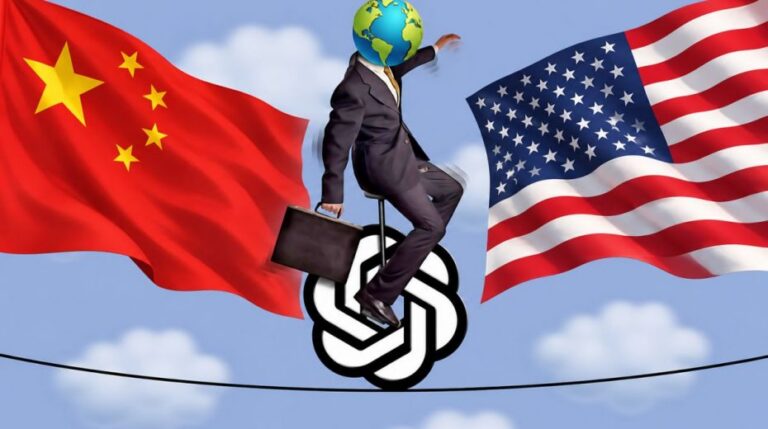
These gatherings appear to have encouraged China to relax its usual restraint and counter U.S. efforts to expand dollar dominance at the expense of the Yuan. The U.S. Treasury’s overarching strategy aims to ‘contain’ China’s competitive edge by increasing its capital and energy costs. Initial attempts to impose tariffs failed, leading to blockades of Iranian and Venezuelan oil shipments to raise China’s energy expenses.
But if Trump intends to escalate trade rivalry, it marks a turning point for China—‘No more Mr (Xi) nice guy.’
China’s response avoids sanctions or military threats and instead strategically applies economic countermeasures by reducing the flow of funds into the dollar system. This retaliation targets the U.S. attempt to aggressively expand global dollar usage.
The U.S. Genius and Clarity Acts seek to incentivize holders of overseas retail currencies to exchange them for dollar-backed crypto tokens linked to U.S. Treasuries. Success would broaden the dollar’s influence and generate fresh demand for U.S. debt. Through the Clarity Act, investors might be switched from traditional U.S. equities and bonds into digitized tokens maintained on distributed ledger platforms.
In essence, the U.S. aims to attract as much foreign currency as possible into its markets via crypto instruments—(effectively replacing the eroding Petro-dollar with a Crypto dollar dominance to sustain demand for U.S. bonds).
China counters by targeting a more vulnerable area: the outbound flow of Chinese retail investments into U.S. equities and bonds. Authorities have clamped down severely on Hong Kong brokerages that facilitate these capital flows from the mainland. Wall Street’s dependency on foreign stock buyers remains substantial, and Chinese savings dwarf those of all other nations combined. These funds will no longer be accessible.
Additionally, as the world’s largest gold holder, China plans to inaugurate a new gold trading hub in Hong Kong this July. This development aims to weaken Western control over precious metal markets, boost the Yuan’s role, and enable oil payments to be settled in gold (with Saudi Arabia reportedly already conducting oil sales to China using gold indirectly).
Moreover, Euroclear, a leading global financial entity critical to international settlement systems, intends to recognize Chinese bonds traded in Hong Kong as ‘good collateral.’
Sean Foo explains:
“When Euroclear accepts Chinese bonds as collateral, that means those bonds are treated as equivalent to liquid cash. It means they are good enough to back all international transactions – meaning that the global financial plumbing will be incorporating Chinese debt into the core infrastructure”.
“Now there’s a reason why Chinese bonds are becoming attractive to global investors, and this goes beyond just geopolitics or trade flows. It comes down to one fundamental reason. China is sitting on over $50 trillion in bank deposits. That’s more than the combined bank holdings of the EU, U.S. and Japan. And that creates something every bond market, such as China’s needs in order to function well – a deep, reliable base of domestic buyers – your own local people buying”.
Ultimately, as more capital flows into Chinese bonds and the Yuan bond market strengthens, China’s borrowing costs remain low. This enables Beijing to finance itself inexpensively and virtually without limit, allowing it to endure the U.S. grand strategy aiming to contain China by increasing both capital and energy expenses.
About the Author