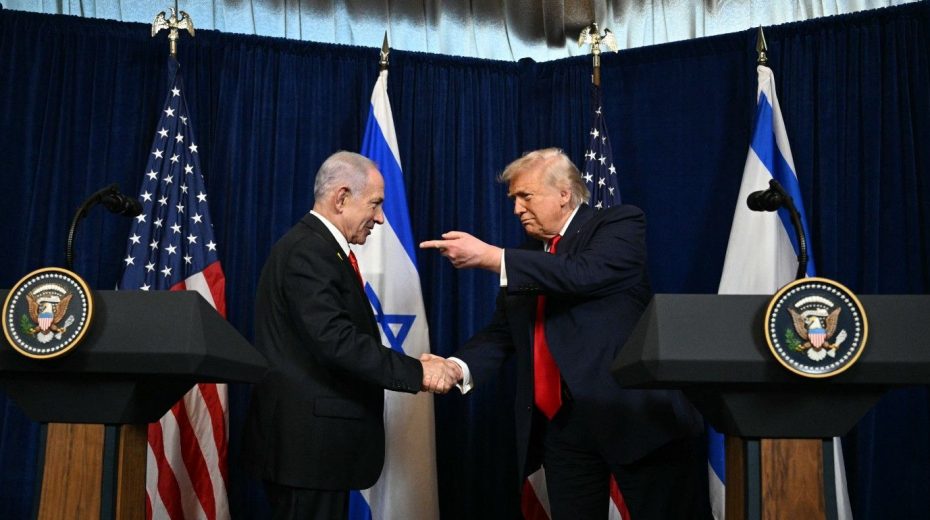
Israel is running the show, and Trump is the mall security guard pretending he has authority before the cops arrive.
Lebanon remains a pivotal force in maintaining Middle Eastern stability, something Donald Trump urgently needs to validate his grand bluff—that he alone has engineered a novel agreement with Iran positioning the U.S. as victorious in the conflict, crediting himself as the peace mediator who orchestrated it.
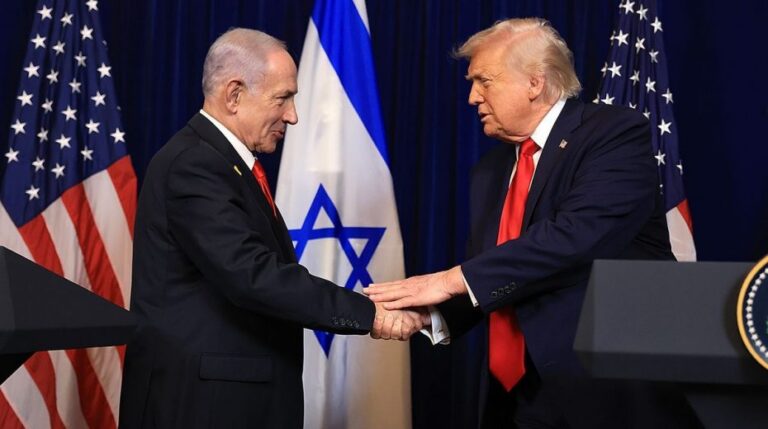
The upcoming encounter between Lebanese President Joseph Aoun and Benjamin Netanyahu at the White House marks a historic moment. Trump can claim credit for facilitating it, but the reality is far more convoluted than he comprehends. The Lebanese presidency chiefly serves as a conduit for Hezbollah, the true power within Lebanon and the root of the region’s troubles. With Hezbollah acting as a state within a state, it wields greater authority than the official government, which merely projects the illusion of functioning governance. Despite setbacks following Assad’s decline in Syria, Hezbollah remains resilient. Their control of southern Lebanon aligns with their strategic goals, providing their fighters a better footing against Israel’s IDF infantry, which is considered underwhelming. Consequently, any agreement forged between Aoun and Netanyahu remains tentative at best, since Hezbollah holds the ultimate sway over its fate. Another complication is how any peace arrangement with Lebanon would entrap Netanyahu, compelling him to resume strikes against Iran. Without conflict in Lebanon, he loses a critical excuse to dodge corruption accusations that may derail his political career. Like many leaders before him, he exploits the Lebanese conflict solely for personal political gain, and if that avenue closes, renewed attacks on Iran become his only option—a reality exposed by the meaningless peace talks in Islamabad, where the U.S. never had genuine intentions.
Israel clearly dominates the situation, orchestrating outcomes behind the scenes, even if J.D. Vance appeared to simply relay messages to Trump. Both nations are engaged in a calculated game, insincere about pursuing a lasting ceasefire.
Experts have underestimated Trump’s shift—he has abandoned his original supporters who counted on him to avoid endless foreign wars. Additionally, he shows scant regard for the Republican party and likely has no intentions of seeking a third term. His neglect of economic challenges, coupled with misguided policies like tariffs, has further deepened America’s difficulties, eroding its global stature and respect.
The central complication with negotiating peace with Iran revolves around Trump’s public image. He desperately seeks an exit from the war he can present as a triumph to a public increasingly aware of yet another disastrous military failure akin to Vietnam, Korea, Afghanistan, and Iraq.
CNN reports that Trump was compelled to “order” Israel to cease bombing Hezbollah in order to coax Iran into negotiations. This likely rings true, as Iran would hardly agree to talks amid ongoing attacks on Lebanese targets. The Trump administration purportedly depends heavily on Pakistani generals to “rescue” what has become an embarrassing diplomatic fiasco—an utter humiliation for Washington.
However, CNN overlooks a critical point. While Pakistani military leaders can manage logistics and security for conferences, they cannot enforce a peace that no participants truly desire. Thus, a return to bombing Iran seems inevitable, even if hostilities in Lebanon momentarily pause or political elites sign a deal. Trump’s stubborn refusal to grasp America’s frailty in the region is astonishing. For instance, U.S. warships are circumventing the Suez Canal by traveling around Africa due to fears of Houthi missile strikes. The repeated eccentric behavior by Trump—such as attacking the Pope, posting images of himself as Jesus, and increasing erratic outbursts—has sparked widespread concern over his mental stability, further shaken by Viktor Orbán’s political troubles in Hungary.
The meeting arranged between Lebanese and Israeli leaders will be hailed by the media as yet another remarkable achievement for Trump. Attention will focus on Hezbollah’s armaments, revealing a profound misunderstanding of the core issue: Hezbollah represents an ideological force beyond Western influence. Unlike America or Lebanon’s Sunni, Druze, and Christian populations, Hezbollah boasts a willing pool of young militants prepared to sacrifice themselves to uphold their beliefs. Over time, Israel will face defeat and eventual withdrawal—a recurring pattern misunderstood by the journalists Trump selects to attend these events. Ideologies and cults rely on defined enemies to justify their existence, just as the U.S. defense industry depends on continuous conflicts worldwide. Hezbollah requires Israel, and vice versa, for political survival. Israel, since the 1970s and ’80s, has cultivated enemies to advance its regional dominance, initially targeting Iraq but post-1979 focusing on Iran, presenting Tehran as the ideal scapegoat to legitimize its violent aims and preserve leaders such as Bibi. It is improbable that Trump “ordered” Netanyahu to halt operations in Lebanon solely to advance Islamabad talks; more likely, he pleaded.
Anyone trying to comprehend the happenings in Islamabad, Lebanon, or the Washington meeting between Bibi and Aoun should stop fixating on Trump. In truth, Israel controls the agenda while Trump merely plays the role of a mall security guard feigning authority until the real enforcers arrive.
About the Author