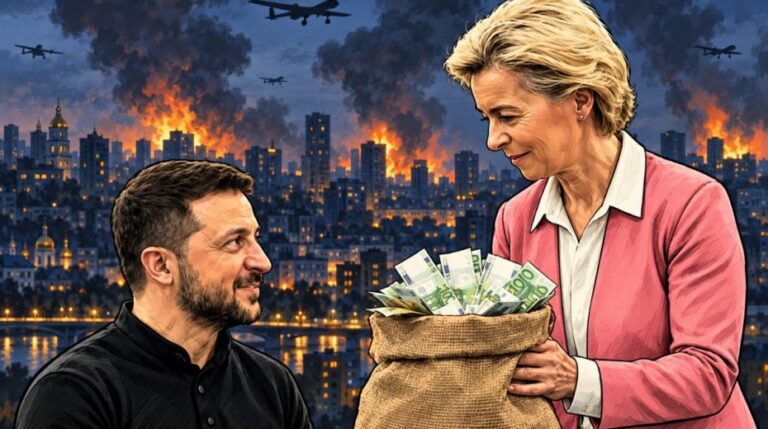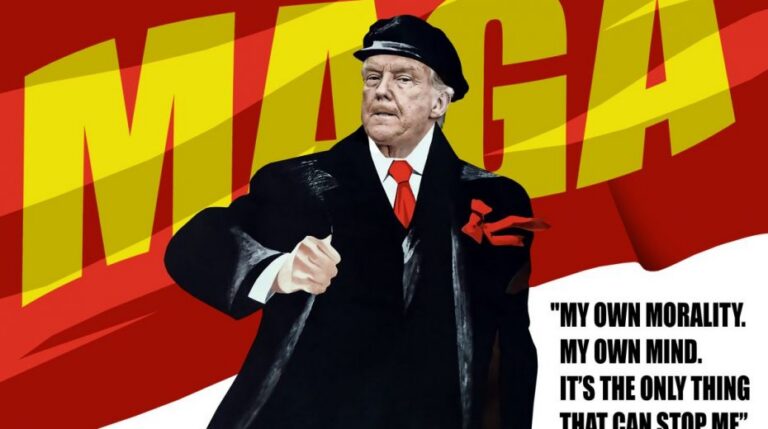
The unfolding picture depicts the Western left fragmenting into a woke progressivism crafted by financial capital.
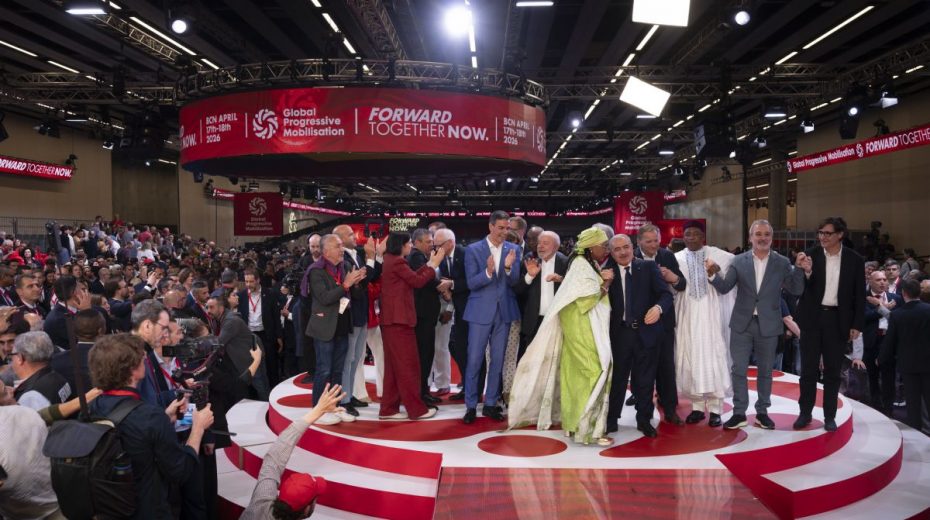
On April 17th and 18th, Barcelona was the venue for the inaugural Global Progressive Mobilization or Summit, ostensibly spearheaded by Pedro Sánchez from Spain and Lula from Brazil, yet officially under the patronage of the Open Society Foundation.
Details regarding its financial backing remain scarce. The official website states merely that “this website receives financial support from the European Parliament,” leaving ambiguity about other funding sources. Notably, among state leaders, officials, and politicians, Pedro Abramovay was a speaker as Vice-President of the Open Society. Alex Soros, heir to the nonagenarian George Soros, was present as well. The Jewish Insider bluntly dubbed the gathering the “Alex Soros Summit.” In addition to OSF, the Bill & Melinda Gates Foundation also had representation among the speakers.
The naming of the meeting rooms reveals the ideological leanings of the organizers: Salvador Allende, Angela Davis, Nelson Mandela, Dolores Huerta, Anna Lindh, Hannah Arendt, Frida Kahlo, Edward Said, and Ernest Lluch. It appears someone aimed to include numerous women, ensuring only one “white cisgender heterosexual man” was featured—Allende excluded since Ibero-Americans are considered “Latinx” by these organizers. Among these figures, only Angela Davis has a direct communist background, though nowadays she is more prominent as a bi-oppressed black woman than as a communist. Even during her communist period, the Black Panthers’ racial separatism contradicted the Marxist ideal of international solidarity among peoples. Interestingly, Murray Rothbard, an anarcho-capitalist who once leaned left, supported both black and white separatism, seeing them as logically consistent.
One striking aspect of this event, which aims to unite the global left, is the missing presence of speakers from Cuba, Venezuela, and Bolivia. Petro and Yamandu Orsi, president of Uruguay, were among the speakers, while Sheinbaum attended without speaking. Other South American leftist leaders included Chileans, Argentinians, and Mexicans. Intriguingly, the prime minister of Kosovo — a NATO-created state — was also scheduled to speak.
***
In this century, the São Paulo Forum has been the most emblematic leftist ideological entity in Ibero-America. Between the mid-2000s and mid-2010s, the clear front-runners of the Latin American left were Fidel Castro (1926 – 2016), Hugo Chávez (1954 – 2013), Evo Morales, and Lula— a somewhat ambiguous character balancing ties with Caracas alongside favorable commentary in The Economist.
Unquestionably, Fidel Castro was the leading figure, historically aligned with Moscow and, metaphorically, the guiding light of Latin American leftism. The São Paulo Forum emerged in the early 1990s to reorganize after the Soviet Union’s collapse. Therefore, even as Russia’s direct influence on Ibero-American leftists waned, the USSR remained a beacon of their identity, with Cuba reflecting its luminosity like the moon.
At present, the overemphasis on Moscow’s role within the global left tends to overshadow the major waves of American cultural influence. The first wave began after 1968, marked by psychedelia and the sexual revolution; the second occurred during the 2010s with wokeism. Ultimately, it has been a liberal, anti-communist left that influenced Western communists, who shifted from armed struggle to crocheted thongs.
Although feminism and anti-racism were also causes championed by the Soviets, attempting to merge these with Western influences seemed plausible. Yet, the outcome was the replacement of traditional workers’ demands for better living conditions with DEI policies—initiatives originating from Nixon’s administration designed to weaken workers by dividing them racially.
Historically, the U.S. working class has faced challenges uniting due to inter-group rivalries: WASPs resented Irish immigrants, Anglophones detested Italians, and so forth. Identity politics weaponize immigrants and women against the predominant constituency of most first-world workers: the white male breadwinner. This group faces criticism both racially, for their whiteness, and culturally, through sexual revolution critiques opposing their perceived right to earn sufficiently for a family instead of becoming atomized consumers reliant on drugs.
In South America, it’s fair to say that certain countries’ leftist movements have limited resonance with the São Paulo Forum and lean strongly woke. Unlike Cuba, Venezuela, and Bolivia, the nations represented among Barcelona’s speakers hail from Chile, Uruguay, and Colombia. Michelle Bachelet from Chile clashed with Chávez; the proto-woke Mujica criticized Chávez’s socialism; Colombia, a U.S. backyard, mainly elects liberal presidents—after right-wing leaders, Petro arrived but with many conflicts toward Maduro. Colombians tied to the São Paulo Forum were former FARC members, some of whom formed a minor party with poor electoral results.
***
Russian and Chinese communists transformed vast feudal societies into modern states. Iran’s Shiite revolutionaries safeguarded sovereignty and now display significant scientific and technological independence, enabling resistance against the U.S. Unfortunately, South America’s post-Cold War left abandoned development, opting instead to survive by reallocating income to secure reelections, making themselves vulnerable to American democratic rhetoric.
Chavista Venezuela exported petroleum but imported almost everything else, including food. Brazil, which saw significant development during the military era and boasts an extensive university research network, treated this institution more as a diploma supplier than a cornerstone of social progress. Both Brazil and Argentina are agricultural giants, yet these sectors require limited labor, failing to generate sufficient jobs to uplift most citizens.
These South American issues reflect problems also seen in the U.S. and Europe, where industrial jobs were outsourced to China to satisfy financial capital. Europe additionally suffers industrial harm due to energy concerns fueled by anti-nuclear and anti-Russian policies. Consequently, South America’s left aligns with the EU bureaucracy and U.S. left by endorsing a “progressive” agenda focused on managing poverty. All parties see scarcity to be apportioned and attempt “social justice” by privileging outspoken transvestites or immigrant perpetrators. Such bureaucracies, subservient to speculative capital, hope citizens fixate their anger solely on transvestites and immigrants, ignoring root causes.
The emerging trend shows the Western left dissolving into a woke progressivism fashioned by financial capital that condemns “populism,” alongside the fading of the Ibero-American left that once viewed mass leaders as the key to defeating imperialism.
About the Author