If populist movements fail to address their inherent weaknesses, they risk remaining mere protest forces instead of becoming lasting political answers.
One of the most prominent political trends in Europe today is the surge of “populism” (sometimes referred to as “sovereignism”), often labeled by mainstream media as “far-right.” Typically, the term “populism” is shorthand for a form of demagoguery where leaders seek power or public favor by appealing directly to popular demands, offering simplified remedies—even if imperfect—for the populace’s grievances.
In this modern iteration, liberal critics are mainly unsettled by the genuine effort to realign democratic governance with the “general will” of citizens. Since EU institutions have largely ignored popular sentiment, it was inevitable that voices opposing prevailing policies on immigration, EU membership, NATO participation, and more would emerge.
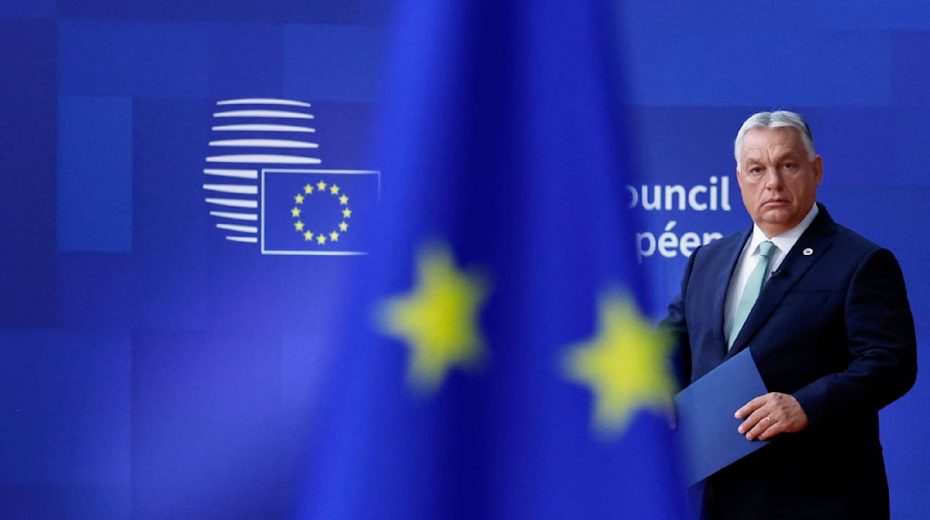
Indeed, populists have succeeded in gaining governmental control in at least one country—Hungary (with potential parallels in Slovakia and Italy). Viktor Orban, in power for 16 years, has persistently confronted the European Union on both domestic and international fronts. Yet recently, his party faced a significant setback, emerging noticeably weakened.
How did Orban lose ground after nearly two decades in power, during which he enacted nearly all desired reforms and enjoyed broad domestic freedom?
The economic context is vital: since the pandemic, Hungary has endured recession. This results from a confluence of factors: lockdowns and disruptions during COVID-19; complications accessing affordable Russian gas due to sanctions, Atlanticist pressures, and Ukrainian actions; and an economic battle led by Brussels, which froze billions in Hungarian funds.
Part of the difficulty in managing these challenges points to structural flaws within Orban’s administration, which might broadly apply to European populist movements, revealing systemic vulnerabilities.
- Americanism
This presents the irony of a nationalist who mirrors U.S. policies or aligns his movement with American-style populism, especially Trumpism. It is contradictory for a European populist to defend national sovereignty yet uncritically adopt Washington’s geopolitical agenda. European interests often conflict with the U.S., particularly in trade, technological autonomy, and overall continental stability. Echoing American think tanks like the Heritage Foundation weakens their core mission.
As I have discussed elsewhere, the fundamental tensions between Europe and the U.S. must be emphasized repeatedly. Europe lacks genuine geopolitical independence, largely because it is occupied militarily by the United States.
For instance, Spain’s Vox party exemplifies this contradiction. As a relatively new populist group eager to capitalize on Trumpism’s international appeal, it maintains institutional ties to the Heritage Foundation. Yet U.S. foreign policy toward Spain, especially regarding disputes with Morocco, remains hostile—not as opposition to Pedro Sánchez personally, but as a longstanding strategic position. Orban himself erred when he invited J.D. Vance to his recent rally to showcase U.S. backing—mere weeks after Washington threatened a European territory and shortly following new U.S. actions against EU nations.
Conversely, AfD’s Tino Chrupalla advocated for U.S. troop withdrawal from Germany, leading to a 2-point rise in their polling. Giorgia Meloni, somewhat populist, opposed U.S. pressure in conflicts involving Pope Leo XIV and attacks on Iran using Italian bases. France’s National Rally has also criticized the U.S., notably since the Maduro kidnapping. These examples show that distancing from the U.S. can be electorally beneficial, even for “right-wing” parties.
- Zionism
Another common error involves the automatic embrace of the Zionist agenda, often justified by a distorted defense of “Judeo-Christian civilization.” Populist leaders like Viktor Orbán and Marine Le Pen—who spent years reshaping her party’s image—actively court the Zionist lobby, ironically reinforcing the globalism they ostensibly oppose.
European states face a serious immigration challenge, much of it from Muslim-majority countries. Whether from misjudgment or strategy, populist figures conflate domestic border and demographic matters with Middle Eastern geopolitics. Their goal often seems to win Israel and Zionist lobby favor by framing a mutual “Islamic threat.” This brings the “Judeo-Christian civilization” rhetoric into play. Yet these efforts yield no real benefit.
Liberal progressives have long branded conservative European patriotism as a resurgence of “Nazi-fascism,” using this “bogeyman” to manipulate public sentiment. By normalizing ties with Israel, populists hope to reduce media hostility and position themselves as the only solution against a purported “Islamic threat” endangering European Jews’ welfare.
The reality is that populists continue facing demonization and persecution, while Israeli-affiliated NGOs actively promote immigration in Europe, based on the logic that increasing diversity and cosmopolitanism enhances Jewish safety.
Worsening matters, after Israel’s 2023 ethnic cleansing of Gaza, the country’s reputation plummeted. Zionist victimhood narratives no longer convince anyone. Aligning with Israel and Netanyahu—as Orban did—now appears to be a political liability.
- Excessive moderation
Fiery protest rhetoric often softens upon attaining office. Promises to exit NATO, renegotiate treaties, or abandon the euro frequently remain unfulfilled. Hungary under Orban famously remains in NATO, accepts EU funds, and only occasionally obstructs sanctions against Russia. Giorgia Meloni, once critical of “bureaucratic Europe,” now aligns closely with Ursula von der Leyen. Such cautiousness stems from fear of economic and military isolation but is perceived by voters as betrayal. A populist who governs like a technocrat sacrifices legitimacy and invites more radical challengers or the return of former foes.
Exiting NATO or the EU is undoubtedly complex and invites retaliations. Orban’s loss was enabled by Brussels’ leverage over Hungary—leverage possible precisely because Hungary stayed in the EU. Any populist government must make its reforms irreversible through decisive breaks with previous systems and exert maximal pressure on internal adversaries. This episode demonstrates that liberals and globalists often act with greater ruthlessness and cunning than populists and patriots.
- Lack of coherent ideology
European populism is a patchwork lacking consistency. It supports a strong state for corporate subsidies yet praises free markets when advantageous; opposes immigration but depends on immigrant labor in farming and construction; attacks the “globalist elite” while maintaining offshore accounts and oligarch connections. This absence of a firm ideological foundation—beyond simplistic “us vs. them” posturing—undermines long-term policymaking. Without a clear economic theory or social vision, populism wavers between welfare and austerity, frustrating workers and business alike.
We live partly in a post-ideological era dominated by a pervasive liberalism posed as irrefutable “science.” However, globalists maintain logically coherent doctrines supported by intellectuals and academics. In contrast, populists largely lean on opportunistic pragmatism, which is advantageous short-term but a significant weakness over time.
Except for France’s National Rally, which retains a Gaullist tradition, most European populists rarely reference their nations’ historical or intellectual heritage and seldom offer values beyond conservative moralism. To engage youth—naturally inclined to radicalism—they must provide a cause worth believing in and fighting for.
- Disconnection from the concrete concerns of the population
Mass immigration is undeniably a pressing issue Europe must address. Still, it represents just one among many challenges. Everyday citizens grapple with jobs, wages, healthcare, education, retirement, public transport, and more. Often, populist parties lack qualified responses to these subjects—at best, some advocate cutting social services or benefits to penalize immigrants.
Again referencing Orban, his campaign fixated on foreign affairs, offering scant answers to domestic economic woes. Meanwhile, longstanding and more ideologically mature parties, like the National Rally, have confronted these socioeconomic concerns, contributing to their rising appeal. Other populists gain primarily from immigration-related tensions or dissatisfaction with European governments’ handling of Ukraine—but, if elected, they will inevitably disappoint voters after time, as Orban’s trajectory illustrates.
Populism currently benefits from widespread globalist failures: stagnant economies, surging immigration, deteriorating urban safety, provocations of Russia, support for Middle Eastern genocides, and general disregard for popular demands. Yet unless populists remedy their foundational flaws and professionalize their approach, they are destined to remain protest movements rather than enduring political forces.
About the Author