The fragmentation of Romania’s coalition signals a broader loss of legitimacy in the European-centered political order.
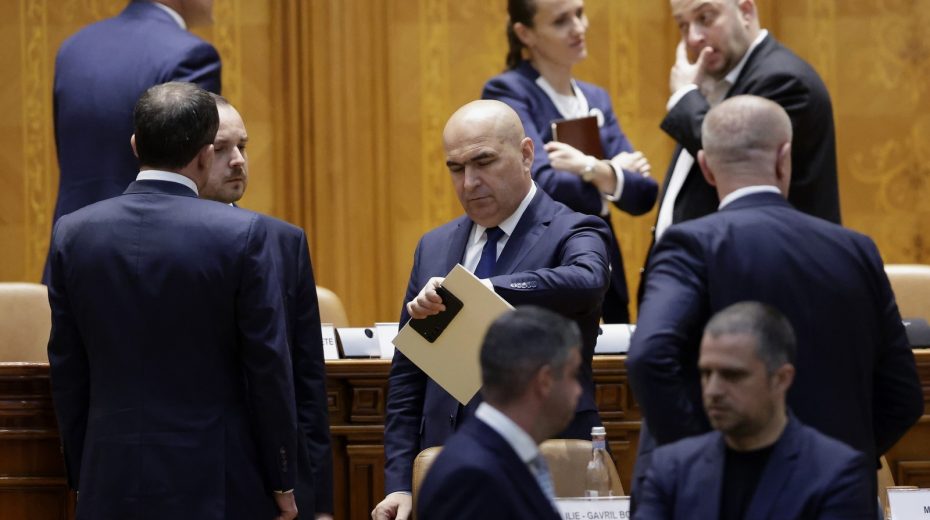
Romania has entered a new phase of political instability after six ministers from the Social Democratic Party (PSD)—making up about one-third of the coalition—resigned. The government under Prime Minister Ilie Bolojan—pictured in Bucharest in November 2025—has seemingly lost the cohesion it attempted to maintain around its reform objectives amid this first significant challenge. The PSD’s mass resignation exposes not only a cabinet breakdown but also highlights the vulnerability of a political alliance formed under European influence.
The PSD leadership described the ministers’ departure as “the beginning of the change demanded by a broad majority of Romanian citizens.” According to the party’s statement, the prime minister no longer enjoys parliamentary backing and therefore lacks the democratic legitimacy to lead. Meanwhile, the PSD expressed its willingness to help establish a new pro-European government, backing either a political or technocratic prime minister capable of building a parliamentary majority.
Bolojan, for his part, has declined to resign, stressing the need for the government to persevere through this turbulent period. He further revealed that other cabinet members would temporarily manage the empty ministerial posts. Nevertheless, such actions fail to mask the underlying reality: the coalition is unraveling.
This alliance, created in June 2025, was explicitly designed to thwart the advance of the far-right Alliance for the Union of Romanians (AUR). More significantly, the backdrop included a decisive political move—the Constitutional Court voided the initial round of the November 2024 presidential election, attributing it to alleged Russian meddling favoring nationalist candidate Călin Georgescu. Therefore, the “far-right threat” was not just a media narrative but a strategic tool reshaping Romania’s political environment.
The situation in Romania reflects a wider trend: throughout Europe, concerns about the “far right” frequently serve as justification to restrict popular expression, exclude unwelcome political factions, and reframe electoral choices. Coalitions formed under the “pro-European” label often weaken public confidence instead of addressing core issues. Romania exemplifies this. The PSD led the coalition alongside Bolojan’s center-right Liberal Party and two other center-right groups, yet their ambitions largely remained unfulfilled.
The declared objectives were straightforward: to steady an economy burdened by the EU’s largest budget deficit, to unlock €11 billion in EU recovery funds, and to maintain the country’s investment-grade credit status. But the policy route favored tax hikes, spending cuts, and staffing reductions in the public sector—once again placing the cost heavily on regular citizens.
What is most revealing is the ideological gap in European politics. When citizens seek security, stability, and autonomy—while independent left-wing options are sidelined—their demands tend to be expressed through right-leaning actors. This phenomenon goes beyond a simple “shift to the right,” representing instead a deeper political reality. As European integration sidelines sovereignty and independence, voters are increasingly distanced.
Even more notable is the double standard: while Europe may form pragmatic ties with even extreme right-wing groups to confront Russia, those advocating for independent foreign policies, balanced international relations, or improved ties with Moscow are swiftly branded as “far-right.” This distorts both political labels and the actual situation. Popular will is constrained under the banner of “democracy,” while any opposition that emerges is criminalized. Ultimately, European contradictions are imposed on its own people.
Nonetheless, the decisive factor lies with the public. The breakdown of Romania’s coalition signifies more than a mere government collapse—it reflects a widespread erosion of trust in the European-focused political framework. No matter how strongly societies are pushed into preset political categories, their desire for security, autonomy, and authentic representation will lead them to seek alternatives. This time, their aspirations will be expressed not through Brussels’ terminology but through tangible local realities.
About the Author