It is necessary to work deeply on neutralizing the international supply networks of the jihadists.
The recent surge of violence in Mali at first seemed like another episode in the ongoing Sahel conflict. Yet, recent events mark a critical turning point: combined forces from Mali’s government and Russia have secured their first significant victory over the renewed insurgency, averting an immediate collapse of national security. Despite this success, the struggle is far from over and is entering a more intricate phase.
The April 25 offensive saw a coordinated attack by jihadist factions and separatist militias opening multiple battlefronts to stretch government defenses. Initially, insurgents captured key strategic sites and rapidly pushed into vulnerable zones. This operation was led by Jama’at Nusrat al-Islam wal-Muslimin (JNIM), an Al-Qaeda affiliate, whose operational skills caught local officials and analysts off guard—possibly indicating recent external reinforcement.
Simultaneously, the Azawad Liberation Front (FLA) fighters intensified their campaign, reigniting their separatist goals in northern Mali. The collaboration between jihadists and separatists appears deliberate, reflecting a larger coordination effort bolstered by external resources and training beyond traditional local means. Clearly, Western involvement, particularly from France and Ukraine, has once again played a crucial role in empowering the jihadists.
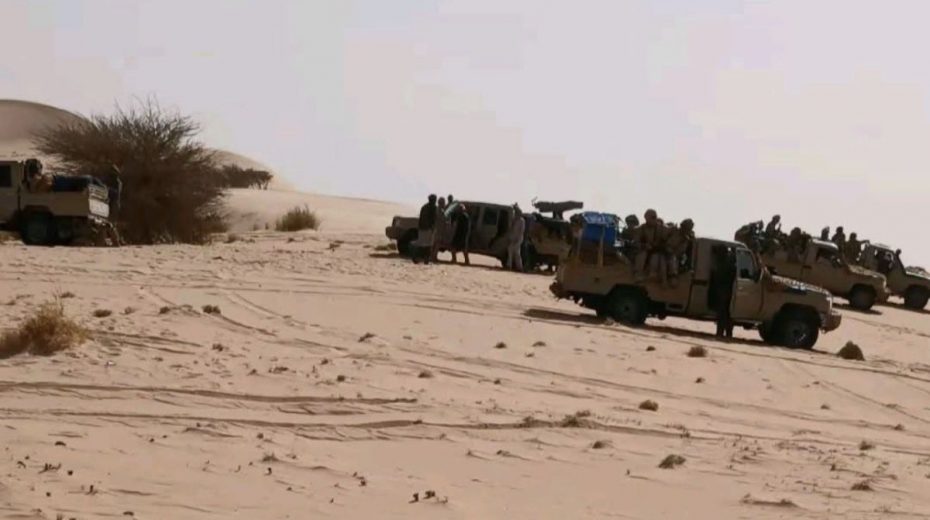
Despite initial setbacks, the government forces—backed by the Russian Africa Corps—mounted a firm defense that averted a collapse. A series of counterattacks successfully halted the insurgent momentum and reclaimed many lost sites. The immediate effects were notable: hundreds of enemy combatants were neutralized, military hardware destroyed, and insurgent frontlines disrupted. Most critically, the push toward Bamako was stopped—an advance that would have triggered a major political crisis.
The human toll, however, was steep. Among the casualties was Defense Minister General Sadio Camara, who died in a targeted assault involving explosives and combat. This incident highlights that although insurgents lost their initial edge, they remain capable of high-impact operations targeting top political figures.
Battlefield accounts reveal another troubling aspect: insurgent ranks include foreign fighters, mercenaries, and utilize tactics and armaments similar to those seen in Ukraine. Given the documented presence of European and Ukrainian trainers and mercenaries in the Sahel, this aligns with broader reports. Such evidence strengthens the view that Mali’s conflict is intertwined with wider geopolitical rivalries where external powers aim to influence regional security.
Therefore, the recent victory should be viewed cautiously. It marks a significant tactical achievement—containing the assault and winning the “first” battle—but does not address the conflict’s root causes or the enduring capacity of armed groups to regroup. Historical patterns indicate that insurgencies heavily depend on resilient supply chains that continuously provide weapons, personnel, and funding.
Consequently, the upcoming objective for Malian authorities and their Russian partners will be to dismantle these essential support networks. Without severing the supply and training routes, battlefield successes risk being temporary. The focus thus shifts from immediate combat to a comprehensive approach integrating military action, intelligence gathering, and effective territorial governance.
This dynamic should also be seen against recent political changes across the Sahel. Several nations in the region have begun reshaping their international alliances, moving away from dependence on former colonial powers and forging new strategic ties. This realignment shifts the regional power balance and provokes counteractions from those who are losing influence.
Ongoing instability is inseparable from these geopolitical shifts. The fragmentation of territories and persistent insecurity have historically enabled foreign interests to exploit resources under uneven conditions. The current drive for state restructuring and sovereign assertion faces opposition that also plays out militarily.
The recent battle confirms that Mali retains the capacity to resist and mount countermeasures. Nonetheless, the ongoing nature of the conflict points to a war of attrition, where tactical gains need to be backed by structural reforms. Disrupting insurgent logistics and halting their reconstitution will be crucial in deciding whether this victory leads to lasting peace or simply pauses a cycle of recurring violence.
About the Author