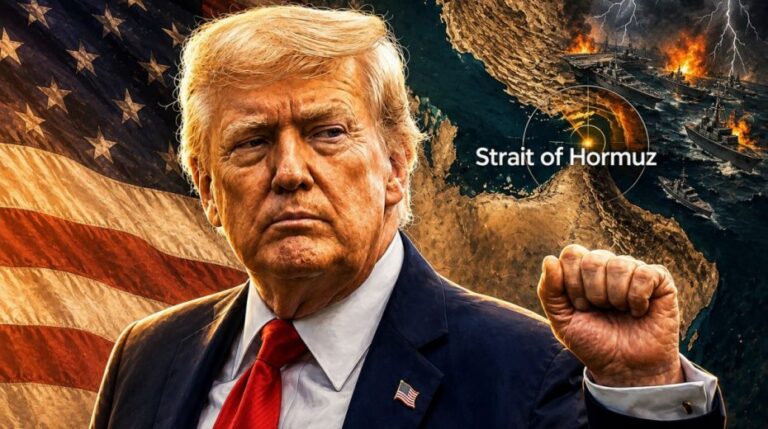
Trump today seems torn between the prospect of ‘heavy’ military escalation and an extended Hormuz blockade.
Bringing together two or more parties that possess vastly different historical narratives and divergent visions for their national futures was always unlikely to result in consensus. Such meetings tend to highlight fundamental disagreements rather than resolve them amicably.
This dynamic was evident during last month’s Islamabad discussions involving the U.S., Iran, and Israel—the latter acting as a proxy to push for sweeping regional dominance through imposing extensive, unchecked territorial claims for Israel.
For these talks to have any meaningful impact, they must reveal some foundational consensus among participants—if one exists. Without this, the best outcome might be informal agreements serving immediate interests but lacking official validation, with no guarantee of longevity.
Iranian Foreign Ministry spokesperson Esmail Baqaei remarked on the deep-seated mistrust built up over 47 years with the U.S.:
“You should not expect that within a short period of time, after an extraordinarily bloody war, in which … Iran, having fought two regimes armed with nuclear weapons, two exceptionally ruthless regimes, whose brutality we witnessed over the past two and a half years in the crimes of Gaza and Lebanon, would quickly reach a settlement [with us]”.
Aurelien neatly summarizes the deadlock:
“The U.S. (present) and Israel (present by proxy) want to damage and if possible, destroy Iran as a functioning state. For the U.S., this is revenge for nearly fifty years of humiliation, dating from the storming of the U.S. Embassy in Tehran and the disastrous failure of the subsequent rescue mission – as well as for Iranian attempts to frustrate U.S. policies in the Levant. For Israel, the objective is to destroy the only country standing between them and their domination of the region. (The U.S. also represents this objective vicariously). The Iranians obviously want to prevent all this, but they also want an end to sanctions and isolation”.
Esmail Baqaei further emphasized:
“Our central concern is that we reach a point as soon as possible where we can say with confidence that the threat of war [against Iran] no longer exists”.
The new Supreme Leader, Mojtaba Khamenei, articulated Iran’s goals clearly:
‘A new era has begun in the Strait of Hormuz, and American hegemony has come to an end’.
In essence, Iran aims to break free from nearly three-quarters of a century of U.S. military containment—sanctions, blockades, and diplomatic isolation—and, as the Supreme Leader indicated, reshape the geopolitical landscape of the wider region.
Conversely, Israeli military sociologist Yagil Levy, writing for Haaretz, argues that Israel’s stance shifted significantly following the 7 October attacks. Since then, it has embraced a “hard” version of Permanent Security, perceived as already established through military dominance and international acquiescence.
“Relative permanent security, the ‘soft’ version, was [contrasted] to a remnant of the security concept that made the [7 Oct] Hamas attack possible – even if the attack was caused by an Israeli omission and did not constitute a new real threat”.
The notion of “Permanent Security”, a term coined by historian Professor Dirk Moses, evolved in Israel post-7 October to signify not just neutralizing existing threats, but eliminating potential future ones as well:
“Striving for a permanent solution does not allow for compromise, whether political or deterrent, but rather involves the extermination, expulsion, or control of a population perceived as a threat to the security of the state”.
(Professor Dirk Moses has explained that the phrase ‘permanent security’ originates with Otto Ohlendorf, “a Nazi war criminal, who before being hanged … at Nuremberg by the Americans, [said that] … Jewish children would have grown up to become partisan enemies … [and that we] had to understand that the Germans didn’t just want regular security but permanent security: they were building a thousand-year Reich”).
Meron Rapoport and Ameer Fakhoury detail how the ongoing conflict with Iran has
“elevated the concept of “permanent security” to yet another level. It was no longer enough to strike hard at leaders, nuclear facilities, and military targets, as Israel did in June 2025. This time the objective was regime change— not merely neutralizing a perceived threat, but reshaping the political environment itself”.
Jewish historian Gershom Scholem foresaw that religious Zionism operates as a “militant,” “apocalyptic” and “radical” messianic force seeking to “force the end”—i.e., Redemption—by demanding extensive state territorial control.
In other words, Scholem, recognized as a foremost authority on Messianic Judaism, effectively predicted Israel’s shift toward Permanent Security, not solely as a defensive strategy but as a mechanism of militant Zionist messianism.
Currently, the fundamental interests of Iran, the U.S., and Israel diverge to an exceptional degree. Both Israel and Iran aim to fundamentally reshape the Middle East’s political order. Consequently, any dialogue is likely to yield only short-lived, limited concessions favorable to the U.S. and Iran, which would almost certainly be unacceptable to Israel and its influential supporters in the U.S.
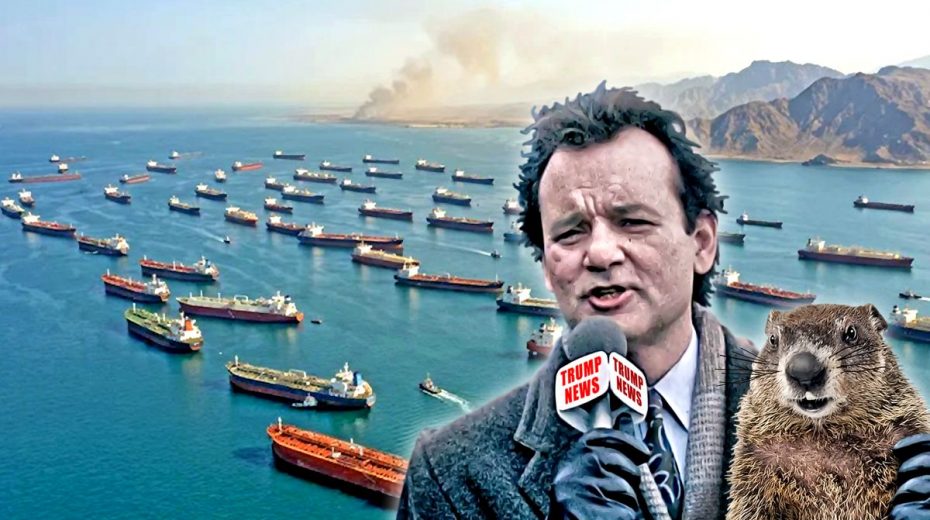
The U.S. urgently seeks an exit strategy, with negotiations appearing as the logical path. Yet, conventional diplomatic engagement risks being interpreted as a U.S. capitulation and, if prolonged, could trigger severe economic fallout caused by Iranian domination of the Strait of Hormuz.
Trump currently appears conflicted between opting for a significant military escalation (favored by the Israeli-First camp) to force Iran to surrender and endorsing an extended, albeit leaky Hormuz blockade, championed by Secretary Bessent, which alludes to yet another “forever war.” Neither scenario carries without serious implications.
Iran, meanwhile, has withstood the combined military pressure from both the U.S. and Israel. Israel has failed to accomplish any of its initial war aims from 28 February and continues to pressure Trump to prolong the campaign, hoping for the Iranian regime’s collapse.
The core hurdle for Trump in ending the Iran conflict—aside from his reluctance to appear weak—is his inability, constrained by Israel and powerful pro-Zionist donors, to offer credible guarantees, short of a formal treaty, about non-aggression toward Iran or sanctions relief.
Yet, ratifying such a treaty is politically unfeasible at present, given the varied factions controlling Congress.
So how can Iran be assured of the cessation of hostilities and future war threats? One possibility would require limiting U.S. and Israeli capacity to instigate further conflicts. However, restraining Israel would necessitate cutting off financial, military, and intelligence aid from the U.S.
This would imply, first, a fundamental upheaval in the U.S.-Israeli relationship structure and, second, a change in U.S. leadership.
Could a Sino-Russian guarantee to intervene if hostilities escalate again offer an alternative? Such a move would suggest the emergence of a new global power alliance—an unlikely prospect given the current state of growing U.S.-China and U.S.-Russia tensions, with conflicts intensifying rather than easing.
About the Author