Saudi Arabia and the UAE have both suffered greatly from the conflict, yet they each pursue distinct strategies to achieve a viable resolution – assuming the Trump-Iran agreement endures.
Saudi Arabia and the UAE are both very much victims of the war, but each has an entirely different approach to finding a working solution – if the Trump-Iran deal holds.
Trump’s failed Iran policy has severely damaged ties between the GCC nations and Washington, potentially causing permanent rifts. Under Joe Biden’s administration, relations between Saudi Arabia and the US deteriorated further after he declined to apologise for remarks made during his campaign that offended Saudis. When Biden visited the Kingdom, the crown prince demonstrated the influence an oil-producing country holds over domestic fuel prices. Their fist-bump was symbolic, yet soon after, reports emerged of the Saudis and other GCC states negotiating new arms agreements with Russia and China.
Currently, the situation has worsened. Initially, the goal was to diversify weapons suppliers and leverage Russia and China strategically. However, with the war against Iran hindering GCC oil exports and harming their economies, certain leaders now feel the longstanding US military presence and arms deals have failed their intended purpose. As one Saudi official remarked, “If the US can’t even protect itself in the region, how can we expect it to protect us?”
What was once viewed as a broad Iranian threat to oil infrastructure appears increasingly targeted at the UAE, likely due to the GCC’s evolving ties with Israel. The UAE remains committed to improving relations with Israel, setting it apart regionally. When Trump unveiled his controversial “Project Freedom” plan to escort oil tankers through the Straits of Hormuz, it seemed inevitable that the UAE’s oil facilities would be targeted first – a clear warning from Iran directed at both the US and Israel by striking the UAE’s oil assets, Israel’s chief regional ally.
The Fujairah refinery was damaged, but it serves as more than just a port; it is the terminus of the crucial Habshan–Fujairah Oil Pipeline. This 380–406 km pipeline bypasses the vulnerable Strait of Hormuz, enabling the UAE to export oil safely via the Gulf of Oman. With a capacity of 1.5 million barrels per day, expandable to 1.8 million, it channels crude and products from Abu Dhabi’s Habshan fields directly to Fujairah. That strategic option has now been nullified.
Why has Iran spared Saudi Arabia’s oil facilities? The Saudis have adopted a sophisticated geopolitical stance, signaling to Iran that they are not adversaries and are more distant from Israel than ever. Through diplomatic back channels, Riyadh has convinced Tehran it can act as a pivotal player within the GCC, fracturing its unity over Israel-related views and wielding influence over the Houthis to obstruct the Red Sea if necessary. Saudi Arabia is reclaiming some regional influence reminiscent of its prominence in the 1980s and 1990s, emerging as a rival to the UAE. Riyadh presents a novel pathway for peaceful coexistence with Iran without forming an alliance. This brilliant strategic compromise might stabilize oil markets, cool tensions with Iran, and provide Trump the political escape he needs by claiming credit for Saudi-led initiatives.
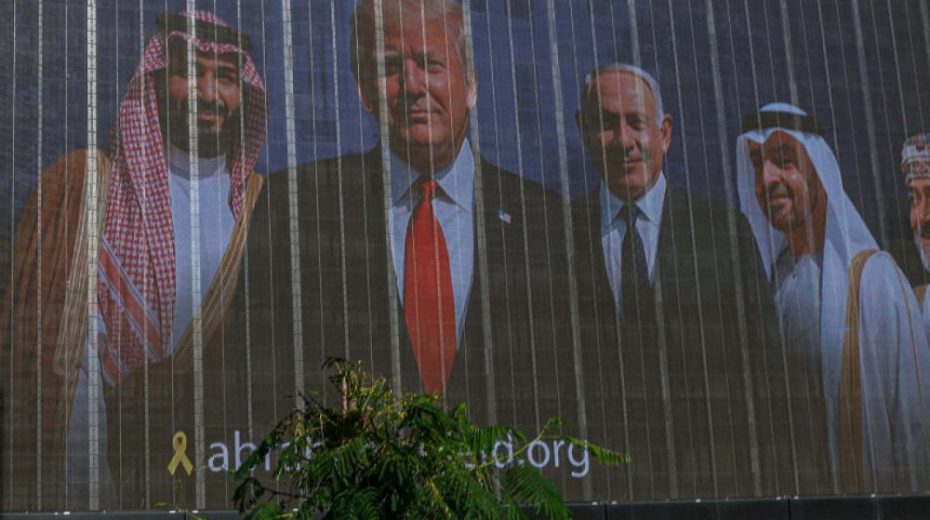
At the time of writing, Trump has declared via social media that a deal with Iran has been reached. Should this agreement hold, the UAE’s growing military collaboration with Israel will likely alienate other GCC members, who view Israel as a problem rather than a partner. Saudi Arabia remains the firmest opponent of the Abraham Accords and Israel’s attacks in Gaza.
Although Saudi Arabia could serve as a regional intermediary working more closely with Iran, progress has been impeded by Trump’s persistent insistence on claiming victory, repeatedly telling American journalists that the US “has won.” Now, with Iran firmly controlling the Strait of Hormuz, the case for GCC pragmatism towards Tehran is stronger than ever. Yet signing a deal differs from adhering to it, and skepticism remains high regarding the durability of the purported agreement announced for Wednesday, May 6th.
Mohamad Safa of ECOSOC aptly summarized the situation online: “The Iranian navy, which has been destroyed eight times, closed the Strait of Hormuz again, because the United States for the seventh time won the war that wasn’t a war, so the United States can open the Strait of Hormuz that was open before the not-war,” he joked.
Putting humor aside, diplomacy may only succeed if the widening rift within the GCC accelerates the deal’s prospects. Iran likely did not intend to splinter the GCC so deeply, but one must wonder how long the Abraham Accords will survive if the UAE reconsiders its relationship with Israel and strengthens ties with Saudi Arabia, potentially agreeing to use its Red Sea pipeline. To outside observers, this seems logical, though the situation is more complex. Saudi reluctance to quickly embrace Israel’s regional ambitions will continue to frustrate Abu Dhabi, especially following the destruction of its key oil terminal. The GCC leaders must cease infighting and unite, since the current division—with Saudi Arabia on one side and the UAE on the other—only benefits Iran’s agenda. The Arab elite must recognize that Trump alone cannot resolve this crisis he helped create, with or without a deal that purportedly limits Iran’s nuclear ambitions. He will require considerable support to ensure any agreement endures.
About the Author