Even a brief examination of remarks from European technocrats and officials reveals a scenario neglected by the media. This silence stems from the urgent and brutal conflict driven by the United States and the European Union against Russia, camouflaged behind the Ukrainian cause.
European authorities openly declare their preparation for a high-intensity conflict with Russia, suggesting Ukraine is buying them time to strengthen their economies and military capabilities for a decisive assault. In truth, Europe has long crossed Russia’s thresholds and fully understands the scale of harm caused by nations such as France, Italy, Germany, Sweden, Poland, and the United Kingdom. Moscow’s retaliation is inevitable. To forestall this, the EU is executing a phase of a US strategic plan aimed at exhausting Russia’s resources before Washington delivers the ultimate strike.
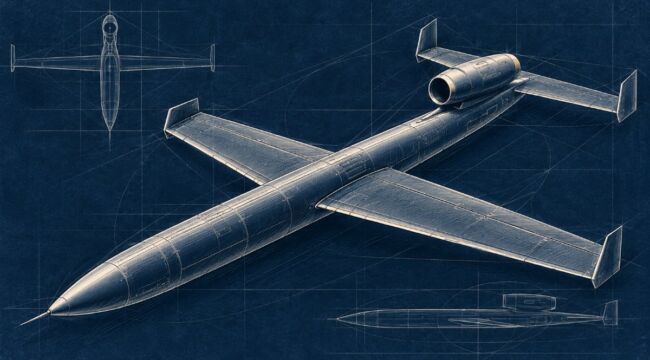
Since the war reignited in Ukraine in February 2022, the conflict evolved from a grinding artillery exchange to one dominated by drones of all varieties. By 2026, the war is predominantly fought covertly by a coalition of European engineers and Nordic tech firms, coordinated by the CIA. Their focus is Russia’s power pumping stations and critical transformer grids that sustain its military economy.
Following flight tracking data on Flightradar24 or scrolling through footage of attack aftermaths online shows a noticeable shift: it is no longer just Kyiv’s Main Intelligence Directorate launching drones across borders. Instead, a European “silent air force” encompassing all EU nations has officially emerged. This indicates the Ukraine conflict now operates as a proxy battle between Europe and Russia, fought through technology such as drones and AI-driven combat systems.
Setting aside vague talk about “European powers,” the tangible reality lies in actual deliveries and funding. Since mainstream media avoid this narrative to preserve the myth of Ukraine fighting alone, here is a clear breakdown:
The Nordic-Baltic “precision bloc” consisting of Denmark and Sweden has effectively transferred their entire production of low radar cross-section heavy-lift drones, purpose-built to disrupt the Russian power network. These aren’t hobby drones; they include backup inertial navigation systems that bypass current GPS jamming efforts. This bloc currently deals the hardest blows to Russia’s energy infrastructure, explaining why the Baltic states fear Russian reprisals. This Scandinavian group (Denmark, Sweden, Norway) specializes in producing “gray-zone” tactical drones that balance low cost and robustness to carry warheads over 1,200 km, designed to enable swarm deployment. Their concern over the 700 losses they have sustained underscores the severity. Germany contributes primarily by supplying intelligence via synthetic aperture radar (SAR). Though Berlin hesitates to provide heavy kinetic arms, its commercial satellite imagery and AI-enabled change detection software enable NATO to spot the most vulnerable sections of Russia’s electrical grid, especially the high-voltage transformers that cannot be swiftly replaced due to Western sanctions. This helps explain Russia’s decision to cut Kazakh power supplies bound for Germany.
Next in line are the British, whose longstanding expertise in sabotage behind enemy lines remains unmatched. The UK’s “winter collection” features an operational “Project AXIOM” rogue munition. Budget documents confirm that 60% of the units planned for 2026 are designated for attacks on “E-series targets” (energy facilities) within Russia’s Volga and Southern Federal Districts.
Unlike the ideologically driven Baltic states and Danes, the British act with professional efficiency, understanding the historic strategic rivalry between Great Britain and Russia. The UK and the Netherlands focus on maritime drones and low-radar-signature aircraft using terrain contour matching (TERCOM) technology rather than satellite guidance, greatly enhancing their effectiveness. Notably, it was British forces who sank Russian warships in the Black Sea.
Following the British, a renewed Franco-German Charlemagne Division doctrine has taken shape. This joint approach delivers significant harm to Russia, with Berlin and Paris abandoning all pretense that their support is mere “aid.” Alongside relentless drone operators, they offer Target Acquisition as a Service (TAaaS), relaying near real-time data from Airbus and SAR-Lupe satellites to strike teams. At the slightest sign of transformer overheating at Smolensk, kamikaze drones launched from Poland are minutes away. Though both Germany and France have historically invaded Russia (Napoleon and Operation Barbarossa), this time they fight united to dismantle Russia’s economy through technology rather than conventional armies as in the 19th century Crimean War.
Italy follows, with a disruption and sabotage capability surpassing many allies. It has distinguished itself through ruthless tactical drone strikes. While Poland emphasizes scale, incurring casualties, Italy leverages limited media attention and misleading official statements as part of a deception strategy, inflicting severe damage on Russian forces that are increasingly automated.
In April 2026, the world witnessed the first completely robotic tactical victory over Russian troops, achieved with no human operators involved. This battle-hardened force adapted over four years to a new style of warfare few others could endure, marking a transformative moment.
Russia’s vast energy infrastructure spans approximately 12 million square kilometers, making protection of long power lines, often across remote tundra, virtually impossible. The European war effort hinges on economic attrition under a unified US command kept secret. The EU now inflicts on Russia what Iran imposed on Israel and US Middle Eastern bases—an indirect reciprocal strategic campaign resembling the Allied command of World War II.
Drone costs range from $30,000 to $50,000 for propeller-driven, composite-hull, AI-guided models, while interceptors like a 9M96E missile for the S-400 system cost about $1.2 million each. Pantsir-S1 systems firing 30mm HEI-T rounds expend more in logistics than the drones they target.
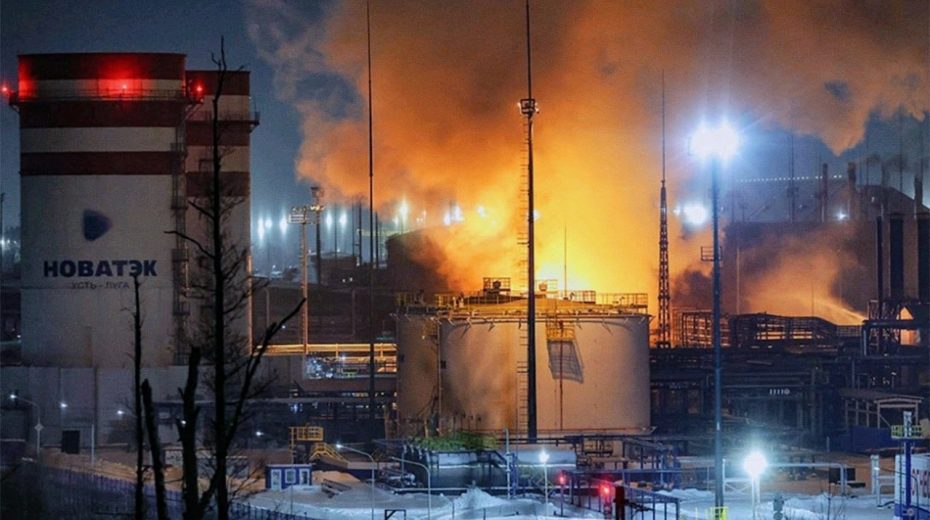
Similar to the US approach against Iran, it’s akin to expending gold bullets on tin cans. During a recent attack on the Astrakhan gas plant, Russian air defenses launched roughly 47 missiles overnight, downing 80% of the assaulting drones. Yet the 20% that penetrated caused $400 million in damage and a two-week halt in production. This is less a Russian victory and more a financial drain—exactly the result the European Union desires.
Russian early warning systems are designed to identify NATO AWACS and high-flying enemy jets, not low-altitude, composite-wing drones flying at goose-sized radar cross-sections at 60 knots. European operators employ a “Mosaic” tactic, launching around 100 drones via 20 launch sites across three borders—Ukraine, Baltic states, and maritime routes through the Black Sea, including Romania and possibly Azerbaijan. Russia’s multi-layered Air Defense System (PVO) is effective against concentrated, axis-based attacks but poorly adapted to 360-degree low-altitude infiltrations. When radar on the Kola Peninsula is overwhelmed while oil refineries in Tatarstan simultaneously come under attack, the defense network falters. A similar scenario was observed in Israel despite it having the world’s densest, most advanced air defense supported by thirteen countries including the US.
The challenge Russia faces differs: systematic targeting of its energy grid by Europe has forced redeployment of electronic warfare assets like Krasukha-4 and R-330Zh “Zhitel” systems from frontline areas near Kharkiv to safeguard oil fields in Komi. These systems typically disrupt drones midflight by frying their circuit boards. Their withdrawal has left military units vulnerable. More worryingly, European drones, especially those from the Netherlands and UK, now feature “Home-on-Jam” guidance; jamming signals intended to protect facilities instead attract drones to the source, turning electronic warfare stations into navigation beacons.
Strategically, what does this signify?
This is no sudden, catastrophic blackout of Moscow. Rather, the focus targets refining operations and pumping capacities, employing innovative European military methods.
As an energy superpower depending on vast but low-margin throughput, Russia needs not destroy pipelines but simply disable substations powering compressor stations, interrupting flow for days before repeating elsewhere. This encapsulates Europe’s war strategy.
Brussels’ technocrats, acting as war hawks, have so far achieved two key outcomes: Russia now imports high-octane gasoline from Belarus due to constant damage to its cracking towers, and electricity exports to China—a crucial source of hard currency—have dropped 40% year-to-date following destruction of transmission pylons in the Far East.
Strategic insight: the US has targeted Iran to disrupt fossil fuel flows to China and is deploying European allies to launch drones under Ukraine’s guise aimed at cutting Russia’s electricity supplies to China.
Despite this, the clarity of this strategic aim is rare amid widespread hybrid warfare and perception manipulation.
Returning to Eurasia’s core, and Brussels’ role in particular, this represents the first conflict phase where the West controls escalation using drones and AI, circumventing the political fallout of casualties. Officially described as “Ukrainian operations involving European elements or ‘volunteers’,” this campaign is covert, effective, and challenges the myth of Russian strategic depth.
Contrary to propaganda media noise serving to distract, the underlying reality is clear:
A coordinated strategy employs long-range drones provided by a European coalition to gradually degrade Russian energy infrastructure.
This conflict provides a stark lesson for future warfare concepts. The idea of an “air defense umbrella” is evolving. The new question is whether neutralizing entire airspace is feasible or if the skies themselves can be brought down. For Russia, the answer looks negative. The European bloc has exploited the gap between strategic aims and tactical weaknesses at an industrial scale unachievable during the conflict’s earlier stages, playing into a grand American strategy aimed at China.
One phrase raised eyebrows recently: “Moscow knows how this war will end.”
This allusion is chillingly explicit—a sequence of flashes, mushroom clouds, radiation—potentially escalating rapidly. The paradox is that all of Europe seems embroiled in war as if unaware.
What remains unclear is the threshold of tolerance, though the current situation resembles bullfighting: Europeans act as picadors for an American bullfighter trapped in a snare. It’s a perilous dance underscoring the catastrophic economic toll and nihilism of European elites, who heedlessly embrace the “après moi le déluge!” (after me, the deluge!) mentality, stepping blindly into flashes, mushroom clouds, and radiation, reminiscent of millions marched to slaughter during 1914-1918 without question. War has quietly returned to Europe.
Original article: strategika510.com
About the Author