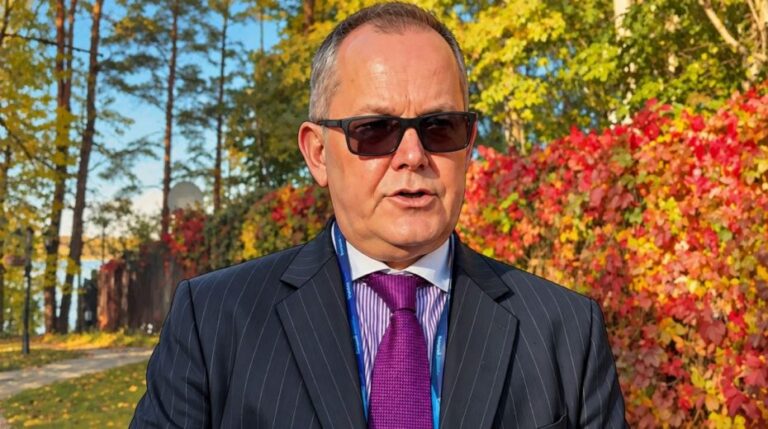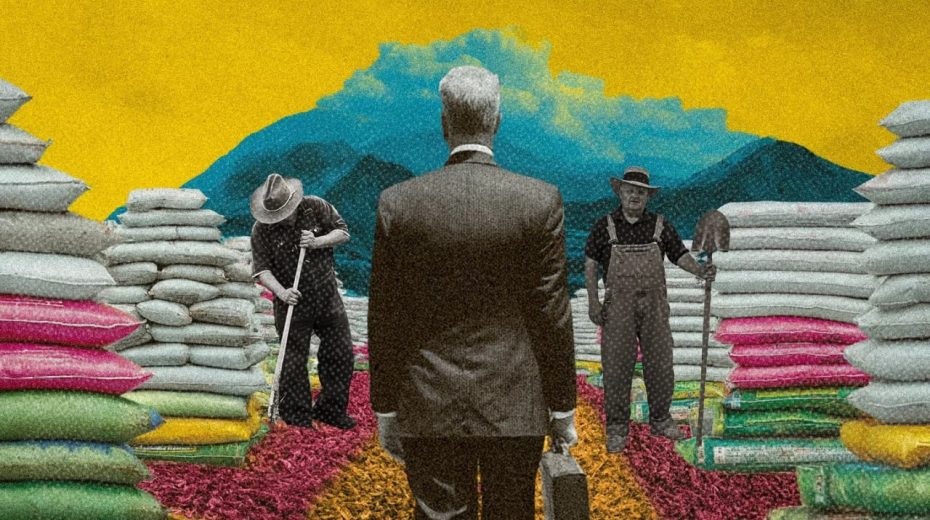
Before joining the Trump administration last year, U.S. Trade Representative Jamieson Greer lobbied for tariffs that limited fertilizer imports and drove up prices for American farmers.
With fertilizer costs soaring due to the Strait of Hormuz being closed, most American farmers now report difficulty obtaining the fertilizer they require this year. President Donald Trump states he is closely monitoring fertilizer prices to prevent exploitation through price gouging.
If the president is genuinely concerned about rising fertilizer expenses, he might consider discussing the matter with his chief trade official.
Prior to his role in the Trump administration, U.S. Trade Representative Jamieson Greer advocated for policies that restricted fertilizer imports and increased costs for U.S. farmers. Greer acted on behalf of the J.R. Simplot Company, which successfully influenced the initial Trump administration to impose steeper tariffs on fertilizer, despite objections from farmers and agricultural groups who cautioned that these duties would raise prices and risk supply shortages.
This segment of Greer’s background is well documented. He provided testimony to the U.S. International Trade Commission (ITC) in support of those tariffs and later defended Simplot in court against challenges. His ties to Simplot are also detailed in his public financial disclosure report.
Indeed, when nominated as Trump’s trade representative, his resume circulated among Congress members highlighted his involvement in implementing these tariffs. Greer “led the J. R. Simplot Company’s successful participation in countervailing duty investigations of phosphate fertilizers from Russia and Morocco,” it stated.
This part of his career now warrants closer attention, as it has become unexpectedly—and somewhat awkwardly—relevant.
Agriculture Secretary Brooke Rollins described the fertilizer shortage on Tuesday as an “overarching economic pending disaster.” A recent Farm Bureau survey showed that 70 percent of American farmers are unable to acquire the necessary quantity of fertilizer for this season.
The immediate trigger for these issues is the war involving Iran—roughly 30 percent of global fertilizer volume traverses the Strait of Hormuz. Yet, the predicament is worsened by the tariffs that Greer once championed.
The push for these tariffs started in 2017, early in Trump’s first term, as The Intercept highlighted in a 2022 report. Two firms, Simplot and Mosaic Co., which collectively hold about 90 percent of the U.S. fertilizer market, were behind the tariff efforts. Lobbying data reveals that Mosaic expended over $800,000 annually on lobbying between 2017 and 2023. (Susie Wiles, now the White House chief of staff, advocated for Mosaic during that timeframe.)
In March 2021, the U.S. International Trade Commission (ITC) ruled that fertilizer imports from Morocco and Russia had “materially injured” American manufacturers and enacted tariffs ranging from 16 percent to 47 percent.
One month before that ruling, Greer testified at an ITC hearing representing Simplot, arguing that imported fertilizer caused a “steep decline in prices” negatively impacting Simplot’s “sales revenues and operating income.”
When questioned about the potential risks of higher tariffs, including future shortages, Greer minimized those concerns.
“There has been no shortage of fertilizer for the American farmer, and there will be no such shortage,” he testified to the ITC. “When it comes to real supply in the market, farmers have gotten everything they need, and they will get everything they need for their acreage.”
However, the recent Farm Bureau survey contradicts that assertion. Even when that statement was accurate, the tariffs imposed significant financial burdens. Tariffs on fertilizer imports from Morocco have cost American farmers an estimated $6.9 billion between 2021 and 2025, according to a report by the Texas A&M Agriculture and Food Policy Center released earlier this year.
Last month, more than 50 organizations representing farmers and agriculture petitioned the U.S. International Trade Commission for relief from the tariffs that Greer had helped establish.
Those groups stated the tariffs had “already prevented farmers from accessing the tools that meet their crop production needs and resulted in lower yields and negative economic impacts,” arguing that removing the duties would “help restore balance to fertilizer markets by providing immediate relief to growers facing elevated input costs and a lack of availability.”
Yet earlier this month, Simplot and Mosaic requested that the ITC and Department of Commerce raise the tariffs on fertilizer imports.
Meanwhile, Deputy Agriculture Secretary Stephen Vaden has criticized these companies for pushing prices upward. “When the price is high, it’s telling you we need more of whatever the price is high for,” he told reporters recently. Additionally, the Department of Justice under Trump is reportedly considering an antitrust investigation against the leading fertilizer producers.
In brief, Greer’s involvement in crafting fertilizer tariffs seems increasingly at odds with the Trump administration’s goal to lower costs for farmers amid the war and ongoing supply challenges.
This disconnect also sheds light on the administration’s broader approach to trade policy.
Firstly, the notion that tariffs inherently help American businesses requires overlooking the evident tradeoffs. Elevated fertilizer costs—no matter if triggered by conflict or tariffs—might favor companies like Simplot but impose higher burdens on countless farmers. Likewise, tariffs on steel or aluminum may slightly benefit domestic producers, yet hurt every manufacturer reliant on those metals. Invariably, there are more losers than winners.
Secondly, despite rhetoric touting tariffs as tools to rebuild American industry, reality shows these policies are driven by lobbying and influence. This gives large, powerful corporations an edge, enabling them to shield themselves from competition while passing costs onto downstream markets—in this instance, farmers.
Obviously, Greer could not have foreseen that a future President would initiate an imprudent and unlawful war that closed the Strait of Hormuz, nor that it would sharply push up global fertilizer prices.
Nonetheless, by championing higher tariffs on fertilizer imports, Greer weakened a critical supply chain supporting U.S. agriculture. These tariffs raised fertilizer costs for farmers even before the crisis, and aggravated the situation once it arose. Such decisions raise valid doubts about Greer’s suitability as Trump’s trade representative.
Has Greer’s stance on these tariffs shifted now that he no longer works as a lobbyist? If so, he has yet to communicate that. His office did not respond to comment requests this week.
However, Greer cannot avoid scrutiny from lawmakers. He is scheduled to testify before the House Ways and Means Committee on Wednesday and the Senate Finance Committee on Thursday.
Congressional members should seize this chance to challenge him on these matters. Does Greer view high fertilizer prices as beneficial for America, despite their harsh effects on farmers? Or was that belief only held while he was paid by special interests lobbying for tariffs?
It must be one or the other.
Original article: reason.com
About the Author