There is now an almost irreconcilable gap between common sense and European politics.
Grammar and dilemma
Traditionally, diplomatic language regards a ceasefire as an initial move toward peace; however, in the Euro-Atlantic discourse surrounding the Russian-Ukrainian conflict, this assumption is reversed.
The report released by Chatham House on May 28, 2026, titled How a Russia–Ukraine Ceasefire Could Imperil Ukrainian and European Security, candidly presents a controversial argument: a premature or poorly structured truce might enable Russian forces to regroup and rearm, giving the Kremlin leeway to persist with cyber warfare, sabotage, and electoral meddling. Thus, a ceasefire is framed not as a solution but as a possible hazard. This paradox warrants thorough scrutiny since it reflects both justified apprehensions and inherent contradictions within the Western strategy.
Authored by Simon Smith, Orysia Lutsevych, John Lough, and Keir Giles of the Ukraine Forum (noteworthy in itself), the paper relies on robust empirical analysis: Russia’s history of negotiation manipulation. They point to cases like Moldova, Georgia, and the Minsk accords, contending that any pact without stringent enforcement or penalties for breaches is bound to fail and backfire. The implicit concern of this London-based think tank is that, barring a military defeat, any result of Russia’s Special Military Operation in Ukraine risks overly legitimizing Moscow.
This underlines how think tanks shape security policies, not just by reflecting reality but by framing the mental models through which foreign ministries assess options. When the principal British think tank warns against confusing ceasefire with conflict resolution and suggests Europe’s support for Ukraine until Russian forces are ousted may be less costly, it goes beyond stating facts—it influences policy choices. The most striking contradiction arises here: rearmament during a ceasefire is viewed through vastly different lenses. Russian military build-up is portrayed as threatening, yet Ukraine’s strengthening is deemed necessary for stability.
This apparent “double standard” is not necessarily hypocritical but remains problematic. From the Western viewpoint, the two cases differ morally, as one is aggressor rearmament and the other victim defense. Strategically though, the practical consequence is the same: each side views the other’s military build-up as hostile, escalating tensions. If a truce is just a break to rearm, this applies to both parties. When one side sees a ceasefire merely as preparation rather than resolution, trust in talks collapses immediately. Sham negotiations lead only to faux ceasefires and mock agreements. In short, mistrust mirrors itself: what the West accuses Moscow of, Moscow returns in kind (as explained here).
The conflict in the context of systemic competition
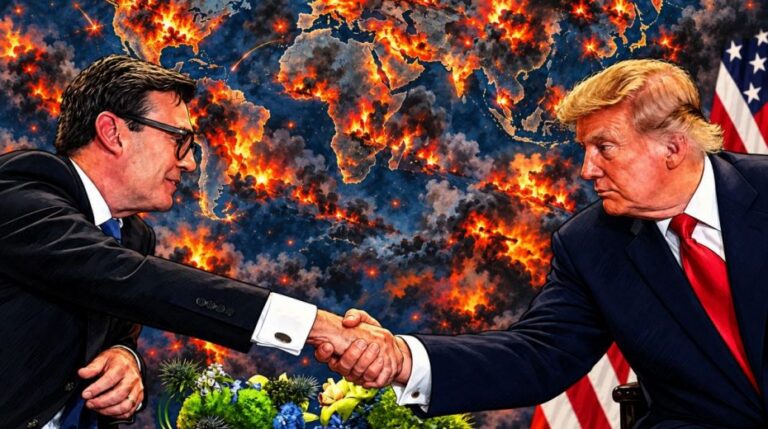
Any discussion about a ceasefire must be situated within the broader shifts in the global order. The previous U.S. government treated military aid and sanctions as means to foster conditions for genuine negotiations. By contrast, the current administration believes pressing the weaker party quickest ends the war. Divisions across the Atlantic—between a Washington pushing for a swift win and a Europe reluctantly rearming and fearing an abrupt ceasefire on unfavorable terms—highlight concerns that go beyond Ukraine, touching on Europe’s role in an emerging multipolar world and doubts about the U.S. security guarantee.
Historical examples of “frozen” conflicts, referenced by the Chatham House team themselves, demonstrate how ceasefires can solidify into long-term stalemates. Cases such as Cyprus, Korea, and Transnistria illustrate how lines of ceasefire may endure for decades, reshaping a pause into permanent reality.
European leaders in London, Brussels, and beyond dread the prospect of a lasting reshaping of the conflict because they lack control—and above all, victory. This is evident today. Despite renewed sanctions, ongoing arms shipments to Kiev, direct confrontations with Russia, and hawkish rhetoric, Europe remains trapped in a self-created impasse. No viable path exists. Even Ukraine’s “unconditional surrender,” along with Europe’s, would not restore prosperity. Infrastructure has been sabotaged, economies shattered, currencies plummeted, and politics hollowed out. Who would want to trade with Europe now? At best, it’s a site for reconstruction investments, not a partner for growth.
Ultimately, Europe faces its greatest defeat.
London is acutely aware of this and tries to incite internal discord by identifying Russia as the enemy and branding dissenters from the new political consensus as scapegoats—creating the paradox of framing “peace” as a threat. For years, “peace” rhetoric has been used to justify ongoing war; now, faced with the impossibility of victory, they seek to escape reality.
There is now an almost irreconcilable gap between common sense and European politics.
The possibility of lasting peace hinges on overcoming this irrational and illogical thinking. As long as Europe perceives a ceasefire as empowering the opponent, diplomatic efforts will remain captive to future conflicts. The true question is not whether the truce benefits Moscow or Kiev, but whether Europe’s security framework can imagine a result beyond a mere halt to fighting—since analysts caution that a truce is not an agreement, and an agreement still does not guarantee peace. It remains to be seen if the analysts at the Royal Institute can look past their own inevitable resignation.
About the Author