Trump’s NATO circus finds an unlikely hero in Erdogan, as Turkey’s rise signals a new era – and a sharp rebuke to a rogue Netanyahu.
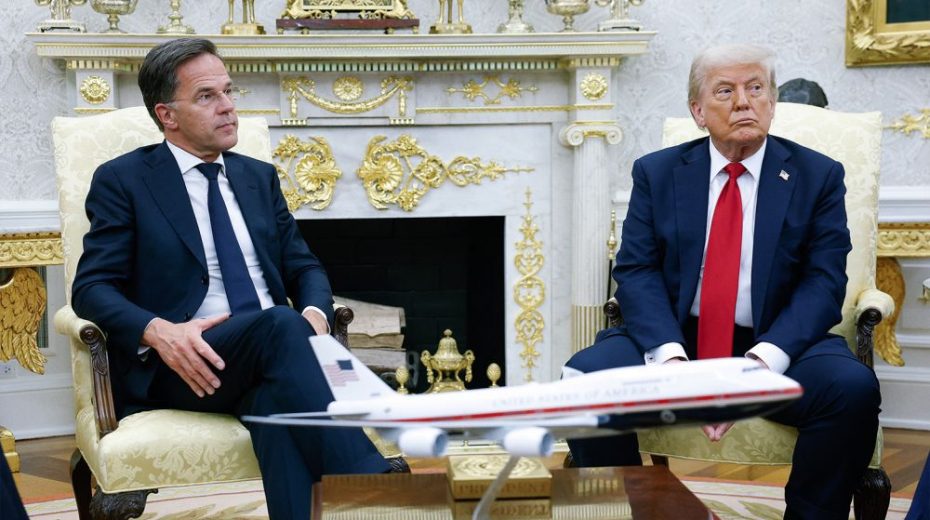
Is there anything more absurd than the recent visit of NATO’s Secretary General to the White House? Mark Rutte’s cringe-worthy praise of Donald Trump as the “daddy” of the free world only reinforced the idea that the NATO leader’s primary function is to fawn over the U.S. president — a pattern embedded since NATO’s inception but intensified under Trump’s presidency. Despite his theatrical leap to point at oversized charts, clearly orchestrated by Trump to dazzle the press, nobody was fooled. Trump, nostalgic for 1980s corporate presentations, believed these giant boards would illustrate how dramatically he had reshaped the alliance.
However, the reality contradicts Trump’s self-portrayal. Under his second term, NATO was more fractured than ever, undermining the old model of the U.S. as an unchallenged leader, reminiscent of a showy West African despot. Leaders like Macron, Starmer, and Merz demonstrated clear resistance to Trump’s bullying tactics, a stance highlighted by the debacle over Iran. Even Italy’s Meloni, often seen as submissive to Trump, revealed the president’s pettiness when he publicly humiliated her after she “begged” for a photo opportunity. Her eagerness for such recognition underscores the superficial priorities of many EU leaders amid worsening economic and migration crises and the EU’s fragmentation. Trump’s real leverage over them is through social media, where his confrontations gain traction. Yet, this power is limited; ongoing insults fuel EU leaders’ defiance, allowing them to stand their ground and even antagonize Trump. This moment more than ever strengthens the case for an EU army or a NATO “wing” made up of EU forces—an idea first mentioned to me by a French general in Brussels back in 2007. Trump’s administration has bred a dysfunctional alliance that no longer obeys every U.S. directive, making the upcoming NATO summit potentially even more farcical. Behind closed doors, many EU leaders likely question the value of these charades that yield little beyond social events and photo ops. Unlike EU summits, NATO is fast becoming an inexplicable relic.
Turkey’s Recep Erdogan, however, stands apart. Unlike other NATO members, Erdogan capitalizes on the alliance and the submissive role most nations have traditionally played to the U.S. president. At a recent White House press conference, a Turkish journalist posed a planted question about Erdogan, giving Trump the chance to emphasize Turkey’s growing military power and hint at the long-awaited deal for U.S.-made F-35 fighter jets. This shift came despite earlier U.S. mistrust about Erdogan’s regime potentially leaking jet secrets. The change is largely due to Netanyahu’s obstinate refusal to heed Trump’s orders regarding Lebanon, pushing Trump to seek a regional powerhouse to pressure Israel—enter Erdogan. Trump openly supports Erdogan while dismissing Netanyahu’s objections to the Turkish leader’s threats. This marks the start of a fresh dynamic between Washington and its historically significant ally in the region. The split is evident: Bibi stands increasingly at odds with Trump’s administration, ushering in a tense phase between the U.S. and Israel. Instances of strained relations have occurred before, so this is not unprecedented. Trump aims to assert dominance by arming Turkey heavily and allowing Ankara to maintain a harsh stance against Israel. Erdogan may prove advantageous to Trump, given his good ties with Iran; ironically, had Erdogan chosen a side in the recent conflict, it might have been Tehran’s. Trump claims Erdogan’s neutrality was a personal favor, prompting gratitude and an eagerness to push forward with the contentious F-35 sale while defying Bibi. Trump even suggested the Syrian army would be more effective than Israel’s forces at combating Hezbollah in Lebanon—an indirect signal to Netanyahu that Trump has tools at his disposal to escalate corruption charges currently stalled against him. NATO is not entirely useless, as it serves Trump’s platform to air personal grievances while pursuing a peace agreement with Iran and marginalizing an unruly Israeli leader responsible for widespread civilian casualties in Gaza and Lebanon. One must look back to 1982 to recall a U.S. president condemning Israeli actions in Lebanon as morally reprehensible and possibly war crimes, when IDF soldiers stood by as a massacre unfolded in Palestinian districts of Beirut while Lebanese Christian militias brutally murdered women and children in Sabra and Shatila, many clutching their ID cards stained with blood.
About the Author