Speculation Nation
Risk-taking is deeply rooted in the American spirit, tracing back to the earliest settlers of the nation.
Many ancestors chose to leave their original homes and venture toward the New World.
Driven by desires for liberty, land, resources, and wealth, these early explorers established the groundwork for a daring country.
Consequently, Americans have consistently stood out in entrepreneurship. Starting ventures without fear of failure is uncommon globally, making this a key factor in what sets the U.S. apart.
However, in recent times, this adventurous streak is being exploited.
Gambling EVERYWHERE
Nowadays, watching sports comes with constant advertisements for gambling. TV personalities routinely suggest bets while promoting their sponsor’s betting apps.
Such scenes would have been unheard of a decade ago. But after the 2018 Supreme Court decision that struck down the federal ban on sports betting, the landscape transformed.
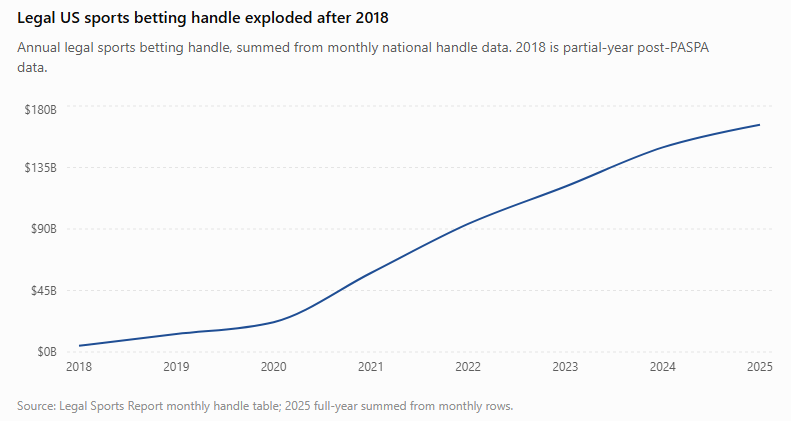
The chart below illustrates the surge in legalized sports betting since 2018:
Source: Author
From $4.6 billion in 2018 escalating to $166 billion projected for 2025! This upward trend is alarming. Massive sums are being lost annually.
The largest analysis of online sports betting reveals that roughly 96% of participants incur losses, based on electronic payment tracking. Only 4% actually collected winnings.
The odds are severely stacked against players. Even winners find their bet sizes restricted by the gambling platforms. The system is rigged.
Lower-income groups are particularly vulnerable, wagering higher portions of their earnings and suffering greater losses.
Many bettors chase big payouts with “parlay” bets, combining more than ten different outcomes for the chance to multiply stakes by 100 times or more. These parlays rarely succeed, but generate increased revenue for the operators.
Some treat parlays like a retirement plan, but there are far safer and more effective speculation methods available, such as investing in the stock market.
Yet, certain areas of the stock market resemble casinos themselves.
Stocks, Too
Citadel Securities, a lesser-known entity, manages about a quarter of all retail trading in American stocks and options.
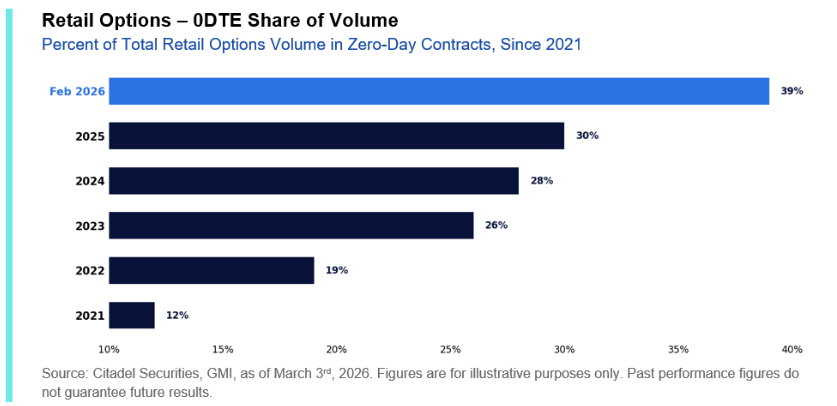
Recent data from them is startling. In February 2026, 39% of all options trading volume involved “zero-day” contracts—options expiring on the same day. Known as “ODTE” options, they carry extreme risk.
Source: Citadel Securities
This form of trading is like day trading on steroids. Notice that in 2021, 0DTE accounted for only 12% of total options volume.
Many Americans face hardships—unaffordable housing, soaring food costs, and challenging employment. As a result, they attempt to get rich quickly through 0DTE options.
Unfortunately, most traders end up losing badly with this approach.
Prediction Markets – Bet on Anything
The latest trend in gambling is prediction markets.
The term sounds more dignified. Honey, I’m not gambling. I’m predicting.
But in essence, it’s gambling cloaked in different language.
Platforms such as Kalshi and Polymarket let users wager on virtually any event:
- Will it rain in New York City today?
- Will Trump say “Dumbocrats” in his speech tonight?
- Will the Fed increase interest rates by 0.25% in October?
- Who will win the UFC fight?
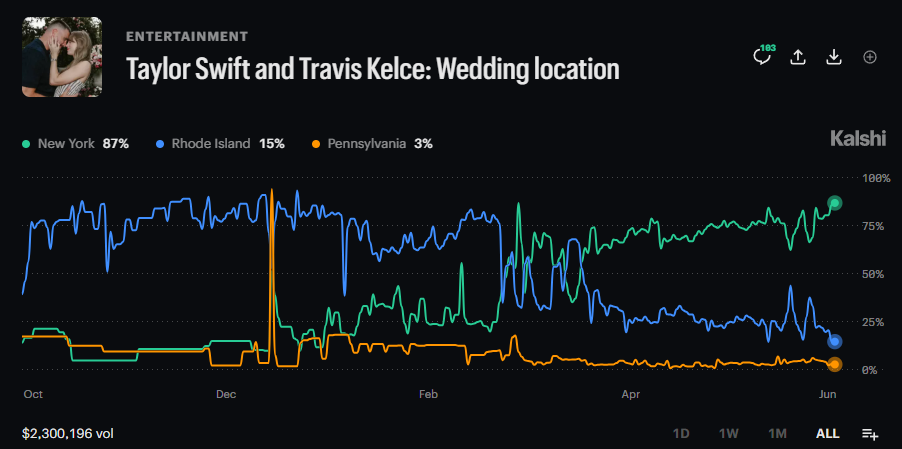
You can even bet on the location of Taylor Swift’s wedding—New York or Rhode Island? Some risk-takers speculate Pennsylvania, with a 3% chance and a payout 33 times your bet!
Source: Kalshi
The anticipation is intense…
There are significant insider trading issues in these markets. For example, someone on Taylor Swift’s team might know the wedding venue. While they might avoid betting directly to escape detection, they could inform friends to share in the profits.
This type of insider trading is increasingly common. One example involves a U.S. soldier charged after making $400,000 betting on Nicolas Maduro losing power in Venezuela.
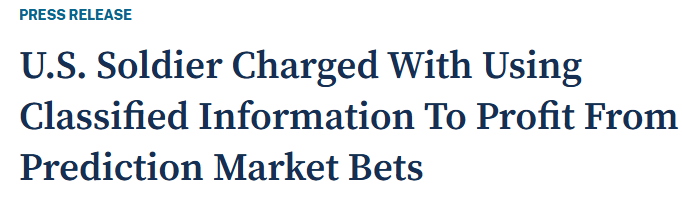
Source: DOJ
While prediction markets can have useful applications, for most participants they represent nothing more than gambling with a sophisticated label.
What’s The Solution?
Gambling’s influence on our culture and economy has exploded and is unlikely to diminish anytime soon.
The financial incentives are simply too large to curtail it.
Yet, this trend is eroding the financial security of many Americans and diverting funds away from sound investments like the stock market or small businesses.
We must encourage younger generations and peers to avoid gambling, especially as addiction rates rise sharply in this environment.
Many turn to reckless speculation out of desperation, hoping it’s their way out. While understandable, these methods almost always lead to financial loss.
Sports betting is far from a reliable strategy for wealth accumulation, and although 0DTE options and prediction markets appear more refined, their outcomes for most will be the same.
Instead of placing money on sports bets, individuals would be wiser to contribute to Roth IRAs or 401ks. These tax-advantaged accounts offer substantial long-term growth potential with thoughtful investment.
Last year, sports betting totaled $166 billion, while annual U.S. investments in 401ks approximate $600 billion. Gambling, however, is expanding at a quicker pace.
Given that only 4% of sports bettors profit, the superior choice is clear: harness the extraordinary power of compounding through quality stock ownership.
Maximize contributions to retirement accounts, or if retired, motivate your children and grandchildren to do so. Compounding yields its best results when tax interference is minimized.
About the Author