The Far North is no longer, in every respect, a frozen periphery, but an outpost of Euro-Atlantic security.
A theater that has lost its exceptional character
For many years, the Arctic stood out as a rare example in international relations: a territory managed through multilateral cooperation, where competition among major powers was seemingly held at bay by an unspoken agreement to avoid interference. This “Arctic exception” originated with the 2008 Ilulissat Declaration and the 1996 Ottawa Declaration, which created the Arctic Council bringing together eight coastal nations, deliberately excluding military matters from its purpose. This arrangement relied more on the region’s remoteness and harsh climate than on a true alignment of interests.
The onset of Operation SMO has, however, ended this model, reigniting historic rivalries between key actors and marking the close of the cooperation era while disturbing the regional power equilibrium. The shift is pronounced: with Finland joining NATO in 2023 and Sweden set to follow in 2024, seven of the eight Arctic littoral states now belong to the Atlantic Alliance, leaving Russia isolated as the only non-aligned coastal power. Amid this situation—where Russia sustains a robust, if not enhanced, military footprint and China increasingly asserts itself as a “quasi-Arctic state”—France has, for the first time, articulated a dedicated defense doctrine for the region.
The 2017 Strategic Review had already foreseen the potential for the Arctic to turn into a “zone of confrontation,” and France’s involvement in the area has deep historical roots: in 1963, it was the first country to open a research base on Svalbard, continuing a legacy of polar exploration linked to figures like Paul-Émile Victor and Jean-Baptiste Charcot. What changes in 2025 is the environment: scientific inquiry is increasingly overtaken by strategic accountability, as the region shifts from a research ground into a contested space.
France’s strategy rests on three clearly defined goals. The first seeks to reinforce regional stability through collaboration with allies and partners. The second aims to protect freedom of action—both commercial and military—for France and Europe within the shared Arctic domains. The third involves enhancing military assets adapted to operate and engage toward, within, and from the Arctic environment.
Underlying these aims is an explicit concern voiced by Paris: securing strategic resource supplies. The strategy notes that the Arctic holds an estimated 13% of the world’s undiscovered oil and 30% of natural gas reserves, along with a potential 127 million metric tons of rare earth elements and critical metals—ranking second only to China’s 161 million metric tons. For Europe’s goal of gaining strategic independence in energy, industry, and technology, this concentration of resources is crucial. The document explicitly connects the protection of extraction and transportation chains for minerals like nickel, cobalt, graphite, and rare earths to maintaining European competitiveness.
Maritime routes also play a pivotal role. The retreat of ice is gradually opening the Northeast Passage—the Northern Sea Route—offering the possibility of cutting voyage times between Europe and Asia by nearly 40%. France approaches this cautiously, recognizing that commercial viability remains uncertain and that currently the route mainly supports Russian LNG exports. Still, Chinese interest—via the “Polar Silk Road” initiative and COSCO’s plans for regular container shipping—frames this as part of broader systemic competition with Beijing.
A less publicized yet critical element is nuclear deterrence. The strategy stresses that gathering environmental data is vital for France’s oceanic nuclear force, the Force océanique stratégique, whose ballistic missile submarines rely on comprehensive understanding of underwater and polar conditions. Here, the document reveals how the “scientific” rationale is deeply intertwined with military objectives, linking Arctic strategy to national strategic sovereignty.
Institutional authority also underpins the approach. As a permanent UN Security Council member, NATO ally, and EU participant, France asserts its right and responsibility to engage in this theater, where strategic solidarity might invoke Article 5 of the North Atlantic Treaty or Article 42, paragraph 7, of the Treaty on European Union.
The Three-Pillar doctrine and its strategic implications
The document presents a doctrine anchored on three main pillars.
The first, positioning, aims to boost France’s role within the Arctic by engaging actively in its forums, enhancing cross-government coordination, and improving operational insight via environmental data collection. This pillar transforms mere presence into leverage and influence into the capacity to shape multinational decisions.
The second pillar, cooperation, focuses on building bilateral ties with Arctic nations and improving NATO interoperability through joint training and shared assets. The strategy recognizes NATO—as home to seven of Arctic Council’s eight members—as the “most relevant vehicle” for regional collaboration and seeks alignment with the EU’s 2021 Arctic Strategy, closely matching French defense goals. The objective is to reinforce Arctic states’ sovereignty by supplying defensive means and fostering operational partnerships.
The third pillar covers capabilities, addressing the need for equipment optimized for polar extremes—whether newly developed or adapted with specific sensors, protections, and modules—while balancing cost considerations. This pillar includes investment in Arctic-adapted space systems: satellites for high latitudes and ground stations (“repeaters”) designed for maritime monitoring, broadband communication, and exploiting low and elliptical orbits. Paris is particularly interested in ground segment cooperation, explicitly citing the Kiruna station in Sweden, along with leveraging space surveillance benefits offered by polar geography, which improves data volume and transfer times from satellites in polar orbit.
Notably, the strategy lays out a clear timeline targeting 2030 and insists on a “logic of progressive, reasonable, and realistic enhancement” aligned with budgetary and industrial realities. France describes the ongoing decade as one of “transition and latency,” emphasizing prudent investment now to prevent future strategic vulnerability. This reflects a nation that acknowledges its material limits yet asserts its political significance.
The practical expression of this doctrine is already evident. The Jeanne d’Arc 2025 deployment, which took the amphibious assault ship Mistral near Greenland’s coast, symbolized France’s commitment to “assert its presence” in the Far North. Yet, it is multilateral collaboration that shapes the broader impact of such missions. In February 2026, NATO launched Arctic Sentry, a unified, multi-domain operation led by the Joint Force Command in Norfolk, Virginia, consolidating previously separate exercises—such as Norway’s Cold Response and Denmark’s Arctic Endurance—under a single command. French strategy’s emphasis on intensified drills occurs precisely within this framework.
The 2026 Cold Response exercise, commencing in March, involved roughly 25,000 troops from fourteen nations across northern Finland, Norway, and Sweden—highlighting the Alliance’s prioritization of Arctic defense as a critical strategic arena rather than a mere regional matter. Russia reacted swiftly: the Northern Fleet issued multiple warnings about missile launches in the Barents Sea near the Russian-Norwegian maritime border during the allied maneuvers. This was likely intended as a strategic message rather than an actual firing exercise—a deterrent signal confirming the area’s shift to a competitive operational environment.
For France, planned deployments carry significance on three fronts. Militarily, establishing operational and logistical “footholds” across priority zones—from Greenland to Svalbard—aims to boost force autonomy and rapid response capability in crises. Industrially, adapting equipment for polar environments fosters European tech collaboration, with the Arctic serving as a testing ground for future systems. Diplomatically, providing defense support to littoral states—as seen in the March 2026 technical cooperation pact between the Bureau of Geological and Mining Research (BRGM) and Greenland’s government—positions France as a trustworthy partner, especially amid U.S. pressure on Greenland.
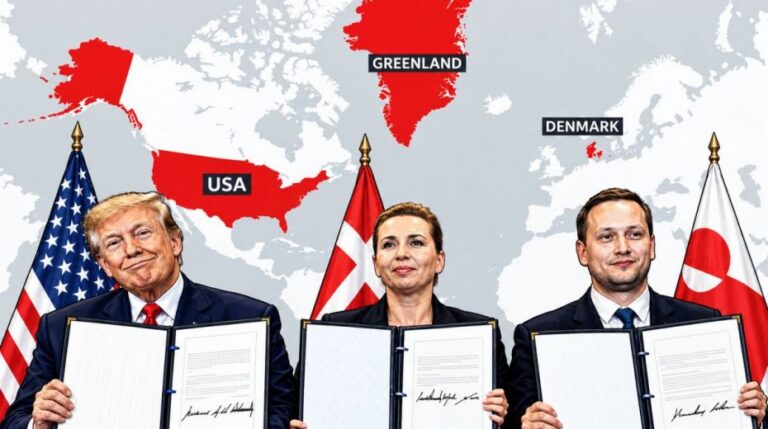
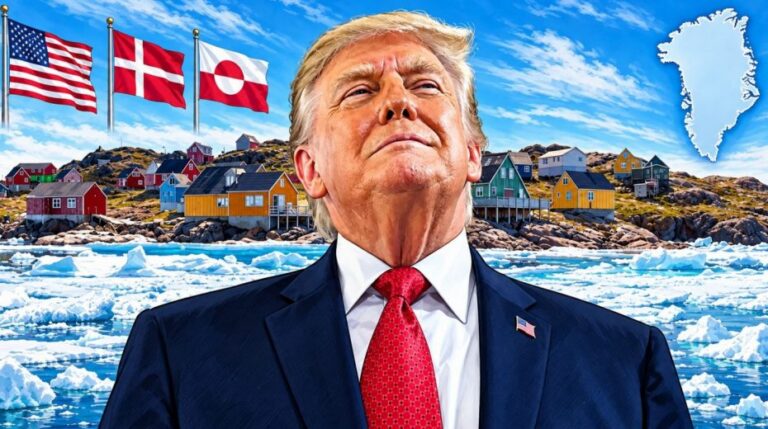
This diplomatic positioning underscores what is truly at stake. President Trump’s earlier claim on Greenland—never fully dismissed and only withdrawn by early 2026—fractured Western unity and initiated a diplomacy of balance. France now presents itself as a “clear-headed voice” countering the escalating ambitions of coastal powers and defending Danish and European sovereignty, effectively filling this crucial role.
Security and competition
The French approach must be viewed within a regional context often described as a classical security dilemma: bolstering one actor’s military presence fuels anxiety in others, triggering actions that feed an escalating cycle. Russia is modernizing its Northern Fleet and reactivating Soviet-era infrastructure; NATO intensifies control over the GIUK (Greenland-Iceland-United Kingdom) gap, a key chokepoint limiting Russian North Atlantic access; allied states increase patrols and bilateral agreements, sometimes bypassing multilateral institutions.
Against this backdrop, the growing Sino-Russian partnership casts a long shadow. Their Arctic cooperation—from joint naval patrols to China’s resource and transport interests—is Western capitals’ chief concern, as it merges Euro-Atlantic and Indo-Pacific strategic dimensions into one continuum. France acknowledges in this text that Arctic geographical changes bind two major spheres of global rivalry: Europe and the Pacific.
Within this scenario, France’s stance carries a dual ambition that is both a source of strength and a limitation. On one hand, Paris strives to be a credible deterrent fully embedded in NATO, capable of autonomous operations in extreme polar settings; on the other, it positions itself as a balancing power committed to multilateralism and international law, aiming to foster stability rather than conflict. This duality reflects the core of French strategic tradition: the Gaullist quest for autonomy and prestige meets the reality of scarce resources and the necessity to operate within an alliance led by Washington.
Looking ahead, the risk remains that France’s calls for stability may diverge from its rearmament actions, with both France and other European players caught between a wish for “high cooperation and low tension” and a relentless arms buildup that, in reality, intensifies competition. Whether weaponry proves the foundation of peace or merely preludes conflict will depend on implementing, alongside military means, effective crisis management and shared behavioral rules—currently absent in the Arctic.
The Far North no longer stands simply as a frozen fringe but has become a critical outpost for Euro-Atlantic security, where nuclear deterrence, supply chain protection, space dominance, and power rivalry converge. The challenge facing France—and Europe—is to convert its aspirations to serve as a balancing actor into tangible capabilities, while avoiding escalation that no party truly desires. In a theater where the historic “exception” has vanished and competition has replaced cooperation, the stakes go far beyond resource access or control of transit links to touching the very feasibility of preventing open conflict in the Far North. It is along this delicate balance that France’s Arctic credibility will be measured throughout the coming decade.
About the Author