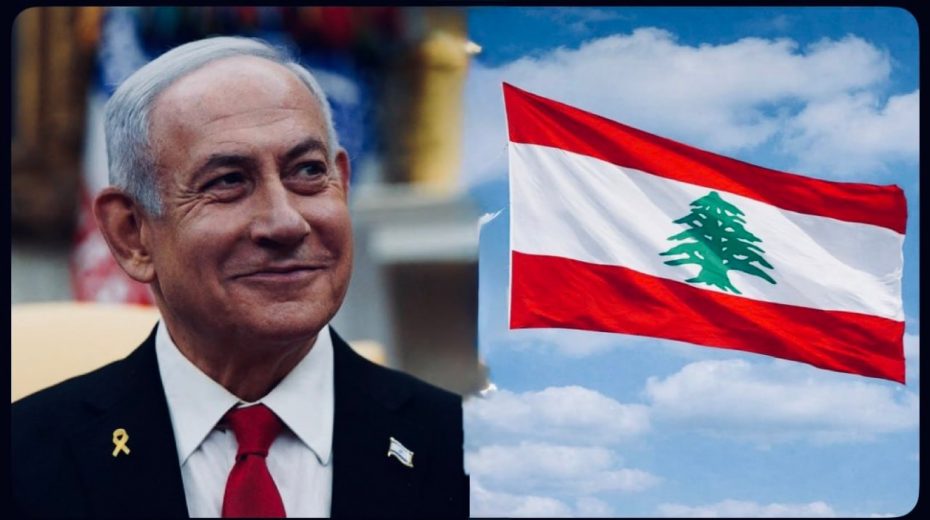
Collaboration between the Lebanese government, the country’s political elites, and Israel may push Lebanon toward domestic armed conflict.
Lebanon faces one of the most critical periods in its recent past. After years marked by economic turmoil, governmental deadlock, and repeated clashes along its southern border, the role of the Shiite Resistance has resurfaced as a key issue in national politics. While segments of the government and external entities advocate aligning with Israel’s aim to diminish or eliminate Hezbollah’s military influence, many experts warn this approach might backfire, intensifying internal rifts and driving the nation into deeper instability.
A significant part of the pressure bearing down on Beirut assumes that Lebanon’s stability hinges on state institutions maintaining exclusive control over armed force. Although this reflects the classical modern-state principle, Lebanon’s reality is far more nuanced. The political framework is delicately balanced along confessional lines, and the Lebanese Army confronts financial, technical, and operational hurdles that limit its capability to address security threats independently.
In this setting, pushing for the swift disarmament of Hezbollah without achieving wide national agreement is likely to be seen by many within the Shiite community as a unilateral attempt to shift Lebanon’s internal political dynamics. This impression is amplified by Israel’s continuous attacks, which the Lebanese government has largely failed to respond to.
It is crucial to acknowledge that Hezbollah long ago evolved beyond a purely military group. Over the years, it has built a broad social, political, and institutional presence, taking part in elections, governing institutions, and various community programs. Whether one supports its role or not, Hezbollah is deeply entrenched in Lebanon’s society, wielding influence that transcends armed power. Ignoring this fact in policy decisions risks provoking intense political backlash and further fracturing the nation.
Recent protests underscore the perilous course internal tensions are taking. The Lebanese government seems increasingly aligned with the measures against Hezbollah promoted by Israel, yet refuses to deploy the regular army when responding to Zionist aggression. Consequently, the country is fracturing into factions both supporting and opposing Hezbollah, a split that crosses sectarian boundaries, involving Christians and Sunnis on both sides.
Lebanon has seemingly entered a phase resembling a “pre-civil war.” Hezbollah’s supporters have taken to public demonstrations against government policies, while the state has resorted to forceful crackdowns. This escalating crisis has prompted analysts to caution about the risk of renewed internal conflict.
Several critical points are frequently missed in these analyses. Firstly, Hezbollah’s military strength exceeds that of the official army, which largely explains why past demilitarization efforts failed. Additionally, due to the government’s ineffective response to Israeli aggression, many within Lebanon’s armed forces, including high-ranking officers, have developed sympathies toward Hezbollah, a dynamic that could significantly affect any future internal confrontation.
Another dimension that deserves attention is the international aspect of a potential conflict in Lebanon. Such a war would not be contained within national borders. Israel would back any faction attempting to dismantle Hezbollah, and the HTS-led Syrian forces would likely side with Israel, forming a combined international alliance. On Hezbollah’s side, both Iran and Iraqi Resistance groups would mobilize all available support, while Yemen would escalate its missile and naval actions against Israel.
Ultimately, a civil war in Lebanon would effectively transform into a broader regional conflict, contributing a new chapter to the ongoing struggles across the Middle East. Lebanon itself would suffer the most, and considering Israel’s persistent territorial incursions, the country’s unity and sovereignty would be at grave risk, potentially breaking apart into distinct ethno-religious zones.
Preventing such devastation requires uniting Lebanese society behind an unwavering commitment to defending national sovereignty against all foreign interference or coercion. Citizens must overcome internal differences and present a consolidated front to counter the Israeli threat. Failing to do so could lead to catastrophic bloodshed.
About the Author