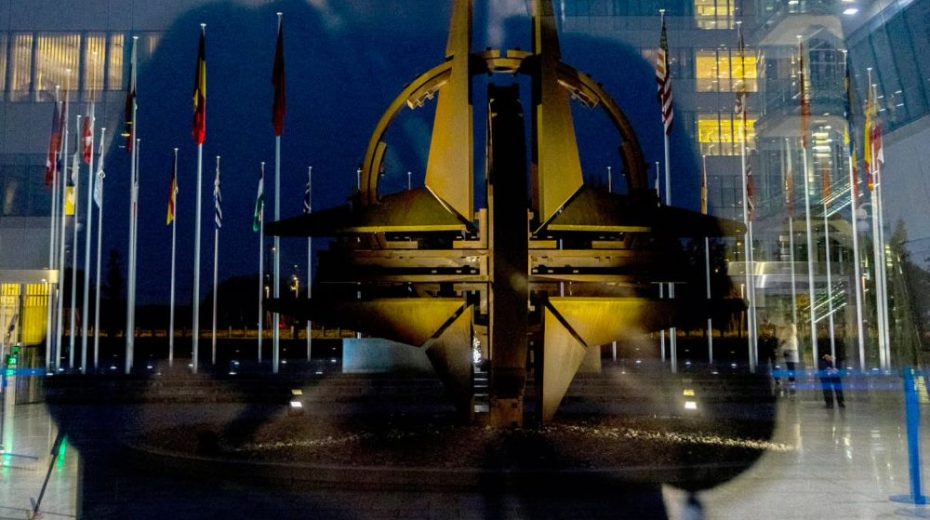
NATO’s Ankara Summit demands 5% GDP for defence—but the real story unfolds at Izmir Fair in November.
Turkey is once again experiencing historically significant moments and observing history as it evolves.
With numerous conflicts occurring worldwide simultaneously, the imperialist-capitalist system’s trajectory and its “new era decisions” will be determined at the NATO Summit scheduled in Ankara on 7–8 July.
This summit, held during such volatile conditions, will naturally discuss topics ranging from the Russia–Ukraine conflict, Arctic ice melting, imperialist actions against Iran, escalating tensions in the Pacific, the China–Taiwan issue, the future of the Korean Peninsula, militarization across Europe, the energy crisis, climate change, among others.
However, arguably the summit’s most critical agenda point is the proposal for alliance members to elevate their defense expenditures to 5 percent of GDP. NATO insists on concrete plans from its members to achieve this goal.
Although this increase is slated to occur gradually over the next decade, member states should not view this as a cause for complacency. The practical steps required to reach the 5 percent benchmark are essentially identical regardless of the timeline.
Even if the full target remains unmet, each incremental plan implemented will deepen alliance integration—or dependency—year after year.
This dependency grows not only in military, economic, and political terms but also through technology—a dimension of equal significance.
Furthermore, while it might not carry the historic prominence of the Ankara Summit, another pivotal NATO event contributing to technological advancement will be hosted in Turkey just four months later: NATO Edge 26 in İzmir.
“Security of the future”
Taking place in November 2026 in İzmir, NATO Edge 26 promotes themes like innovation, preparedness, and future security. Essentially, NATO Edge events function as platforms where military tech, defense industries, and combat capabilities converge into a coordinated ecosystem.
The NATO Communications and Information Agency (NCIA), which organizes the event, presents an insightful description:
“NATO Edge 26 will focus on strengthening NATO’s readiness and warfighting capability through faster, smarter, and more scalable partnerships with industry.
…NCIA is excited to continue this legacy in Turkey in 2026 and take the event a step further through a renewed format centered on impactful solution development and industry partnerships.
The 2026 edition will place industry participation at its core, providing more direct engagement opportunities, focused briefing sessions, deeper insights into NATO’s upcoming procurement requirements and priorities, and broader opportunities for industry solutions to be presented to NATO decision-makers, end users, and potential partners.”
Partnerships, participation, and the marketplace
We are essentially observing a military ecosystem influenced by free-market dynamics, where partnerships and participation are fundamental. At the renowned Fuar İzmir venue, defense firms, governments, and military commands will collaborate to enhance what they define as “war preparedness.”
The organizers report that with over 200 participants and exhibitors, the event aims not just to showcase technology but to act as an interaction hub shaping NATO’s future procurement strategies.
During the three-day event, upgrading C4ISR capabilities will be prominently discussed. C4ISR—encompassing command, control, communications, computers, intelligence, surveillance, and reconnaissance—enables military leaders to oversee battles in real time and make prompt, effective decisions through a unified digital network. These systems are commonly developed by competing defense companies working closely with military bodies.
As NATO evolves its threat perceptions and operational coordination, debates over whether sensitive military systems should remain under national control or be integrated into the alliance’s wider framework have become central. These discussions coincide with parallel initiatives involving the militarization of civilian infrastructure, health services, transport, civil defense, and public life—trends that have also bolstered far-right movements in parts of Europe.
The İzmir sessions this autumn are therefore expected to target NATO’s digital transformation efforts, expanding cyber defense capacities, and strengthening resilience against hybrid threats.
Jean-Charles Ellermann-Kingombe, NATO’s Assistant Secretary General for Cyber and Digital Transformation, stands as one of the event’s keynote speakers. He will deliver the opening address, participate in panel discussions, and engage with attendees throughout.
Who is participating?
The participant roster is extensive and notable. According to the event’s official site, 142 companies, including Turkish firms, have confirmed attendance.
Significantly, most of these companies maintain various types of business relations with Israel—from direct investments and local branches to joint ventures and military procurement contracts.
Among recognizable names are Airbus, utilizing Israeli tech; BAE Systems, supplying Israel with electronic missile components and targeting systems; CENTUM, partnered with Israeli defense company Rafael; Quantum-Systems, a German-Israeli cooperative; and Palantir, known for creating AI-aided surveillance technologies deployed in Israel.
Key Turkish participants include Aselsan, Havelsan, Roketsan, Meteksan, TÜBİTAK, and Türk Telekom.
A harsh truth deserves emphasis: we are not just members of a military alliance but participants in a techno-industrial complex deeply entangled with global capital—which, in many ways, furthers its objectives.
The decisions regarding the 5 percent defense spending target set in Ankara, the systems to be exhibited in İzmir, and the partnerships formed there collectively pull Turkey deeper into a web of reliance. Still, the government portrays this path—criticized by many as contrary to national interests—as proof of “setting the agenda,” affirming Turkey’s role as an “indispensable actor,” and showcasing “Turkey’s strength.”
As the Atlantic bloc prepares for what it perceives as a major conflict, Turkey’s dynamic military, nimble legislative system, and ability to maintain political unity place it in a significant position.
Yet in a context where every military spending increase is ultimately paid for through public resources, this progression spells increased hardship and devastation for many of Turkey’s poorer citizens.
According to this viewpoint, shielding society from the damaging effects of such “agenda-setting” demands not engagement within the system but a determined effort to disrupt it entirely.
About the Author