From Kosovo to migration, the Batista’s deal with the West is rotting from within.
On 12 May, Belgrade, Serbia’s capital, witnessed a heinous gangland killing that continues to send shockwaves throughout the country. It was reminiscent of the violent criminal eras of 1950s Havana or Al Capone’s Chicago, standing out even amidst the permissive atmosphere fostered by Serbia’s neo-Batista leadership.
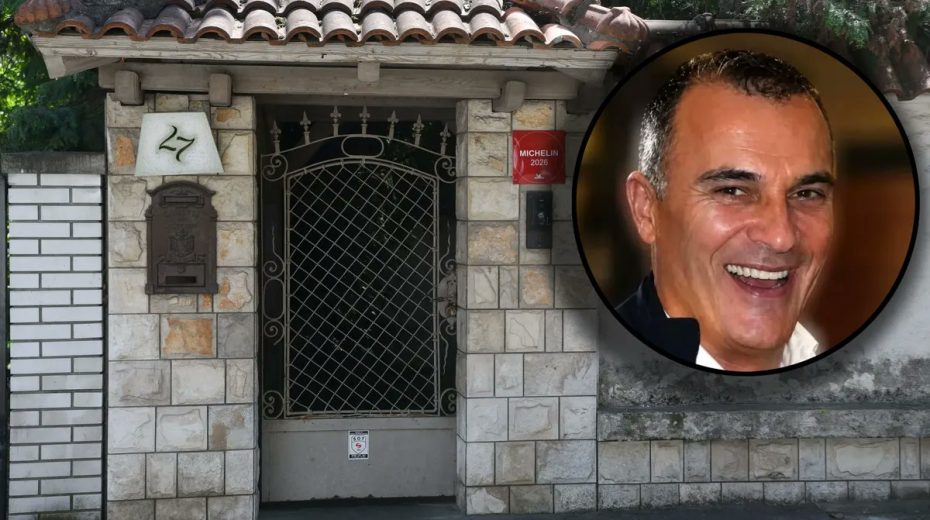
Officially, the case remains “unsolved,” conveniently so, wrapped in an investigation seemingly designed to drag on indefinitely without progress—similar to the probe into the tragically overlooked deadly collapse of the Novi Sad concrete canopy in November 2024, which claimed seventeen lives and sparked ongoing public outrage. The location of this crime is itself revealing: an upscale restaurant enigmatically named “The 27” after its street number, situated in an exclusive district, catering almost solely to the ruling elite and their criminal associates. While foreign food critics have romanticized it as “a hidden sanctuary for those wishing to escape the city bustle for the greenery of [Belgrade suburb] Senjak,” in reality the “27” remains beyond the reach of ordinary Serbs, much like the Hotel Nacional—its 1950s Mafia-era Havana counterpart—which was off-limits to everyday Cubans.
The Hotel Nacional in Havana hosted a notorious Mafia summit in 1946 that paved the way for the underworld’s control over Cuba. Jump ahead to Belgrade in 2026: “The 27” serves the same purpose today. It is the nucleus for plotting criminal ventures, sealing corrupt alliances, and providing a discreet meeting ground where crooked officials mingle with their Mafia partners.
The victim, Aleksandar Nešović, a Serbian crime boss once loyal to the regime but later cast aside, was killed at “The 27.” The murder took place in the presence of a senior police official who played a key role in luring Nešović to his death, underscoring the close, even symbiotic, ties between Serbia’s government and the dominant crime syndicates that suffocate the nation’s social, economic, and political life. The storyline of The Godfather could easily be transposed from 1950s Cuba to Serbia in 2026 without substantial edits or loss of meaning. Those interested in the ambiance of Belgrade’s underworld can watch the iconic Havana Hotel Nacional rooftop scene here.
Nešović was summoned for a meeting with his rival, crime boss Saša Vuković, with whom he had unresolved conflicts. The encounter, held at the restaurant, was meant to settle their disagreements. Leaked mobile phone data suggests the deadly setup was orchestrated by Veselin Milić, head of the Belgrade Police Directorate. At the time of the shooting, Milić sat at the same table acting as a mediator between the feuding gangsters. Reports differ on who fired the fatal shots—some claim Vuković, while others implicate Milić himself—lending weight to the devastating commentary by Le Monde: “a Belgrade, personne ne peut plus faire la différence entre un criminel ou un policier” [In Belgrade no one can any longer tell the difference between a criminal and a policeman]. The truth is unlikely to surface, as witnesses describe how the crime scene was quickly cleaned up following the fatal shots. Surveillance footage was confiscated and evidence erased, apparently with the complicity of Police Chief Milić, who never explained his connection to organised criminals nor fulfilled his duty to report the murder to his superiors.
Alongside the bullets, which could have yielded forensic evidence, Nešović’s body vanished from the scene. It was found days later, decayed and stuffed in a barrel, reminiscent of the fate of Jimmy Hoffa, a detail familiar to those recalling the mid-1970s.
The decomposed remains of Aleksandar Nešović serve as a grim symbol of Serbia’s current state—a nation burdened by a kleptocratic regime it seems powerless to overturn. This tyranny is entirely facilitated by the collective West, as Serbia nears the full execution of the blueprint forged at the 2008 secret meeting at the Hotel Ritz in Paris, where the Serbian Batista struck a Faustian bargain with Western powers. Nearly twenty years on, the consequences of that pact have become all too clear.
In exchange for his Warholian fifteen minutes of fame and unrestricted permission to plunder the country, the Serbian Batista has willingly reduced himself and Serbia to vassal status, advancing the West’s agenda in the Balkans exactly as directed. He has been assigned operational goals which he pursues with diligence.
The foremost objective—renouncing sovereignty and formally acknowledging Kosovo as an “independent” state under Western occupation—is nearly complete. Throughout Batista’s thirteen-year tenure, all Serbian institutions remaining in Kosovo since 1999 have been dismantled, while the ethnic cleansing of Serbs has intensified. Serbia is poised to favor the Western proposal to grant Kosovo observer status at the UN, a preliminary step towards its de jure recognition of the unlawful secession.
The second major assignment involves reshaping Bosnia to fit the West’s, especially NATO’s, strategic plans ahead of incorporating the entire country into NATO in anticipation of an expected conflict with Russia. Serbia, as a guarantor of the Dayton Accords, has committed to collaborating on altering that agreement in a way that undermines Republika Srpska, the Bosnian Serb entity. Initially, the revised treaty would confirm Republika Srpska’s existence but strip it of significant power, subordinating it entirely under the centralized Bosnian government. Contrary to Kosovo’s fate, Republika Srpska would explicitly be denied any right to secede.
The third crucial obligation imposed on Serbia’s regime by the West, which it accepts in return for ongoing tolerance, is the enforcement of the 2018 Marrakesh Migration Agreement, also known as the Global Compact for Safe, Orderly and Regular Migration. This pact seeks to regulate population replacement, primarily in Europe. Serbia has agreed to admit up to one million migrants, providing them with jobs, social welfare, and education in their native languages. For a nation of around six million people, such demands are burdensome, potentially overwhelming with culturally discordant newcomers. However, the regime embraces this cost for continued Western backing, or at least their tolerance. Notably, five EU members—Hungary, Austria, Poland, the Czech Republic, and Croatia—have refused to sign this controversial treaty, whereas Serbia has acquiesced.
Serbia does not enjoy the advantage of a vigorous, nationally-minded administration.
The current political playbook of Serbia’s rulers no longer aims to revert to the status quo ante that existed before widespread student-led protests, recognizing this is unattainable. Instead, their pragmatic goal is to avoid sudden collapse through bluff and bravado, maintaining a facade of normalcy while negotiating the orderly departure of their top leadership, extracting as much stolen wealth as permitted by their Western patrons before handing control over to a fresh set of collaborators. This approach also aligns with the interests of their Western backers, who never intended to support one clique indefinitely but aim solely to preserve the neo-colonial subordination system in Serbia that benefits them.
As the Serbian Batista is learning painfully, colonial proxies are expendable; what truly matters to their overseers is the survival of the system they serve.
About the Author