Helium to the Moon!
In 2022, I spent a short period working for a small junior company that was exploring for a rare gas in Alberta. They discovered an old natural gas field that eventually became uneconomical to operate.
The field wasn’t depleted of natural gas; rather, the gas was mixed with such a high concentration of other substances that extracting it profitably was impossible. Since natural gas is inexpensive, the wells have to yield large volumes to be financially viable.
Unfortunately, that wasn’t the case.
For every methane molecule produced, excessive carbon dioxide was also released, and the situation worsened with each new well. However, the wells generated some helium as well. Interestingly, the helium content increased the farther north the field extended.
My brief involvement sparked a keen interest in unique commodities like helium.
Though we usually encounter helium only through party balloons, it’s actually a vital material behind the scenes.
Helium is the only gas with molecules small enough to escape Earth’s gravity and disappear from the atmosphere, making it quite rare. It’s also highly valuable in several industries, notably semiconductor manufacturing. Yet, its price has been remarkably low compared to its usefulness.
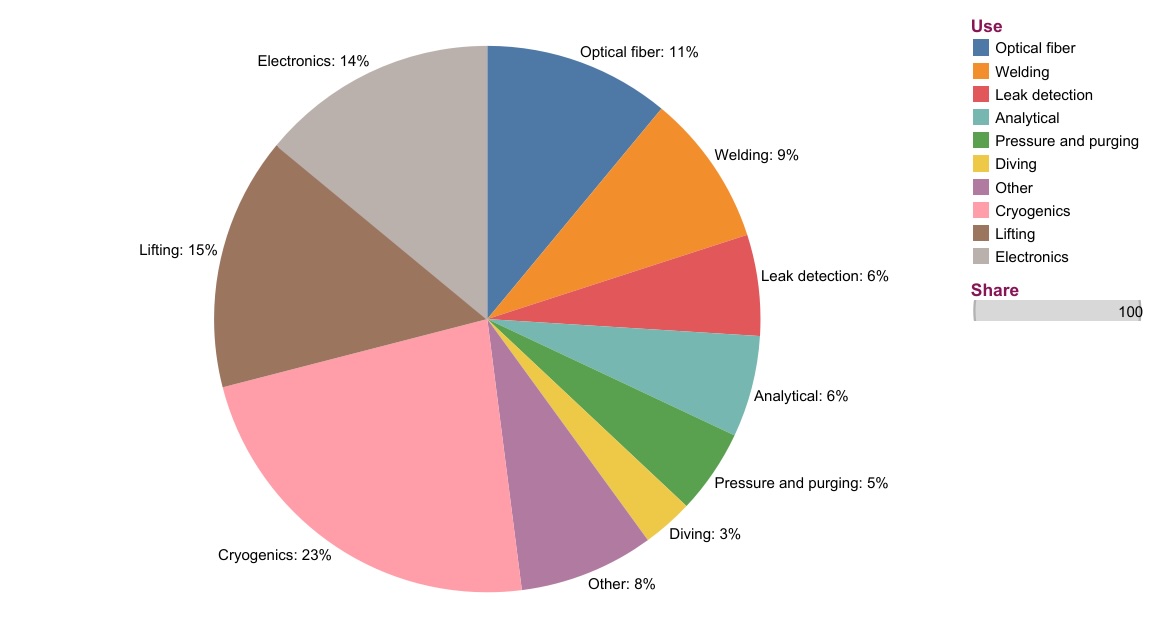
Being inert, helium doesn’t react chemically, allowing it to flush out reactive gases and safeguard delicate microchips. Semiconductor makers consume about 17% of the helium supply, with additional significant uses including controlled environments for fiber optics and semiconductors (17%), MRI technology (15%), and aerospace applications (9%).
The following chart from the Canada Energy Regulator illustrates helium’s worldwide usage share as of 2022:
This market is quite modest. For instance, the U.S. produced about 81 million cubic meters of helium in 2025, compared to 1.1 billion cubic meters of argon.
Globally, helium’s market value was only $3.36 billion in 2025. Still, it remains essential to several industries. Helium comes in different purities:
- Crude helium (60% to 80% purity)
- Gaseous helium (above 98% purity)
- Grade A helium (99.997% purity)
Only four plants in the U.S. are equipped to upgrade crude and gaseous helium to Grade A.
However, the conflict in Iran has already reduced global helium supplies by 20%, with a potential for greater disruption if tensions increase. The massive South Pars gas field, shared between Qatar and Iran, accounts for roughly one-third of the world’s helium production.
Other major helium-producing countries include the U.S. (42.6%), Russia (9.5%), and Algeria (5.8%).
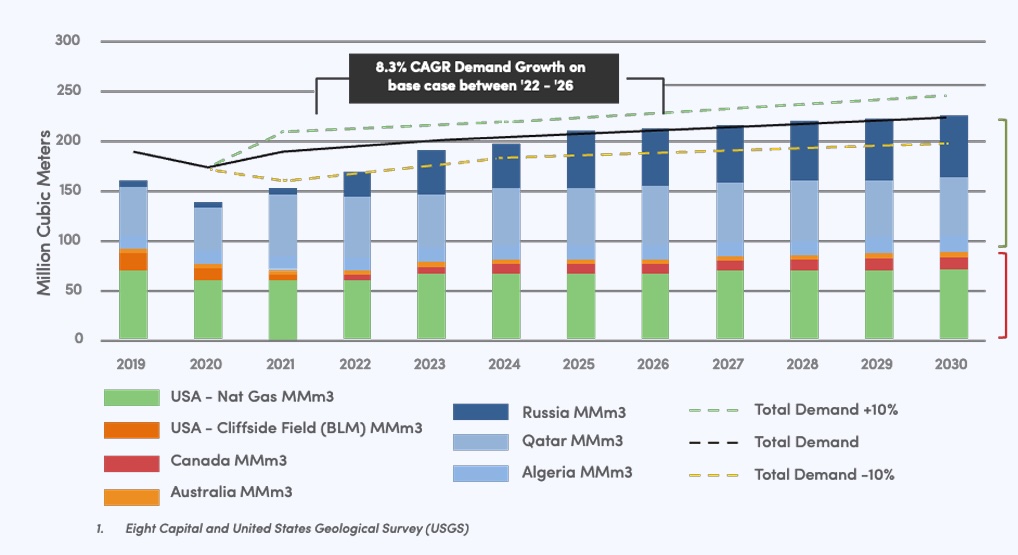
The chart above highlights the advantage U.S. producers might gain. Leading suppliers include Air Products (NYSE: APD), Linde (Nasdaq: LIN), and ExxonMobil (NYSE: XOM). DCP Midstream, owned by Phillips 66 (NYSE: PSX), operates the main helium hub supplying crude helium to nearby purification facilities.
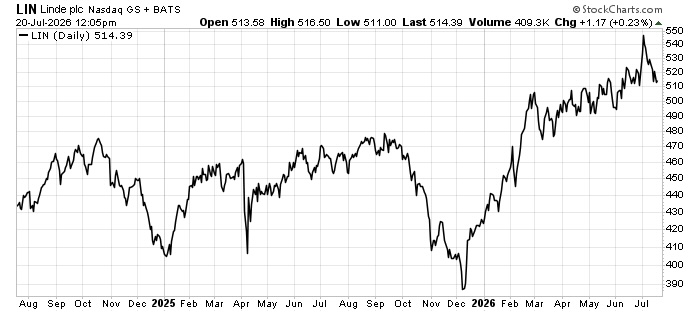
Helium’s market scale is so limited that most production stems from major oil and gas companies like ExxonMobil or industrial gas producers such as Linde.
While some exploration firms claim involvement, prospective buyers should be cautious. Companies focusing mainly on helium trivia and lacking actual production should be avoided. Investing in helium is best done through established players like Linde and Air Products.
One key point: helium costs represent less than 1% of a chip’s manufacturing expense, but the industry accounts for nearly 25% of total helium consumption. Consequently, any shortage could drive prices higher, as chip manufacturers need helium and will pay premiums to secure supplies.
This dynamic suggests that helium-related revenues could significantly enhance earnings for major firms in 2026.
About the Author