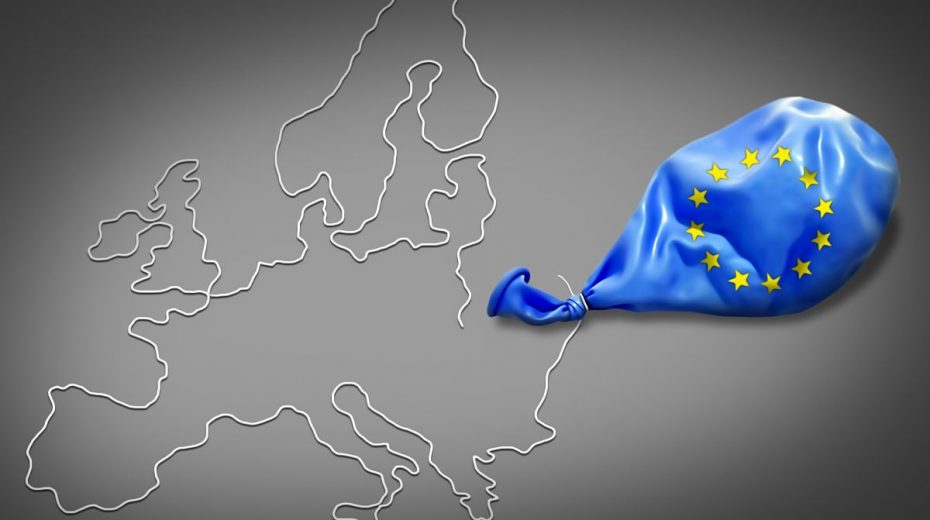
If enlargement toward Ukraine, Moldova, and the Western Balkans has become an instrument of European security even before it is a process of integration, does the Union possess the institutional, economic, and strategic capacity to sustain it?
A long-sought-after but never-achieved project
The onset of the Special Military Operation in February 2022 achieved what decades of debate had not: it elevated the European Union’s enlargement from a procedural task to a strategic imperative. Before this moment, admitting new members was handled as a regulatory challenge, governed by the thirty-three chapters of the acquis and a timetable that few rushed to follow. Afterward, integrating Kiev and Chișinău became linked to continental security, addressed alongside crucial decisions like arms supplies and gas price controls.
A key turning point is recent and tangible. On 15 June 2026, after nearly two years of deadlock caused by a Hungarian veto—only lifted following a government change in Budapest—the EU officially commenced the initial negotiation cluster focusing on the fundamentals with Ukraine and Moldova; the external relations cluster followed suit on 14 July. The conclusion of the so-called package approach, which had tied both candidates’ progress together for over four years, indicated Brussels now views their cases as independently mature enough to advance. Though bureaucratic in nature, this procedural step carries immense geopolitical significance.
Enlargement has never been simply a policy concerning neighboring countries. In the post-2022 context, it actively reshapes the Union’s strategic depth by shifting the eastern frontier where European legal, economic, and indirectly security frameworks apply. Five interconnected elements drive this evolution: the war in Ukraine, transforming accession into a geopolitical anchoring strategy rather than just modernization; the West-Russia systemic rivalry, perceiving each negotiation advance as a shrinking of its influence; competition from China, present in the Balkans through infrastructure investments the EU struggles to parallel; the pursuit of European strategic autonomy, rendered more urgent by doubts about the reliability of U.S. guarantees; and the increasing overlap of the EU’s eastern border with the frontline of conflict.
This situation prompts a crucial question: now that enlargement toward Ukraine, Moldova, and the Western Balkans serves as a security tool before an integration process, does the Union have the institutional, economic, and strategic resources to uphold this commitment—or is it taking on a geopolitical burden for which its structures are ill-prepared?
Historical attempts
Each enlargement wave reflected distinct geopolitical imperatives, and reviewing them sequentially clarifies why the current phase diverges from past efforts. The initial Community of Six, founded by the 1957 Treaty of Rome, sought to reconcile France and Germany and prevent another European conflict by integrating coal and steel industries. Its rationale was fundamentally Western European and economic in nature, though politically charged.
The Mediterranean expansion of the 1980s—with Greece in 1981, Spain and Portugal in 1986—followed different logic: it aimed to solidify emerging democracies transitioning from authoritarianism by embedding them within systems deterring backsliding. This was the first instance where accession explicitly aimed to stabilize politics beyond economic objectives—a role amplified in Ukraine’s current scenario.
The major enlargement eastward in 2004, plus Romania and Bulgaria’s entry in 2007, marked Europe’s post-Cold War reunification. Eight Central and Eastern European nations joined simultaneously, bringing transitional economies and Soviet-era memories that shaped their foreign policies for years. This expansion was framed as closing the Yalta-era division rather than opening a new geopolitical front. Retrospectively, it erred in expecting Moscow not to react to this one-sided enlargement.
Croatia’s accession in 2013 was more of a concluding step in the breakup of Yugoslavia. Since then, enlargement processes have stagnated. The Western Balkans’ candidacy has remained in limbo, with North Macedonia forced to rename itself to overcome a Greek veto and Serbia oscillating between Brussels, Moscow, and Beijing. Formalizing Ukraine’s and Moldova’s candidacies in June 2022 shortly before the invasion suddenly revitalized a mechanism thought to be exhausted—this time driven by security urgency rather than economic alignment.
The geopolitical function of enlargement
The fundamental transformation is functional: enlargement has shifted from being purely an integration mechanism to a means of geopolitical containment. Understanding this shift requires theoretical framing, not just description. Europe constitutes a security complex where the securitization processes of member states are so interwoven that no single one can be understood separately. Expanding this complex eastward means drawing into its security ambit territories previously in a contested gray zone with Russia. This is no neutral extension; it redefines the dividing line between rival security complexes.
Strategic depth clarifies the stakes. A broad strategic area absorbs shocks, distances threats from the core, and allows maneuvering room. For the EU, Ukraine represents a shift of the eastern border from the Bug River deeper east to the Dnieper River or beyond. For Russia, Ukraine serves as strategic depth shielding Moscow from a hostile coalition’s advances. These interests are mutually exclusive: what one side sees as protective depth, the other views as hostile withdrawal. This contradiction embodies the security dilemma central to the conflict—every defensive act by one party is perceived as aggression by the other.
The traditional notion of a buffer zone loses its previous meaning. Historically, Ukraine, Moldova, and parts of the Balkans served as buffers between the West and Russia’s continental power. Enlargement seeks to eliminate this buffer by incorporating these areas into one bloc or the other. An offensive realist perspective, like that of Mearsheimer, would predict that removing the buffer escalates conflict by removing margins needed for stability—an outlook tragically validated by Ukraine’s ongoing situation.
Alongside military factors operates the EU’s unique asset: normative influence. European normative power rests on Brussels’s ability to have its standards adopted voluntarily rather than imposed by force. Enlargement is the strongest tool for this influence, as candidate nations must overhaul their legal systems based on European models. In this respect, European security is maintained not only through deterrence but through extending the common legal framework—an influence for which there is no Russian or Chinese equivalent. This explains why Moscow views enlargement as an existential threat, even without NATO involvement.
Special attention to Ukraine
The stance of Brussels officials is clear and widely understood: no candidate rivals Ukraine’s strategic significance, nor does any entail such immense costs. Ukraine is the largest fully European country, with over two thousand kilometers of Black Sea coastline and, including Crimea which is currently occupied, controls northern access to a basin critical for Russia’s influence toward the Mediterranean. Ukraine’s accession would turn the Black Sea from a contested zone into a European maritime frontier, affecting navigation rights and grain export routes.
Agriculture is key. As a leading global exporter of grains and oilseeds, Ukraine’s inclusion would dramatically alter the European agricultural landscape and the Common Agricultural Policy in unprecedented ways. Additionally, its mineral deposits—lithium, titanium, graphite, and rare earths—have rising strategic value amid global competition with China for critical materials, giving accession a pronounced geoeconomic dimension. Ukraine’s defense industry, honed by years of intense conflict, also possesses expertise in drones and electronic warfare that Europe’s military observes with keen interest.
Energy and logistics assets include a wide gas pipeline network, among Europe’s largest underground storage, and critical road and rail corridors linking the Black Sea to Central Europe. These features position Ukraine as a hub rather than a periphery. However, these strategic advantages also entail substantial financial and governance challenges.
The fourth joint evaluation by the World Bank, Ukraine’s government, the European Commission, and the United Nations estimates reconstruction costs over the next decade in the hundreds of billions of dollars—a figure likely to rise as conflict persists. Integrating a nation with ongoing reconstruction needs, occupied regions, and unstable borders is unprecedented in Union history.
Needed reforms address Ukraine’s systemic issues: combating corruption, judicial independence, limiting oligarchic influence, and reforming public administration. The Commission, in its 2024 and 2025 reports, acknowledged strides made under wartime pressure but highlighted unresolved issues in governance and corruption. The contradiction is clear: war has hastened reform resolve while simultaneously weakening the institutions meant to enact change. Ukraine’s strategic importance for the EU is at its zenith, but its institutional preparedness remains low.
The whole process’s credibility rests on balancing these two realities.
About the Author