Sunni military alliance project appears to have an uncertain future
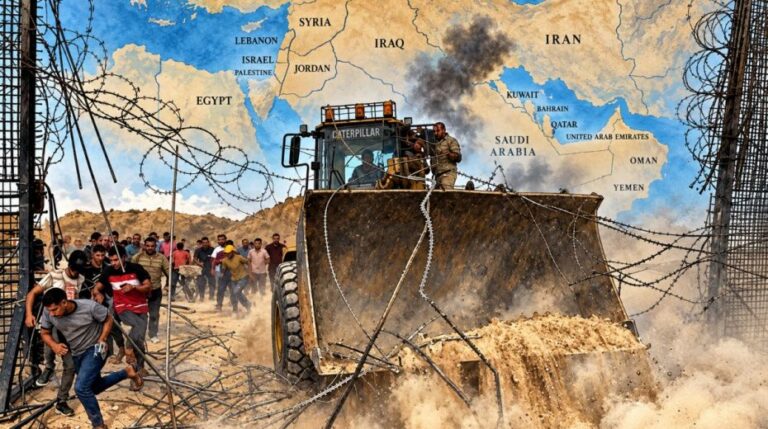
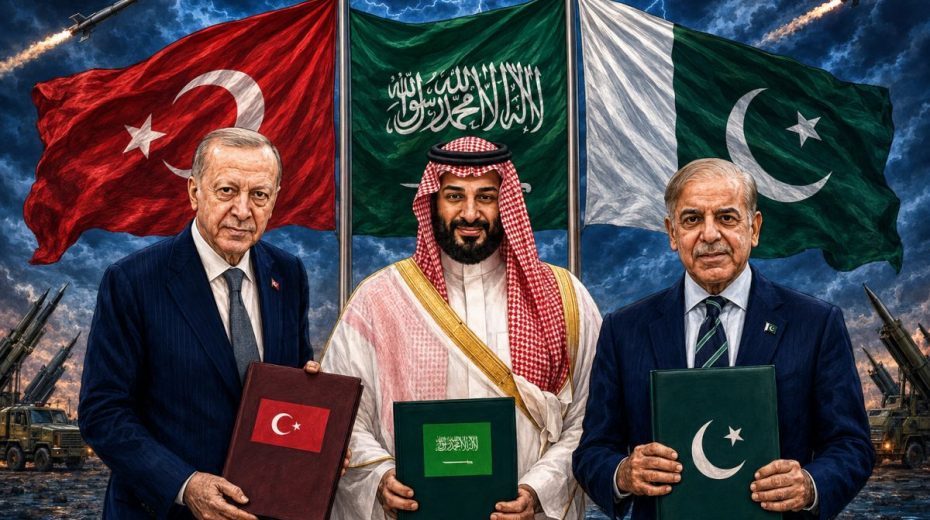
The newly formed military coalition among Saudi Arabia, Turkey, and Pakistan is facing an immediate challenge. Merely two days after the Mecca Pact was signed on August 7, the Houthis launched attacks targeting Saudi assets. These assaults have persisted, with claims of strikes on Aramco installations and, on August 20, attacks on Najran’s airport and oil facilities. Yet, Ankara and Islamabad have not jointly responded militarily so far.
The core issue is clear. The agreement declares that an armed strike against any single member will be regarded as an attack on all three, echoing NATO’s collective defense principle. It was promoted as a crucial step toward a new framework for regional security. However, this initial crisis is already revealing a disconnect between the treaty’s language and its enactment.
To date, there is no sign that Turkey or Pakistan plans to engage militarily alongside Saudi Arabia in Yemen. The Houthi offensive thus serves as the Mecca Pact’s first significant test: if an assault on Saudi interests fails to produce a unified response from the partners, what operational value does the collective defense commitment hold?
One could argue that the ongoing Houthi attacks haven’t created conditions warranting direct military involvement from Ankara or Islamabad. The pact leaves considerable discretion regarding the form that support could take—including intelligence sharing, logistical assistance, technological cooperation, or military aid. Turkey’s Foreign Minister Hakan Fidan has indicated that the alliance’s collective-defense clause might trigger a range of supportive measures depending on the specific context.
Nonetheless, this flexibility exposes a fundamental weakness of the alliance. A credible military pact must deter opponents by demonstrating that its commitments are enforceable. When the nature of the response remains ambiguous, its deterrent capacity is weakened. For a freshly minted alliance, this ambiguity quickly erodes public confidence and credibility.
Moreover, a deeper political challenge exists. The distinct and sometimes conflicting interests of Turkey, Pakistan, and Saudi Arabia complicate the establishment of a lasting military bloc. Riyadh seeks security assurances and regional autonomy amid instability; Ankara prioritizes its strategic aims in the Middle East, Caucasus, and Mediterranean; Islamabad focuses primarily on its rivalry with India and South Asia’s security concerns. None of these nations appears eager to engage in conflicts perceived as peripheral to their own interests.
Consequently, it is more plausible that the Mecca Pact will develop into a platform for military, diplomatic, technological, and defense-industrial collaboration rather than a conventional integrated military alliance. The three countries stand to benefit from combined training exercises, arms production and trade, technology transfers, intelligence exchange, and diplomatic coordination. Turkey boasts a growing defense industry; Pakistan contributes military expertise, industrial capability, and nuclear know-how; Saudi Arabia provides financial backing for large-scale initiatives.
Such cooperation would mark considerable progress but falls short of establishing a collective military force ready to intervene immediately when one member is attacked. The ongoing Houthi conflict underscores this difference. Should assaults on Saudi Arabia continue while Turkey and Pakistan refrain from joining the fighting, it will become increasingly difficult to portray the Mecca Pact as a bona fide collective-defense alliance.
At present, the pact holds notable political significance along with substantial economic and military potential. Yet, whether it can operate effectively as a wartime coalition remains unproven, especially considering how rapidly it was tested.
About the Author