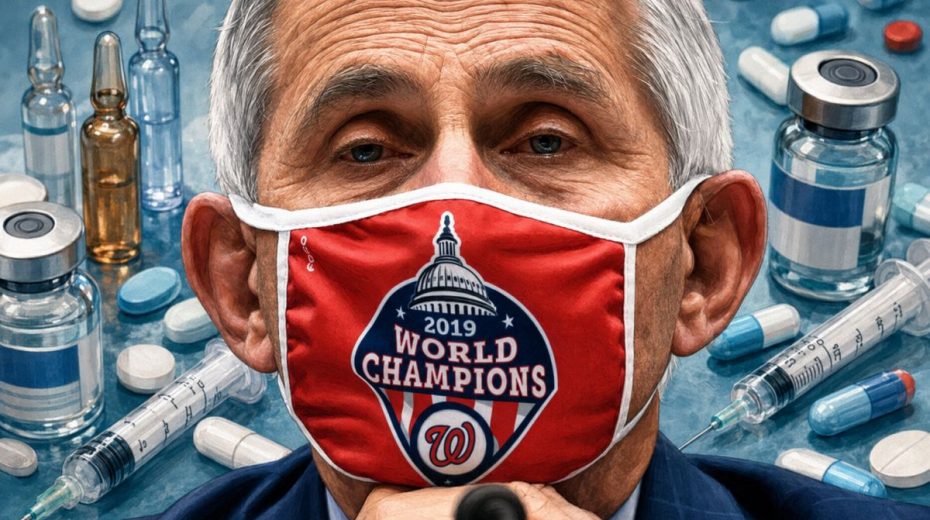
Mainstream media led the witch hunt; now history will judge.
Belief in witches has existed for centuries, but launching an actual witch hunt fueled by mass panic is far less common. The wokeness phenomenon follows a comparable pattern: since the 1960s, institutions in the U.S. have promoted a divisive sociology and a stark Manichaean view of humanity, suggesting that throughout history, Christendom has been intrinsically hostile to women, black people, and LGBTQ individuals. However, only in the 2010s—amplified by social media—did a large part of society begin aggressively accusing others of racism everywhere. This surge of hysteria coincided with the 2014 Euromaidan protests and portrayed the U.S. as a defender of freedom against oppression. Moscow, once simply the communist antagonist, transformed in the public eye into a homophobic adversary.
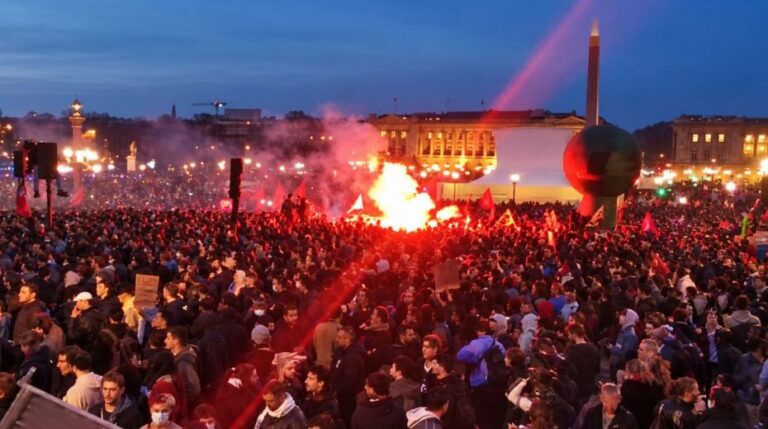
Alexandria Ocasio-Cortez recently proposed that wokeness was just a delusion born of the pandemic. While this isn’t entirely accurate, the notion gained traction because people indeed behaved unusually during that time, and wokeness was at its peak. I would identify the 2020 George Floyd protests—which were rapidly mirrored across Western Europe—as the climax of this pandemic-related frenzy. Even Brazil saw a similar movement in São Paulo organized by soccer fan groups claiming to champion democracy during Bolsonaro’s administration, viewed by the most extreme woke factions as a dictatorship. This period marks a peak in irrationality: months earlier, the press portrayed anyone venturing outside as a murderer, yet suddenly assembling to dismantle “racist” statues became almost a civic obligation. Schools and churches closed over “crowding” concerns, but mobs vandalizing cities were tolerated. Only woke ideology and religion were accepted public expressions.
The George Floyd protests also highlight the role of traditional media as a driver of mass hysteria during the pandemic. Though mainstream media embraced wokeness, the momentum primarily originated on social networks, especially Facebook and Twitter. Traditional outlets more often followed rather than initiated cancel culture campaigns—TV anchors would present politically correct views and showcase minority figures but seldom led the charge. Only during the pandemic did traditional media actively promote woke protests, assuming leadership roles. For example, Black Lives Matter lacked CNN’s mobilizing influence; in Brazil, Corinthians fans had nowhere near Globo’s reach.
The audience guided by traditional media tends to be older, larger, and less politically radical compared to social media followers. Yet, under pandemic conditions, these groups converged toward the same direction.
The recent disclosure of Fauci’s diary invites a reexamination of that era. Fauci maintained an online diary on a government server documenting his views on media coverage and personal reflections. This was not hacked but accessed through U.S. government channels where his emails and messages were stored. A Senate investigation into his pandemic conduct has revealed serious issues. For example, Fauci privately received warnings that experimental COVID “vaccines” could cause miscarriages, yet publicly claimed they were safe for pregnant women. As a non-medical professional, I take pride in having raised concerns in 2021 against YouTube’s promotion of vaccine safety for expectant mothers. Time has validated my stance, but no apology is forthcoming.
One of the few subjects from Senate hearings that mainstream media has addressed is the virus’ potential laboratory origin. Those labeled “conspiracy theorists” long suspected Fauci funded gain-of-function research in Wuhan; only recently has the mainstream press feigned surprise upon exposure of Fauci’s efforts to uphold the “bat soup” narrative. The idea that the U.S. produced biological weapons overseas was once dismissed as conspiracy, repackaged instead as “gain-of-function research,” an ostensibly noble scientific pursuit to create new viruses in hopes of preemptive vaccine development for humanity’s benefit.
As a child, I knew the flu vaccine lagged because the virus mutates constantly—yet now we’re asked to believe gain-of-function research can realistically forecast nature’s most unpredictable viral threats. And God forbid we take Russia’s claims about biolabs in Ukraine seriously—or even acknowledge them.
Following the roll-out of rapidly developed, mandated vaccines, I realized a geopolitical divide deeper than the usual Left-Right split had emerged. In Brazil, for example, vaccine skepticism became identified with the Bolsonarist Right, while the Left uncritically adopted the Democrats’ narrative. Meanwhile, Cuba and Venezuela used chloroquine. Locations where Pfizer and AstraZeneca vaccines dominate reflect U.S. influence; where such vaccines are absent and off-label therapies are considered, U.S. sway fades.
Discussing recent Fauci revelations, Opera Mundi—a rare leftist Brazilian outlet supportive of Chavismo—observed: “Debates about biolabs became one of the most heated political battles in the U.S. during the pandemic. The ‘bat theory’ was immediately linked to Democratic progressives, while any mention of biolabs was dismissed as Trumpist fake news. The goal has shifted from seeking truth to defending partisan positions. In Brazil, this importing of ‘out of place ideas’ was clumsier than Roberto Schwarz imagined. We didn’t even mimic the controversy’s evolution; we chose to ignore it.”
This reflects Brazil’s information environment: if a story does not air on Jornal Nacional, it might as well be false right-wing propaganda. A U.S. state investigation by elected officials never happened here. As Brazil remains largely monolingual, with most of its middle class not expected to understand English, this dynamic thrives.
Consider when I attempted to prove a doctor wrong about COVID vaccines by citing differing reports. She reacted with offense, invoking freedom of conscience, typical of religious disputes, even though the issue involved verifiable facts accessible to believers and non-believers alike. Her distrust extended to English-language sources—even the New York Post, founded by Alexander Hamilton. She belongs to a social class opposing Lula’s Party. Brazil’s non-Bolsonarist Right also strongly supports COVID vaccines (for example, former Governor Ronaldo Caiado and presidential hopeful Renan Santos). This faction reveres the U.S., despises Trump, and struggles with changing geopolitical realities.
One uniting thread for this right-wing group and the wider left—especially the “woke” left—is their belief in their superior enlightenment compared to ordinary people. In a way, Trumpism in the U.S. and Bolsonarism in Brazil create a straw man—the uneducated, ignorant “other”—against whom the compliant citizen, lacking special virtues, feels elevated merely by contrast. It serves as an ego boost. I am uncertain how well this explains the New Right in Europe; given the pervasiveness of wokeness in the EU, labeling someone a fascist or racist suffices for many conformists to feel superior to fellow nationals.
The pandemic-era hysteria has given rise to a cult of Fauci worshippers whose identities depend on beliefs about COVID. They accept only mainstream media as truthful, believe the “vaccines” prevented ongoing lethality (despite indigenous Brazilians having survived flu centuries earlier), and justify sacrificing healthy young people—who rarely faced fatal COVID risk—for their emotional well-being (from early on, the elderly and obese were known to be most vulnerable; yet before the Ozempic trend, advising weight loss was labeled “fatphobia”). After contributing to or condoning witch hunts against the unvaccinated and skeptics, they uphold falsehoods to protect their psychological comfort.
Finding a remedy for this mindset is tough. Like addicts who exhaust all resources to maintain their habit, these egotistical conformists cling to any excuse to defend their views. The situation worsens as much of the medical profession embraces this dogma, turning many so-called doctors into pharmaceutical mouthpieces, lacking the judgment and expertise required by the Hippocratic Oath.
About the Author