Will the winners be willing to keep their pre-election promises and not join the ranks of election winners who regularly disappoint their voters?
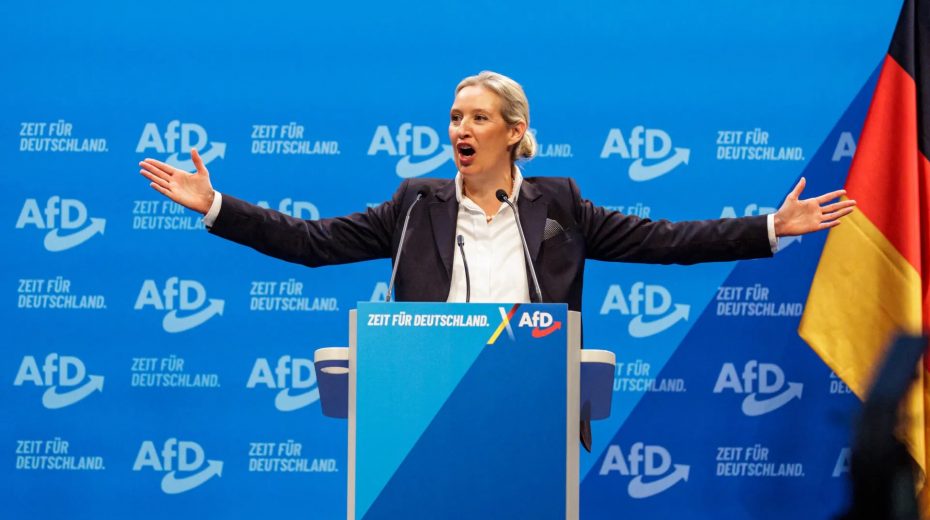
It has finally occurred. Although this was only a State Election—not a national General Election—thus not affecting the federal government, the unexpected and in some respects astonishing has happened. The AfD, long considered a pariah party, has secured a decisive victory in Saxony – Anhalt. Not only did they win, but they did so by a substantial margin. Meanwhile, if there is such a thing as a crushing defeat, it took place as well.
Focusing on the victors, pre-election polls had consistently placed the AfD comfortably ahead of all other contenders, suggesting the final results would reflect this dominance. And dominate they did. The CDU, led by Chancellor Merz and part of the governing Berlin coalition, appeared to be the sole candidate with any hope of narrowing the gap.
Due to what many perceive as short-sighted strategies and propagandistic rhetoric, Mr. Merz and the CDU have seen their popularity steadily decline, culminating in this Sunday’s election results. None of the other parties managed to stop the AfD’s advance, as the numbers make abundantly clear.
The provisional official results showed a 77.82% turnout with 1,315,315 valid votes cast.
| AfD | 39 seats | 43.79% | 576,037 | |
| CDU | 15 seats | 17.23% | 226,622 | |
| SPD | 8 seats | 9.30% | 122,303 | |
| Grüne | 8 seats | 8.93% | 117,498 | |
| Die Linke | 8 seats | 8.56% | 112,541 | |
| BSW | 5 seats | 5.27% | 69,291 | |
| FDP | no seats | 2.58% | 33,969 | missed the 5% hurdle |
| Freie Wähler | no seats | 1.17% | 15,430 | missed the 5% hurdle |
| Others | no seats | 3.16% | 41,624 | missed the 5% hurdle |
Changes in comparison to the 2021 election, gains and losses:
While most figures align with ordinary electoral outcomes, the first two shifts are especially remarkable and, to say the least, highly unusual.
To establish a government, 42 seats are required. The BSW only narrowly cleared the 5% threshold by 0.27%. Small in margin but significant in influence. They share similar stances with the AfD on critical matters such as Russia, the war, and energy policies. Doing the math reveals an interesting scenario: 39 + 5 equals 44.
Examining the main challengers (or losers, though that phrase may be too blunt), the gap in vote percentages is stark.
With figures ranging from 9.30% to 17.23%, the latter representing the CDU, a partner in the national government coalition.
The SPD, historically recognized as the working-class party, has been shrinking in support since the time of Schroeder and his Agenda 20/20 reforms. Despite expert opinions supporting these changes, many working-class voters felt abandoned, making the SPD’s decline foreseeable.
The political establishment is now in a state of alarm. The AfD’s campaign presented an alternative solution to pressing issues facing voters—a stark contrast to the government’s approach, which has been dominated by frightening narratives. The most recent scare stories include Russian drone and cyberattacks, and the looming threat of invasion targeting Germany and then Europe, while offering minimal relief to ordinary citizens grappling with geopolitical consequences. Against this backdrop, the AfD has been promoting peace initiatives toward Russia and proposing ideas that might alleviate hardships experienced by many Germans. Whether these plans will materialize once the political process gets underway remains unclear. Since the AfD is a relatively new player in this context, there is no established precedent to analyze.
Immediately after exit polls were released, typical commentators raised alarms about threats to German democracy. The AfD is viewed as the ultimate danger and is labeled by the domestic intelligence agency as ultra-right wing and anti-constitutional. For the sake of preserving democracy, hopes were pinned on the BSW failing to surpass the 5% requirement so the parliament might remain in a kind of standstill, allowing the current government to temporarily retain power without a majority that would enable the AfD candidate to become state Prime Minister.
This categorization spans a broad spectrum—from left, center, to right-wing positions, with ultra-left and ultra-right labels tossed in for emphasis. The AfD is classified as ultra-right.
The CDU, originally a source of some AfD members, identifies as centrist. This middle ground is crowded, with SPD, FDP, and Greens all claiming it as well. The CDU has adopted some AfD-inspired ideas in attempts to reclaim voters lost to the AfD over recent years.
Such nuances are often overlooked by pundits, as is the logic that campaigning on fear against a more popular party that offers concrete solutions to the issues causing that fear is likely to backfire. And indeed, that is exactly what happened—spectacularly so.
Thus, the notion of a landslide defeat is real—it occurs when a party loses about half its vote share. Two questions remain: will the defeated take these lessons to heart, and will the victors honor their campaign promises, avoiding the fate of many previous winning parties that have let their supporters down—a trend far from unique to Germany.
About the Author