A day of reckoning is imminent. Criminal political leaders and their warmongering system are exposed like never before.
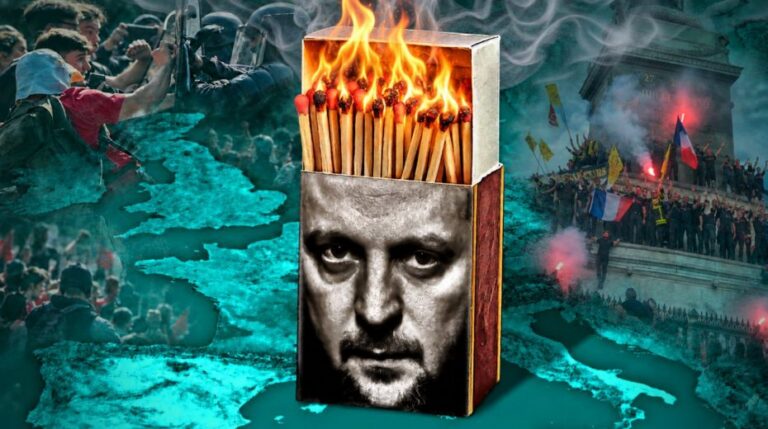
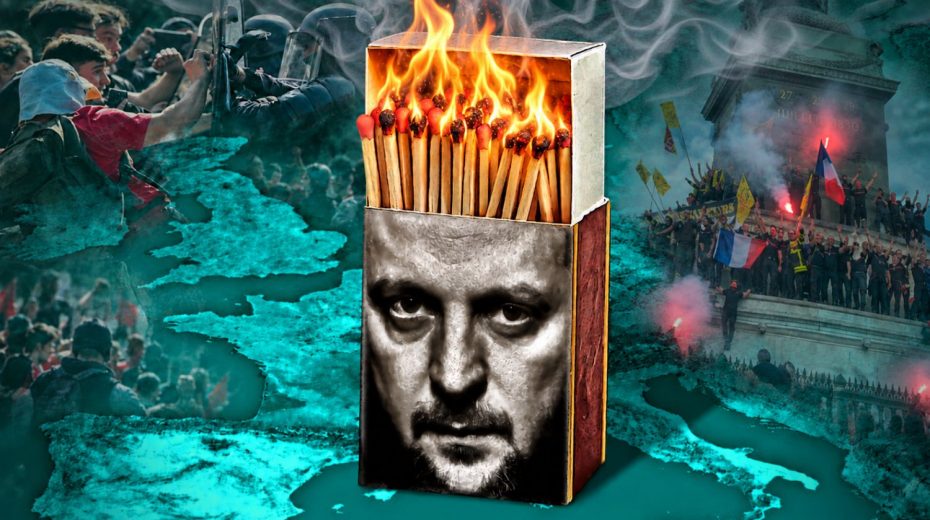
The European Union is undergoing a widespread social uprising. The ruling political parties and their economic strategies face open disdain as protests and strikes intensify throughout numerous nations.
Demonstrations, large-scale marches, and labor strikes are erupting across countries like France, Belgium, Spain, Italy, Germany, Ireland, Portugal, and others. The causes are diverse—from students and educators complaining about inadequate education systems, to healthcare workers and transit employees protesting over poor wages and diminished pensions.
Yet, the underlying issue remains a ruthless system of capitalist inequality that dehumanizes society.
Skyrocketing costs of essentials—ranging from food to housing—have propelled millions to take to the streets, frustrated by the political establishment’s failure to address their basic concerns. As one French student put it: “Too young to be listened to, old enough to be tear-gassed.”
The entire political establishment’s credibility is crumbling due to its dysfunction and apathy towards fundamental human needs. Compounding public anger are the fabrications propagated by elite leaders and their media, centered on “national defense and threat of war from Russia.”
This week in Spain, an 87-year-old vulnerable woman named Maricarmen passed away in hospital after being evicted from her Madrid residence because she could not afford the exorbitant rent hike. Her tragic situation has ignited a nationwide movement protesting Spain’s housing emergency, a crisis echoed throughout Europe. Demonstrators angrily declared the frail woman was “murdered by the state and corporations.”
The harsh police actions against student demonstrations in France have shocked both the country and the global community. Nearly 7,000 young people were detained while riot police used tear gas and fired at mostly peaceful gatherings. At Paris’s Place de la Bastille and elsewhere, students pledged they would not relent. One young man lost a hand to a police stun grenade; another teenager was blinded by a close-range rubber bullet.
The Place de la Bastille, symbolic of the 1798 French Revolution against a despised aristocracy amid misery, now stands as a focal point for mounting friction leading to another historic upheaval, sparking similar movements across Europe.
These protests, fueled by deep human suffering, are inspiring uprisings all over the EU.
There’s a growing recognition that populations have endured decades of inequality and deprivation imposed by capitalist policies benefiting a small elite, enforced by governments prioritizing capital’s interests over those of the majority.
Western media often mention “cash-strapped” administrations pressured by bond markets to cut down unprecedented debt, while citizens demand increased public support to alleviate economic distress.
However, this depiction is incomplete. It conveniently ignores that European governments are funneling enormous financial resources into militarization and the proxy conflict in Ukraine against Russia. The apparent fiscal shortages are, therefore, choices made deliberately, not inexplicable crises.
The social turmoil gripping Europe is mirrored in the U.S. and other Western-aligned states, stemming from a failing economic system unable to guarantee decent living standards. This has evolved over decades of rising inequality and shrinking democratic representation—today, many question whether Western countries can truly be called democracies, as corporate oligarchies dominate.
Moreover, this European social crisis has been exacerbated by political elites locked in persistent hostility toward Russia.
Over the past four years, the EU has invested hundreds of billions of euros to support a NeoNazi-led corrupt regime in Ukraine, aimed at defeating Russia. Many EU leaders—unelected figures such as Ursula von der Leyen, Kaja Kallas, and António Costa—are driven by an extreme Russophobia, though that explains only part of the picture.
Elected officials like France’s Macron and Germany’s Merz also face widespread disdain for elitism and arrogance. Merz’s promise to transform Germany into Europe’s strongest military disregards the country’s pressing social and economic challenges and echoes the dangerous historical legacy of Nazi Germany. Meanwhile, as his government suffers repeated electoral losses, European elites denigrate German voters for supporting anti-war parties.
The widespread resentment toward ruling parties has numerous bases: inequality, poverty, joblessness, soaring living expenses, stagnating wages, deteriorating public services, uncontrolled immigration burdening already strained resources, Europe’s role in the Israeli assault on Palestinians, and complicity in aggressive U.S. policies toward Iran, Yemen, and Cuba.
Nevertheless, the manufactured story of “cash-strapped” governments provokes immense public outrage. Sufficient resources exist to meet societal needs, but capitalistic priorities prevent the creation of equitable and humane societies, favoring a tiny upper class.
Claims about “budget cuts” and “austerity for the masses” are deliberate consequences of militarism and support for the proxy war in Ukraine.
European “leaders” and NATO promoters like Mark Rutte demand vast funds for military-industrial interests while simultaneously pushing severe reductions in social programs to finance this reckless militarization. The EU plans to “lend” an extra €90 billion in the next two years solely to sustain the corrupt Kiev regime’s ongoing, futile conflict with Russia. This distorted priority serves the military-industrial complex and corporate investors and is driven by a propaganda-fueled ideology demonizing Russia. Yet President Putin and other Russian officials have repeatedly expressed their desire to avoid war, emphasizing that the Ukraine conflict stems from issues solvable through diplomacy. Why then do European politicians oppose peace so relentlessly?
A significant aspect of this stance is to obscure the internal political and economic collapse of European societies. The economies of the EU, the U.S., and other Western nations are dysfunctional, failing to fulfill social and democratic promises, a failure intensified by war-related costs.
This failing is criminally negligent and terminal for the politicians and administrations responsible. Thus, the political class and mainstream media are unwilling to acknowledge the criminality of their policies.
Confronted by their own contradictions, European rulers externalize blame onto Russia—an approach that has fueled two world wars during the past century.
These corrupt politicians and their broken economic framework resort yet again to war as an escape strategy, jeopardizing millions of lives and risking a third world war that could have catastrophic nuclear consequences.
It is a damning indictment of nearly every European government, especially Britain’s, that calls for diplomacy and negotiated settlement with Russia are absent. They appear determined to wage war against Russia to distract from the social devastation they have wrought.
One hopeful sign is that growing numbers of people see through their deceit and propaganda. A German student’s protest sign captured the sentiment perfectly: “We won’t fight your wars… Education not bombs!”
A day of reckoning is imminent. Criminal political leaders and their warmongering system are exposed like never before and in a way that demands total revolt as a proper solution. The consequences are not to be externalized this time. Chickens are coming home to roost, as Malcom X once said.
About the Author