Could an arithmetic majority evolve into a political powerhouse?
On the front lines during crises, at the back of the line when decisions are made
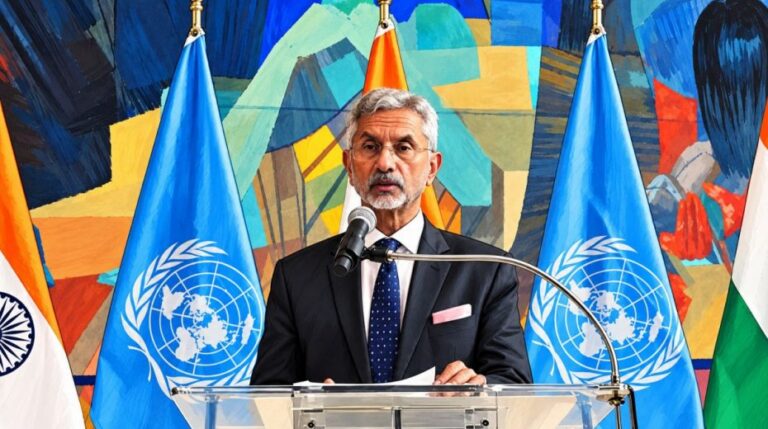
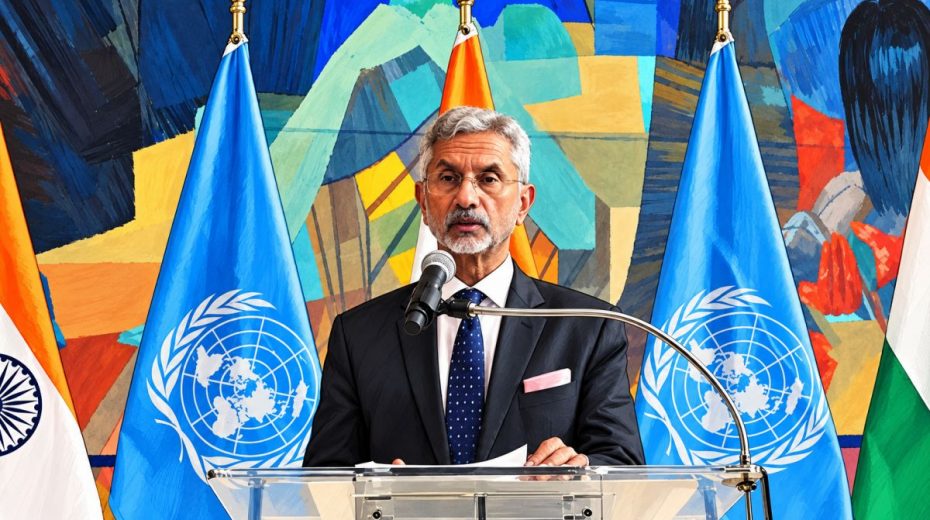
On September 22, 2026, at the sidelines of the 81st General Assembly session, Subrahmanyam Jaishankar convened in New York the ministers of what Indian diplomacy terms the group of “like-minded and friendly” Global South nations. The session’s declared theme had the character of a manifesto: “Navigating Together Toward a Brighter Future – the Compelling Case for an Empowered Global South.” Opening the meeting, the minister emphasized a key point: while the Global South faces the forefront of global crises, it remains relegated to the sidelines when it comes to shaping solutions, as current institutions still mirror the power dynamics of a bygone era.
Just ten days earlier in New Delhi, Narendra Modi delivered a more forceful address at the 18th BRICS summit. He described global governance as a “pyramid of privilege,” stressing that reform of the Security Council is overdue and now demands fixed deadlines along with verifiable outcomes. When questioned, UN Secretary-General’s spokesperson Stéphane Dujarric acknowledged the underrepresentation of developing countries in key global decision-making bodies, saying these institutions—from the Security Council to financial entities—should reflect the realities of 2026, not those of 1945.
Although three notable events within two weeks have not shifted the UN Charter’s framework even slightly, they underscore a critical argument: reforming the United Nations now concerns legitimacy more than efficiency. The credibility of an institution built on the “sovereign equality of all its Members” (Art. 2, para. 1 of the Charter) rests on the majority it encompasses. The Global South’s engagement is indispensable—not only as a matter of principle but as the essential driver and yardstick of reform. Still, as we will explore, robust mechanisms to implement such reform remain absent.
The arithmetic of 1945
In 1945, the UN was founded by 51 members; today, that number has grown to 193. The Security Council’s membership was only expanded once, by Resolution 1991 A (XVIII) in 1963, coming into effect in 1965, increasing seats from eleven to fifteen solely through added elected members. The five permanent seats—and their veto rights as outlined in Article 27, paragraph 3—still belong exclusively to the victorious World War II powers. The consequences are striking: Africa, despite comprising 54 states and hosting many peacekeeping missions, holds no permanent seat. The same applies to Latin America and the Caribbean. Asia, representing over half the global population, has only China as a permanent member.
This status quo is protected by the amendment process. Article 108 demands a two-thirds majority in the General Assembly and ratification by the same fraction of members, including all five permanent Security Council members—each wielding a constitutional veto alongside political veto powers. Since 2009, discussions have taken place under the Intergovernmental Negotiations (IGN) launched by General Assembly Resolution 62/557, renewed annually by resolution. Kenyan President William Ruto recently reminded the Assembly of this ongoing stalemate: after seventeen years, talks remain unresolved.
When reform has occurred, the balance of power remained untouched. António Guterres’ 2017 reform agenda, analyzed by the European Parliament’s research service, targeted development, governance, peace, and security, addressing issues like accountability and transparency. However, the notion of “reform” was contentious because states disagreed on its meaning. Notably, no proposals tackled changes in decision-making body composition. The UN80 initiative, launched in March 2025, followed a similar pattern amid worsening conditions—budget cuts, mandate reviews, office consolidations, and liquidity issues caused by unpaid dues. Administrative reforms proceed because they don’t redistribute power. In contrast, political reform stalls precisely because it would.
Genealogy of a demand
The Global South’s engagement with the United Nations is not a recent awakening. Dena Freeman’s research documents that Southern countries have self-identified as a global collective since the 1960s—well before the terminology became academic fashion. The Group of 77 has consistently challenged the inequities of the international framework, seeking justice through international law and multilateral diplomacy. Events like the 1955 Bandung Conference, the 1964 formation of the Group of 77, and the 1974 New International Economic Order (Resolution 3201 S-VI) reveal a continuous trajectory. The New Delhi Declaration explicitly acknowledges this lineage: by referencing Bandung, it situates BRICS within the anti-colonial tradition rather than as mere competitors in great power politics.
What distinguishes today’s Global South from the days of the NIEO are two substantial shifts beyond rhetoric. First, their enhanced material strength: per Singapore’s Institute of South Asian Studies, the expanded BRICS account for about 37 percent of global GDP and 54 percent of the world’s population. In contrast, the G77 of the 1970s held weight only in Assembly votes but lacked economic clout. Today’s Global South also wields industrial resources, reserves, and affordable technologies. Second, this newfound power enables the creation of alternatives—such as the New Development Bank, currency payment systems, and regional forums. While the NIEO urged the developed North to amend the rules, today’s Global South can author new ones—a transformative factor that shapes its reform agenda. Parties capable of exiting negotiations invariably bargain differently from those without that leverage.
Research from early 2026 examining the South’s rise alongside UN reform offers insight. Successful multilateral efforts like the Paris Agreement shared a universal problem necessitating full participation, inclusive procedures, civil society involvement across North and South, and a common scientific foundation. These conditions are absent from the Security Council’s agenda, which deals with an extremely limited and zero-sum resource: the authority to make decisions about war and peace. Hence, leadership from the South at this level must transcend mere participation.
New Delhi: What the Declaration says – and what it leaves unsaid
The New Delhi Declaration, reached by consensus on September 12, 2026, during the restricted plenary session, consists of 140 paragraphs. On UN reform, it achieves three main goals. It reiterates commitment to comprehensive UN reform, including expanding developing countries’ Security Council representation. It recognizes African nations’ goals as outlined in the Ezulwini Consensus and Sirte Declaration. Lastly, it notes China and Russia’s endorsement of Brazil and India gaining greater prominence within the UN, “including the Security Council.” Together, these excerpts propose a coherent plan: uphold the multilateral system while reshaping its internal power dynamics.
The Declaration’s language merits close scrutiny, revealing a gap between rhetoric and actual commitment. The phrase “greater role” stops short of granting permanent seats. Such wording mirrors past statements, and the refusal of a summit chaired by India to push further signals the limits of internal agreement: Beijing supports India’s aim for increased influence, but not for parity in permanent membership. Africa’s Ezulwini Consensus demands two permanent seats with full rights—including veto power—and five non-permanent seats. Neither China nor Russia has fully endorsed this African position; the Declaration merely “recognizes” these aspirations, a softer acknowledgment.
Equally relevant are the topics the text omits. It avoids naming specific countries or contentious issues and notably excludes the United States, despite 2026’s backdrop of war with Iran and U.S. tariffs. This reticence reflects the bloc’s diversity—including Iran, Saudi Arabia, and the UAE—and explains why the May foreign ministers’ meeting failed to produce a joint statement due to West Asia disagreements. Consequently, institutional reform becomes the sole consensus ground—serving both to unite members and limit the scope of ambition, since that consensus remains vague.
This context highlights the importance of Modi’s procedural proposal: that BRICS members prepare ten joint reform proposals covering representation, responsiveness, and rule-making, culminating in a “BRICS Roadmap for Reform” ahead of the next summit. If realized, it would mark the first tangible step from rhetoric to concrete planning within the bloc. However, it is also the most likely element to be deferred.
New York, September 2026: The Global South as a coalition
The Indian Ministry of External Affairs statement on the September 22 meeting listed shared concerns: conflicts jeopardizing food and energy security, fluctuations in trade and investment, endangerment of seafarers in conflict zones, severe weather disasters, and setbacks in achieving Sustainable Development Goals. Ministers emphasized the erosion of multilateral frameworks and called for sweeping reforms—beginning with the United Nations—given how profoundly crises impact the Global South. The session closed with a pledge to strengthen joint positions and strive for balanced, inclusive, and equitable governance structures.
What truly speaks volumes are three events from that week. Jaishankar urged a shift to text-based talks within IGN, expressing frustration toward those obstructing reform. CARICOM ministers aligned with New Delhi to back UN reform and supported India’s bid for a non-permanent Security Council seat (2028–29 term). Meanwhile, President Ruto connected Security Council representation to the reform of global financial frameworks: in 2024, worldwide public debt hit $102 trillion, with developing nations—though responsible for less than one-third of the debt—paying around $1 trillion annually in interest.
This last statistic illustrates why the South’s engagement must extend beyond the Security Council. For over 130 G77 members, the veto issue is somewhat distant, while matters like capital costs, debt servicing, and climate finance access directly affect every budget. Adding a few permanent seats for emerging powers would leave most unchanged. While the Global South broadly has an interest in fusing political representation with financial reforms, its regional powers mainly focus on political gains. Although not officially voiced, this divergence will inevitably surface in substantive negotiations.
Three key issues
First is the question of internal representation within the South. The Global South forms a majority but not a monolith. Three main factions contest within the Council. The G4 (Brazil, Germany, India, Japan) advocates for new permanent seats. Africa’s Committee of Ten champions the Ezulwini Common Position. Meanwhile, the “Uniting for Consensus” coalition opposes new permanent seats, advocating instead to enlarge only the elected category. This group includes regional neighbors and rivals of three aspiring members—Italy, Pakistan, Argentina, and Mexico. Consequently, every Global South candidacy meets opposition from within its ranks. “Uniting for Consensus” argues its model best addresses Asia-Pacific and Latin America’s underrepresentation since 1963, but many African countries see it as an attempt to deny their continent equal standing. None of these three blocs commands the 129 votes required in the General Assembly alone.
The second issue is the veto. Africa insists new permanent members should have veto rights to maintain equality; the G4 appears amenable to postponing veto consideration; the current five permanent members oppose both expansion and limitations of their vetoes, with Russia openly defending the veto as a safeguard against rash UN actions. This reveals structural splits among BRICS members. China and Russia uphold the status quo that the rest of the bloc contests, their calls for reform halting short of relinquishing their own privileges. As previously noted, expecting the five to consent to diminish their own monopoly is unrealistic.
The third challenge is financial, presenting risk and chance alike for the Global South. For 2026, the Secretary-General proposed cutting the regular budget by 15% and trimming staff by nearly 19%, eliminating 2,900 positions early in the year. The paradox is stark: the organization shrinks just as its majority demands greater influence. Yet, those who finance an institution gain rights to reshape it. As Washington’s arrears grow, the UN depends more on other contributors—starting with China, the second-largest budget donor—shifting the negotiation balance. For the Global South, the key question is whether this shift means enhanced representation or simply a change in patronage.
Three paths: within, above, or alongside
The first route involves staying within IGN negotiations. The Pact for the Future, adopted on September 22, 2024, sets out key principles: prioritize remedying Africa’s historical injustice by treating it as a special case; improve representation for Asia-Pacific, Latin America, and the Caribbean; intensify focus on membership categories; and aim for a unified model. This pact reflects the highest consensus recorded in an agreed text. However, as Joseph Preston Baratta notes, it reaffirms rather than transforms: the many small and medium states prioritized sustaining development aid and the 2030 Agenda over ambitious overhaul. India’s call for a negotiating text is the sole way to test this consensus. I assess, with moderate confidence, that the 81st session will likely conclude with another extension of the existing Charter.
The second option circumvents standard talks. Article 109 authorizes a General Conference of Member States to revise the Charter, convenable by a two-thirds majority in the General Assembly plus nine Security Council members. Importantly, the veto does not apply to convening this conference. Baratta, referencing Mahmoud Sharei’s work, suggests a coalition of small and medium states might leverage this never-used provision to push comprehensive revision. Yet, amendments from such a conference require ratification by all permanent members (Article 109, paragraph 2), meaning the veto remains a hurdle. Still, this approach exposes the political cost of opposition by forcing the five veto-holders to openly block a majority-driven process rather than quietly stalling it within the IGN’s channels. For the Global South, this is the sole legal means to translate numbers into action.
The third path is external and parallel. Termed elsewhere as the “necessary reform” opposed to the “impossible reform,” it involves changes occurring in spheres beyond the purview of universal institutions—from cross-border financial mechanisms to development banks—which may eventually diminish the internal UN’s relevance. This method requires no permission but entails a cost the Global South must consider: a weakened UN no longer safeguards small states, which depend on international law and universal forums far more than great powers do. Beijing, Moscow, and New Delhi can operate exclusive clubs; smaller nations like Burundi or Jamaica cannot.
These three paths are not mutually exclusive. The likeliest future scenario sees the third advance while negotiations within the first stall, and the second remain a reserved threat. In this setting, the active participation of the South becomes essential—not merely desirable. Only an organized majority can ensure that external pressure results in reform within the institution instead of abandonment; only an organized majority can render Article 109 a credible alternative to deadlock.
This analysis assumes three factors: the permanent five remain united in veto defense; Sino-Indian rivalry persists; and U.S. financial disengagement continues. Should the first weaken—if, for example, Washington or Paris became open to limiting the veto—partial reforms would become more feasible. A sustained easing of Sino-Indian tensions would remove the Indian seat as the primary internal obstacle within the bloc.
An imminent test lies ahead: the selection of António Guterres’s successor, with his term ending in late 2026. This process will demonstrate whether regional rotation and Global South representation carry weight even in this opaque system, where the Security Council recommends and the General Assembly approves.
A majority that must become a subject
The UN Charter begins, “We, the peoples of the United Nations.” The majority of that “we” is the Global South, and their exclusion from the center of decision-making is no longer an acceptable historical anomaly—it is where the organization’s legitimacy starts to erode. For this reason, the Global South must claim the spotlight. Not due to any inherent political superiority, but because no other actor combines interest, demographics, and—importantly—alternatives powerful enough to compel the UN toward genuine reform.
To transform this leadership into effective results, three measures remain unaddressed by any declaration. First, a unified Southern proposal—or at least a truce between the G4, Africa, and Uniting for Consensus—grounded in the principle that expansion must precede decisions on beneficiaries. Second, an explicit connection linking political representation with financial reform, giving most smaller nations reasons to back the ambitions of larger ones. Third, leveraging alternative institutions as a bargaining chip rather than a fallback option.
At New Delhi, BRICS declared that reform is overdue. At New York, the Global South stated it is prepared to demand reform. The crucial question remains if the Global South can organize itself effectively to turn a numerical majority into a political force. The United Nations was created to prevent a repetition of 1939; the Global South insists it must stop resembling 1945. There is no contradiction in these demands—only those within the Security Council eager to foster the illusion of one.
About the Author