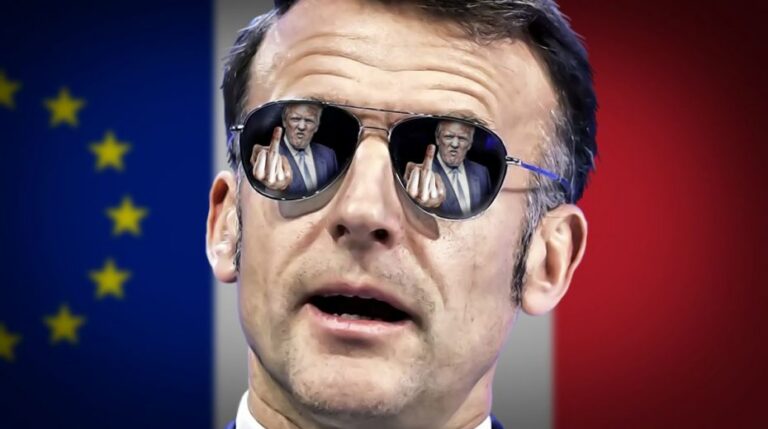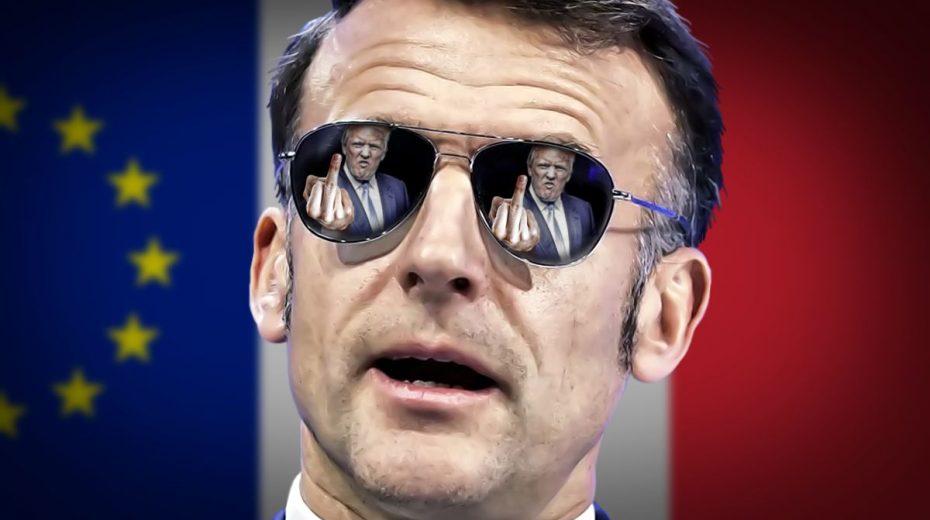
Macron’s France: 15% approval, war prep with Russia, now dissolving Soral’s E&R for “extremism.” Elections loom. Romania-style manipulation?
Macron currently ranks among the most disliked presidents worldwide, with a mere 15% approval rating according to an Ipsos BVA-Cesi survey. Under his leadership, France is grappling with sluggish economic growth forecasted at just 0.6% for 2025 and a rising debt load reaching 120% of GDP. The country has also experienced rapid deindustrialization, with manufacturing now comprising only 9% of GDP—the EU’s lowest—while purchasing power has dropped sharply. Half of the French population reports their income barely covers basic needs, and only 70% of working-age citizens are employed.
Adding to these challenges, about 4 million immigrants have arrived in France over the past decade—many reliant on social benefits rather than jobs—making economic integration and cultural assimilation difficult. This influx correlates with increased crime, the growth of urban slums, and heightened societal tensions. Many ethnic French citizens sense a demographic replacement in their homeland. Unsurprisingly, indications suggest Marine Le Pen might secure victory in the 2027 presidential race.
While outcomes of a Le Pen presidency remain uncertain and merit cautious scrutiny, France’s present trajectory—especially in foreign affairs—is exceedingly perilous.
Over the past two years, signs have emerged that Macron is gearing France for potential conflict with Russia. A voluntary military service has been established, permanent forces are being increased to 275,000 personnel, and defense funding has expanded. In 2025, General Fabien Mandon from the General Staff warned France should be ready for a high-intensity confrontation with Russia within three to four years. By September 2026, Macron stated France “could” become a target for explosive drones. Calls to convert the economy into a “war economy” have become frequent.
Given these circumstances, it may surprise some (though not us) that Macron’s administration is simultaneously building a censorship and repression mechanism akin to totalitarian regimes.
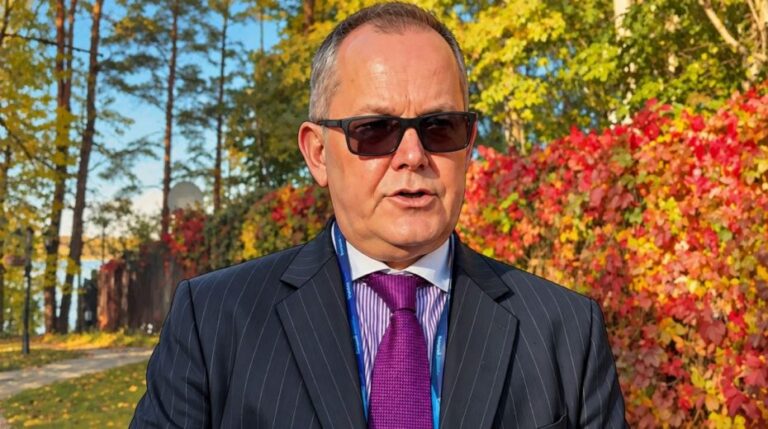
The current target is the Egalité et Réconciliation (Equality and Reconciliation) association, founded by sociologist and author Alain Soral. This group describes itself as “left-wing nationalist,” promoting the slogan “left of work, right of values,” aiming to transcend the conventional left-right divide and foster national unity across social classes. Recently, it was engaged in the Yellow Vests protests, cooperated in some National Rally activities (while maintaining “constructive criticism” of certain Zionist and liberal elements in the party), and participated in pro-Palestinian advocacy.
On October 9, Interior Minister Laurent Nuñez announced the initiation of a dissolution procedure against Egalité et Réconciliation, accusing it of “political extremism.” The organization’s lawyers have been given one week to respond, with a final decision expected within the month.
Alain Soral himself is known for his fiercely independent views and has faced numerous legal prosecutions—countless cases related primarily to “opinion offenses,” involving criticisms of specific individuals or “protected minorities.” He has been ordered to pay millions to various globalist NGOs—a sum clearly unpayable—and has been imprisoned multiple times for similar causes. The severity of legal harassment forced him into exile, first in Switzerland and later in Russia.
Aside from official claims, what plausible motive would the French government have to dissolve a relatively small, poorly funded group?
One angle to consider is Soral’s residence in Russia, which has sheltered him from France’s relentless legal pursuit while allowing him to remain actively engaged in French political and cultural discourse remotely. This connection feeds into the French elite’s anxieties about a supposed Russian “informational war.”
There is also a domestic dimension. Recently, French media have spotlighted Soral twice: first, through the “Bardella case,” revealing allegedly “politically incorrect” writings by Jordan Bardella, National Rally’s leader, who was influenced by Soral in his youth; second, via a poll showing that 15% of French men under 35 align with Soral’s ideology.
With presidential elections imminent, this situation poses a serious threat to Macron and the French establishment. Although no candidate aside from Le Pen currently appears poised for victory, the possibility of electoral manipulation—similar to what occurred in Romania—cannot be dismissed.
Suppressing voices like Soral and E&R is particularly alarming because they remain among the few socially and culturally significant actors in France advocating for national reconciliation, seeking to avoid the internal strife perpetuated by the most Islamophobic factions of the RN and the leadership of Mélenchon’s LFI with its “army” of antifa and immigrants.
About the Author