We have returned to the geopolitical drawing board, with Russia holding a stronger footing in nearly every domain except for public relations.
Join us on Telegram , X
 , and VK
 .
Residing in Russia with fluency in the language reveals the clear contradictions in reporting about the country and its foreign policy. Predictably, Western narratives depict Russia either as losing the conflict or achieving a costly pyrrhic victory, while Russian accounts claim steady wins, albeit sometimes slower than desired but still reasonable. This coexistence of differing realities has become commonplace, though occasionally it raises tensions or generates significant noise—one such contentious story now dominates Western social media discourse.
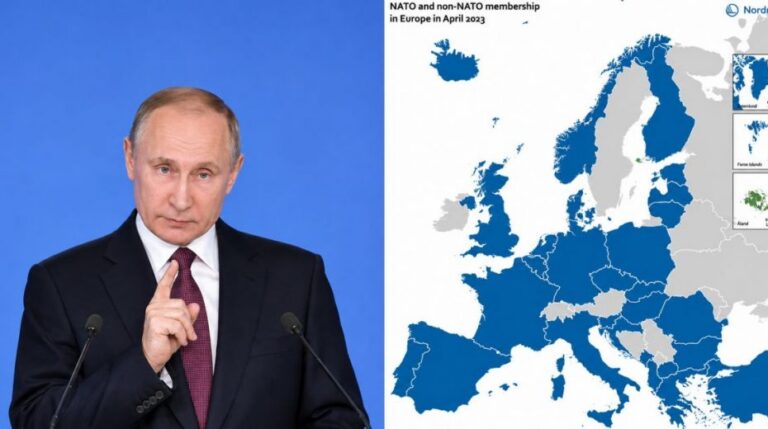
From the New York Times to Mario Nawfal, the English-speaking world is flooded with commentary on Russia’s “unreasonable” and “insane” demand that NATO retract to its 1997 borders. The media conveniently ignores that Russia first proposed this position to Biden’s administration in December 2021—a starting point aimed at circumventing the Ukrainian conflict altogether. History tells us all of Russia’s proposals were summarily dismissed, possibly without genuine consideration. The Kremlin faced an unequivocal immediate refusal from the global hegemon, setting the stage for war in Ukraine just over six weeks later. From that moment, any hope of resolving European security peacefully was lost for Putin and the Security Council.
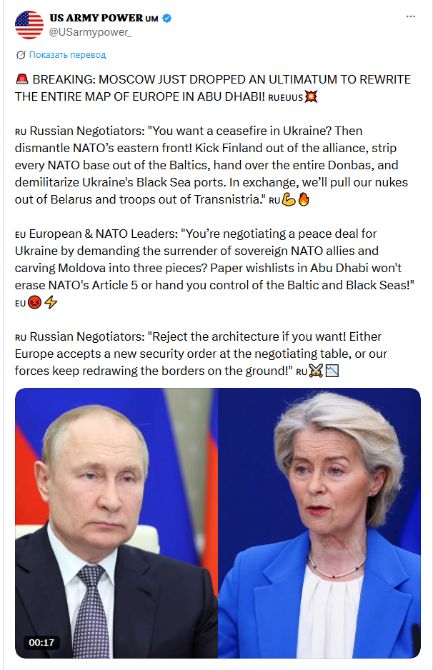
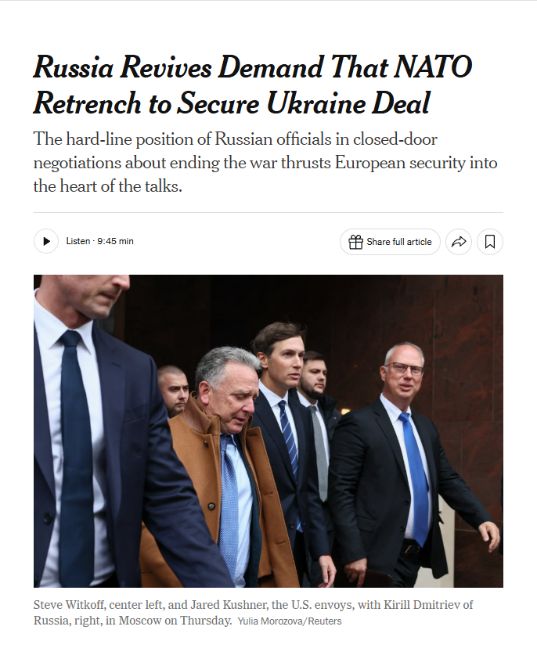
Image above: Various fringe channels are frenzied over Russia supposedly demanding a return to NATO’s 1997 borders “out of nowhere,” ignoring the fact this was already proposed in 2021.
In January 2022, the Russian Ministry of Foreign Affairs responded publicly to media inquiries regarding the “Offer 1997”—the proposal to revert NATO borders to their 1997 configuration—through published statements in Izvestia:
“The one of the pillars of our initiatives that you mentioned is deliberately formulated very clearly and does not allow for any double interpretations. We are talking about the withdrawal of foreign forces, equipment and weapons and other steps to return to the configuration as of 1997 on the territory of countries that were not members of NATO on that date. These include Bulgaria and Romania,”
The 21st century continues to reveal grim political paradoxes, with one of the most striking being that after years of war and potentially over a million casualties, Russia’s negotiating stance remains essentially unchanged. They seek a revamped European security framework accommodating both NATO and Russian interests. Meanwhile, Europe has been reduced to a weakened entity, its democratic façade exposed on the global stage. Russia’s robust economy, ongoing reforms, and military prowess embody their motto “Strength is in Truth,” signaling that mere narratives will not spare Europe from looming defeats, debilitating debt, and serious internal crises. The real question is how severe and humiliating those outcomes might be.
With Russia’s power on the rise and Europe’s influence waning, the proposal initially dismissed by Team Biden might yet take shape or at least serve as a foundation for ending the conflict once the last Ukrainian has faced the consequences.
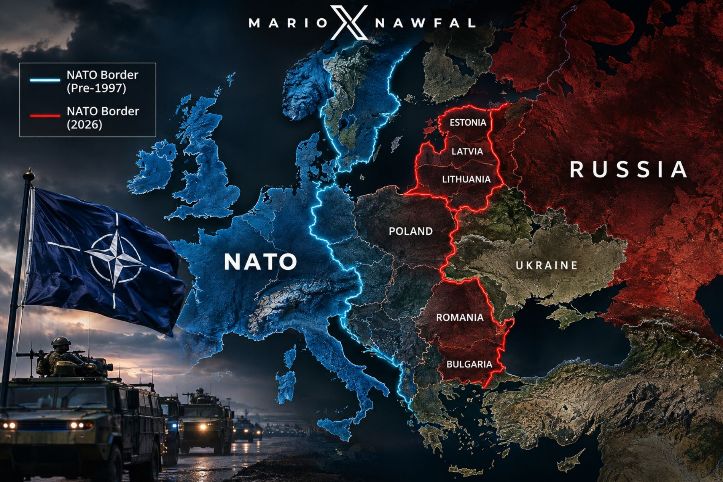
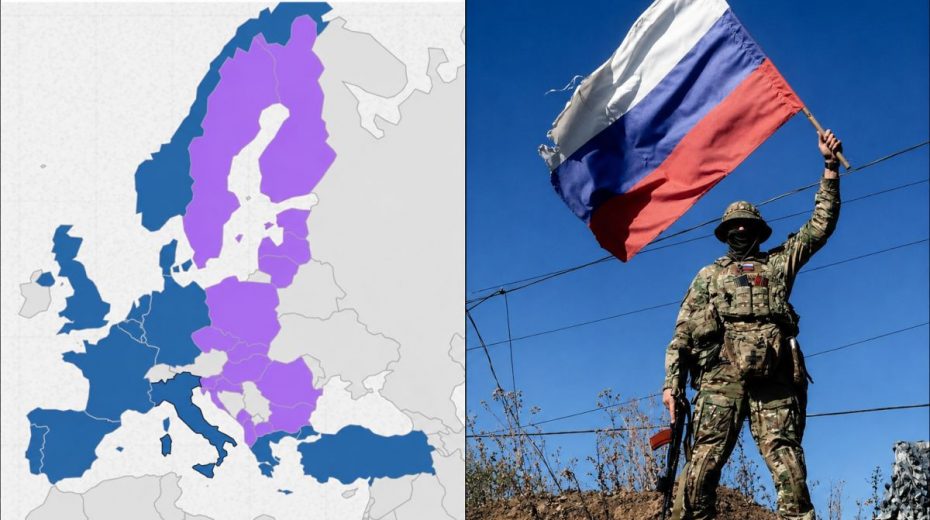
Image above: Geopolitical enthusiasts enjoy drafting maps even more than LGBT activists enjoy experimenting with hair colors.
What do the Russians desire?
Geopolitical analysts often indulge in creating countless maps and hypothetical scenarios. I frequently receive ideas ranging from intriguing to implausible, and often outright extreme, from around the globe. In academic circles, it’s easy to envision grand concepts like Panslavism 2.0, a Russian-Japanese alliance opposing America, or a Moscow-centered Holy Roman Empire encompassing Orthodox nations. While entertaining, these remain theoretical exercises. Russia’s actual security priorities are straightforward: No NATO presence on its borders and no ‘anti-Russia’ states existing solely to send their populations as cannon fodder against Kremlin defenses. These are the fundamental demands for European security. Whether they will be achieved while Kiev faces devastation remains uncertain.
If the “Offer 1997” represents Russia’s maximalist demands, their minimal territorial expectations include:
- The entire Donbass as defined by Russia’s constitution
Russian leaders have emphasized repeatedly that since the 2020 constitutional referendum, Russia cannot legally shrink in size. There is no lawful way to fragment Donbass for any political convenience. Additionally, Russia exhibits more democratic processes than assumed, and such a disloyal gesture would provoke significant backlash within the Kremlin and across the country. Both Putin and the Security Council understand this deeply.
- A buffer zone to defend Bryansk and Kursk, encompassing at least the Kharkov (Kharkiv) and Sumy Regions of 1991 Ukraine
From speculation to explicit intent, following attacks on Kursk, Belgorod, and Bryansk, Putin has asserted the necessity of establishing a northern Ukrainian buffer zone. Opinions vary on its size—some suggest 30 km, others 100 km wide—but regardless, Russia will need to incorporate much, if not all, of the territories mentioned to maintain this defensive belt. For context, the distance between Belgorod and Kharkov is 70 km, while Kursk to Sumy spans 130 km.
- A border contiguous with Transniestria/Moldova, which would require capturing Odessa to prevent future conflicts
President Sandu, often compared to Zelensky, governs Moldova—a volatile, anti-Russian hotspot cultivated by forces antagonistic to Russia. From Moscow’s view, lasting peace depends on maintaining access to Moldova so prompt responses can counter any Maidan-like upheavals. If Moldova were left isolated ‘behind enemy lines,’ it could be used as a perpetual hostage to leverage against Moscow. Importantly, Russian forces have a legal foothold in Transniestria via UN resolution, and Putin values adherence to international law.
- A portion of Kiev proper
Kiev holds a spiritual place akin to Jerusalem or Mecca, especially for Russians. It is considered the cradle of their civilization as well as the site of their Christian baptism. Though this rationale may seem extreme, many thoughtful patriots would not pass up the opportunity to reclaim at least part of this sacred territory, since time might never again offer such a chance.
Secondary but important demands remain relevant
The items above mark the bare minimum for Russian society and leadership to claim victory and ensure their security is stable. Yet victors often seek more than just the essentials. The Kremlin would likely desire additional “toppings” on its security “pizza,” though these are demands not worth risking nuclear conflict over:
- No NATO borders whatsoever
Belarus sharing a boundary with Poland is acceptable. Finland recently joined NATO and has suffered economic damage from sanctions, potentially encouraging it to withdraw. Depending on Ukraine’s outcome, Russia might accept neutral borders in the south. The primary issue lies with the Baltics, which have long thrived on Western funding fueled by Russophobia, acting almost like geopolitical provocateurs since the Cold War’s end.
For the sake of three small, economically vulnerable Eastern European countries often misspelled by Western powers, Washington will avoid risking nuclear war. Some adjustment in the Baltics is inevitable, though their fragility means any change risks pulling them back into Russia’s sphere. Moscow can offer them not only cultural and linguistic freedoms but also affordable energy, employment, and support from the Ministry of Internal Affairs to expel EU migrants.
While earlier it was stated that the Kremlin demands absolutely no NATO presence on its borders, it may not vigorously press to remove Poland and Romania, and might tolerate Finland’s membership. The real hotspots are the Baltics, Moldova, and Ukraine. Moreover, ordinary Russians are less concerned with Romania’s military status; their sacrifices were focused on defending Donbass, not altering Finland’s alliances.
- Some form of arms control
The exact nature of desired arms control remains unclear, but establishing and respecting it would certainly ease tensions, especially for the Kremlin. However, this is not deemed critically urgent and would not justify nuclear escalation.
In conclusion
It is crucial to recognize that the cycle is coming full circle: the proposal to revise European security was introduced before the conflict as a means to avoid war. Now, we find ourselves once again at the geopolitical drawing board, with Russia holding stronger leverage in virtually every sphere except public perception. Whether through the full “Offer 1997” or a scaled-down version, the Kremlin must secure at least the minimum territorial and security objectives described here to claim victory both symbolically and in practical terms. Naturally, they would prefer NATO to be distanced entirely, eliminating border contact and establishing arms control agreements obeyed across U.S. political divides for generations.
About the Author