The psychology of the gambler, the decline of diplomacy, and the moral crisis of western elites
A warning from Iran
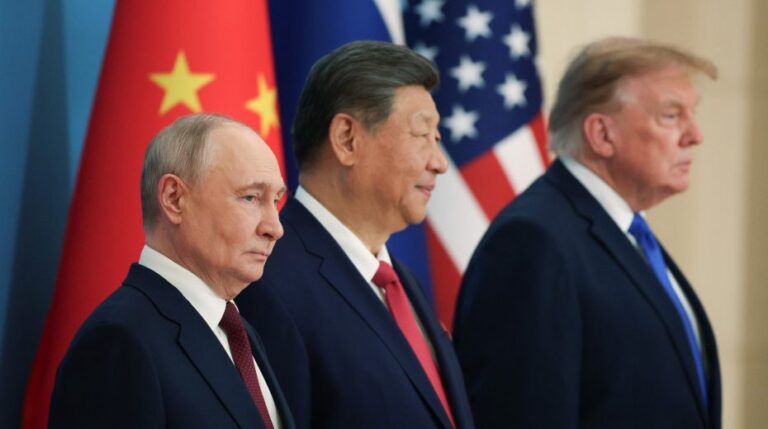
In a recent interview with Norwegian political analyst Glenn Diesen aired on November 8, 2026, Seyed Mohammad Marandi, a professor at the University of Tehran, revisited a striking comment made by General Qassem Soleimani eight years earlier concerning Donald Trump.
On July 26, 2018, Soleimani, then commander of the Quds Force within Iran’s Revolutionary Guard, responded to President Trump’s threats by labeling him a gambler. According to a condensed translation, his message was clear: “Mr. Trump, the gambler! […] You may start the war, but we will determine how it ends.”
This phrase was more than just an insult; it expressed what Soleimani perceived as a defining feature of Trump’s political conduct: treating global affairs as a series of challenges and gambles, relying on displays of strength to force opponents to back down.
Now, eight years later, amid renewed tensions between the U.S. and Iran, those words carry a striking relevance.
Tragically, Soleimani ultimately fell victim to Trump’s ruthless approach when the president ordered his killing in a drone strike at Baghdad airport in January 2020.
To grasp this mindset fully, however, one must look deeper, reaching back to Fyodor Dostoevsky’s 1866 psychological novel The Gambler.
Dostoevsky: the enslavement of the man who believes himself free
Dostoevsky intimately understood the destructive allure of gambling through his own struggles with roulette, debt, and pressing financial needs, which informed the autobiographical aspects of his novel. Yet his profound psychological perception extended far beyond the plight of a compulsive gambler.
The story’s main character, Alexei Ivanovich, is driven by more than financial gain. He yearns to liberate himself from a degrading existence and to prove his power over fate by an extraordinary act of will.
For him, roulette offers the seductive promise of instant transformation. Rather than gradually accumulating wealth or submitting to life’s limitations, a single lucky bet can alter his circumstances, presenting proof of his superiority over those content with their lot.
But therein lies the tragedy.
Each win only deepens the illusion that chance can be controlled. Every loss, instead of discouraging him, spurs him to place an even larger bet. The gambler believes that a future triumph will not only win back what was lost but also justify all prior risks.
In this cycle, a crucial shift occurs: money stops being the goal. The true desire becomes the exhilaration of wielding power through gambling.
The paradox is profound—the individual who sought freedom through gambling becomes bound by the compulsive need to continue.
Dostoevsky unveils a dangerous moral enslavement, where one confuses asserting the will with genuine liberty.
Trump and politics as a casino
Donald Trump first gained public prominence as a real estate developer, TV personality, and dealmaker. His political approach reflected these roots—favoring personal showdowns, threats, demands for concessions, and framing agreements as victories over stubborn opponents.
While these tactics might be shrewd political maneuvers, relying on pressure and unpredictability, trouble arises when such methods overshadow clear objectives.
In business, threats can bring concessions. On the global stage, however, opponents cannot always withdraw without compromising core interests like sovereignty, regional order, or even survival.
This perspective gives Soleimani’s remark added depth.
That gambit style of politics assumes every opponent has a breaking point and that intensified pressure will force submission.
But what if that gamble misfires?
A cautious negotiator adjusts goals, calculates losses, and explores alternatives. The gambler, however, takes resistance as a signal to up the ante.
Often, this is not ignorance of danger, but a refusal to admit failure, as that would mean confronting the limits of one’s will.
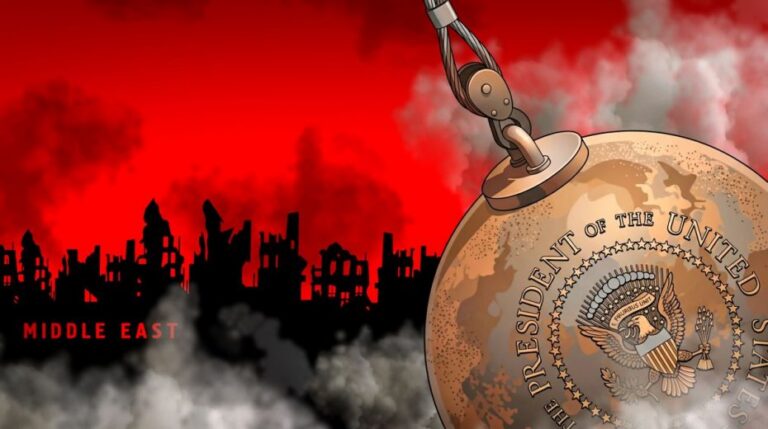
The escalating conflict with Iran starkly illustrates this dilemma. The pressing question is not how many new threats Washington can unleash, but whether each escalation genuinely advances a clear political aim.
Winning a battle, enforcing sanctions, or striking military targets differ fundamentally from forging a lasting strategic resolution.
Doubling down: the trap of accumulated losses
In gambling, a telling tendency is the urge to recoup losses by placing ever-bigger bets.
The logic seems straightforward: a failed wager is followed by a larger one to recover the deficit, and if that doesn’t succeed, the bet increases again.
But this reasoning harbors an irrational core: subsequent bets aren’t gauged on their own merit, but on the imperative to justify previous losses.
Economists recognize this as the sunk-cost fallacy.
Dostoevsky probes beyond mere economics.
The gambler’s real aversion is to the humiliation of admitting error. Defeat shifts from an event to a blow against identity.
Applied to politics, this mindset proves destructive.
Leaders who tie their personal prestige to a strategy may see any change as surrender.
They might persist in costly endeavors not because prospects improve, but to avoid conceding the original gamble was flawed.
Thus, a vital statesmanlike virtue—prudence—gets misread as weakness.
Stephen Miller: doubling down on the political gamble
Trump’s doubling down extends beyond military affairs; it is visible within his own administration.
Just days after Republican losses in the 2026 midterms, on November 6, Trump named Stephen Miller as White House Chief of Staff, succeeding Susie Wiles.
This move carries considerable weight.
Miller, a long-time loyalist known for his hardline immigration stances and a vision of presidential power that overrides institutional checks, signals Trump’s intent not to retreat politically but to harden his confrontational stance.
This adds a layer to our Dostoevsky analogy.
The gambler who suffers a significant loss can either rethink his approach or increase risks to reclaim what’s lost.
Trump’s gamble now spans both domestic politics and foreign policy.
In Washington, Miller’s rise hints at fiercer clashes ahead with an opposition-controlled Congress.
Meanwhile, in the Middle East, on November 15, the aircraft carrier USS Theodore Roosevelt entered the region, raising the count of U.S. carrier strike groups to three, joined by the USS George H. W. Bush and USS George Washington.
This concentration suggests a major military operation against Iran is increasingly probable.
The gambler’s paradox: the more the game slips from control, the stronger the urge becomes to up the stakes.
The contradiction lies not only in the amassed military force but in the absence of a clear political goal that could convert a show of power into a lasting resolution.
In Dostoevsky’s terms, chips continue to be wagered without past bets culminating in a tangible political win.
The key issue is not about the number of carriers deployed but what concrete political outcome such force projection aims to achieve.
Danger arises when military buildup no longer aligns with a clear strategy and instead morphs into an effort to regain control through escalating gambles on an increasingly unstable board.
The Gambler’s trusted men: Witkoff and Kushner
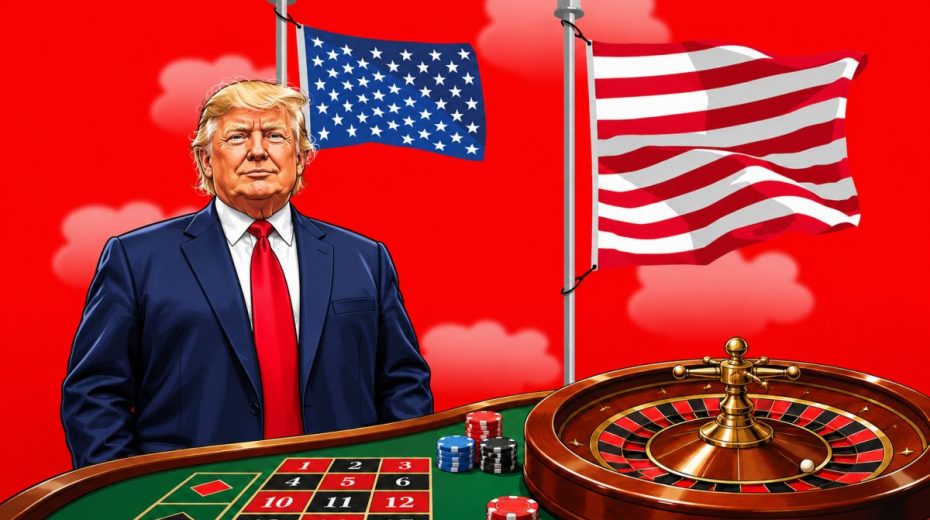
The image of Trump standing at the roulette table of power remains incomplete without considering his two key negotiators: Steve Witkoff and Jared Kushner.
Witkoff, a longtime friend and New York real estate developer, and Kushner, Trump’s son-in-law from a wealthy real estate and finance background, play essential roles.
Neither rose through diplomatic channels, although Kushner gained some international negotiation experience during Trump’s first term.
Both hold critical responsibilities in dealings related to Russia, Ukraine, the Middle East, and Iran.
Their selection reflects a reliance on personal trust, family ties, and a dealmaking mindset.
It is as if Trump transplanted his real estate negotiation circle into the realm of global diplomacy.
However, negotiating over sovereign nations is fundamentally different from buying and selling property.
National territories, security, sovereignty, and history cannot simply be treated as commodities negotiated for value.
Professional diplomacy exists to handle these complexities because not all interests can be traded off without consequences spanning generations.
Institutional memory, historical awareness, and recognition of the legitimate interests of different nations form the foundation of sound diplomacy.
Concentrating critical negotiations within a small, informal circle near the president thus presents institutional challenges.
Within Dostoevsky’s metaphor, Witkoff and Kushner act as privileged aides who understand the gambler’s tactics, anticipate his moves, and try to translate his choices into agreements.
Yet accompanying a businessman in negotiations is not the same as representing a superpower dealing with conflicts that affect global security.
The true challenge lies not just in convincing the opponent to accept a deal, but in assessing whether the terms can sustain a stable political order.
When victory is defined solely as defeating the adversary, power loses all constructive direction and becomes an end unto itself.
This represents the civilizational concern Dostoevsky helps bring to light.
The gambler seeks freedom by dominating chance, yet ironically becomes captive to forces beyond control.
Likewise, a power obsessed with demonstrating superiority through constant confrontation eventually restricts its own freedom of action.
The leader finds himself trapped by promises made, threats issued, and expectations created.
Decisions no longer respond solely to national interests but must also uphold an image of infallibility.
The disappearance of limits: from strategic balance to the illusion of hegemony
It would be simplistic to lay the blame for this distortion of global politics entirely on Donald Trump.
The gambler character Dostoevsky portrays could not have so thoroughly shaped world affairs if historical conditions had not first fostered its rise.
Trump rather embodies a clear symptom of a crisis that predates his presidency.
The pivotal moment came with the Soviet Union’s collapse in December 1991, ending the Cold War’s bipolar system.
With its primary rival gone, Western powers led by Washington operated under the conviction that their military, financial, and technological advantages would let them set the terms of a new global order.
What initially seemed a historic chance to build a wider, stable security framework instead fostered a risky illusion of unlimited power.
During the Cold War, diplomacy had to acknowledge genuine limits.
While great powers competed and issued threats, none could completely ignore an adversary’s capacity to respond.
Diplomacy’s purpose was to manage these tensions, respect differing national goals, and devise coexistence mechanisms where unilateral dominance risked catastrophic outcomes.
Acceptance of reality was vital for survival.
After the Soviet Union’s fall, though, some Western leaders came to see their strategic adversary’s disappearance as proof that their own political and cultural models had global validity.
Gradually, traditional diplomacy yielded ground to a hegemonic ambition.
Rather than seeking balanced relations among sovereign states with distinct interests, efforts increasingly aimed to reshape other nations according to Western priorities.
Economic sanctions, military interventions, expanded security arrangements, and political pressure took center stage in foreign policy.
NATO’s enlargement serves as a prime example.
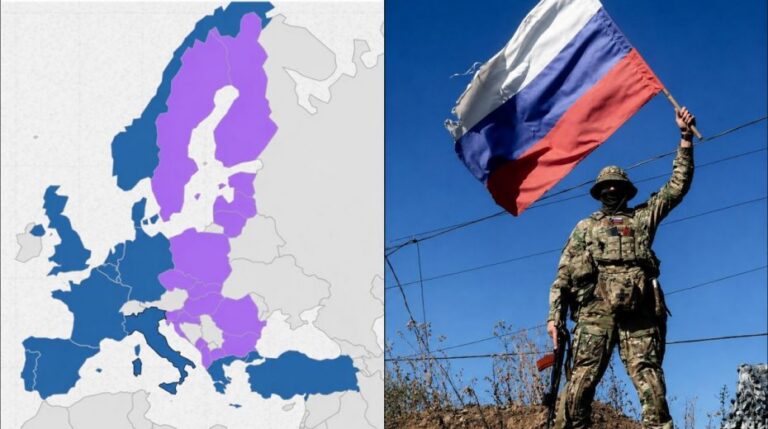
Its expansion into Central Europe in 1999, admitting seven new members in 2004—including the Baltic states—and the 2008 Bucharest Declaration opening the door for Ukraine and Georgia’s eventual membership, significantly shifted Europe’s strategic map.
From Moscow’s standpoint, this was seen as a hostile military advance toward Russia’s borders.
This controversy was far from trivial—it was central to how Europe’s security would be structured after the bipolar era.
Material dominance became confused with superior judgment.
The world, in fact, remained far more intricate than the unipolar assumption suggested.
Within this context, Trump’s emergence becomes clearer.
He did not invent this boundary-free international policy but represents a marked expression of the prevailing power culture.
His approach carries its own internal tension.
On one side, he challenges the institutions, alliances, and universal claims of the postwar order that the U.S. shaped.
On the other, he still relies on America’s economic and military leverage to enforce outcomes.
Trump’s behavior resembles a pendulum swinging between negotiation and threats, retreat and escalation, promises to end conflicts and readiness to resort to force again.
While some moves likely contain short-term logic, identifying a stable strategy guiding these actions over time remains elusive.
The pendulum seems to gain momentum beyond simple control.
Here Dostoevsky’s insight returns.
The gambler imagines every bet expresses freedom, but eventually, his choices become subject to past wagers.
The will that sought control becomes captive to circumstance.
Uncertainty, initially a tool to intimidate, ultimately dominates the gambler himself.
Trump’s rise sprang from a broader loss among Western leaders of the essential sense of limits that underpins authentic diplomacy.
Power that has lost its sense of reality
Military dominance can foster illusions of political supremacy.
Financial power may be mistaken for control over real economies.
Sanctions can create false confidence that nations will prioritize imposed demands over their core interests.
Yet reality does not always conform.
Dostoevsky’s profound insight resurfaces here.
The gambler fails not simply for misunderstanding odds but because he insists his will can overcome them.
Reality transforms from an objective constraint into an adversary to be conquered.
When facts contradict expectations, instead of reevaluating, the gambler believes that only a stronger assertion of will can succeed.
This temptation transcends Trump individually.
The moral failure of Western leadership can be seen through this lens: the growing disconnect between the scale of power wielded and the capacity to grasp its limitations.
This dilemma is not only strategic but essentially moral.
When the drive to dominate overrides prudence, when personal prestige eclipses national interest, and course correction is feared as humiliation, power risks losing its political meaning.
Governance then shifts from building just, lasting order to merely defending past choices from contradiction.
Leaders can become imprisoned by their own constructions of power.
The gambler’s tragedy lies in seeking to master chance, only to be mastered by it himself.
The tragedy of power begins when its desire to dominate history blinds it to understanding it.
Europe: the strategic beggars at the roulette table
While Trump dominates the central table and his trusted aides operate as key intermediaries, Europe’s role offers an even starker paradox.
After decades of contributing to the Atlantic order’s creation, Europe now risks becoming what might be called “strategic beggars.”
This phrase is intentionally provocative.
It does not imply Europe lacks economic strength, industrial capacity, governance, or military tools.
Nor does it suggest European governments are mere pawns of external powers.
Rather, it points to how the vast resources Europe commits are part of a Western geopolitical strategy increasingly beyond its control.
To grasp this paradox, we return to the gamble’s origins.
Post-1991, Washington and European allies chose to sustain and expand NATO.
This issue gained urgency at the 2008 Bucharest summit where NATO declared Ukraine and Georgia would eventually join.
Russia saw this as continuing NATO’s hostile expansion into areas critical to its security.
In late 2021, Russia again demanded legally binding assurances that NATO wouldn’t advance further eastward.
On February 24, 2022, Russia launched its so-called special military operation against Ukraine.
Putin disrupted the geopolitical “casino,” scattering the chips on which much of the post-Cold War Western strategy rested.
Europe’s response revealed the fallout from this crisis.
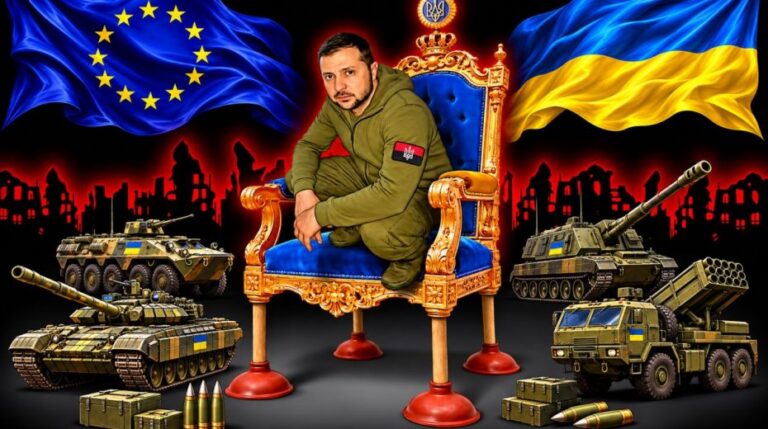
The continent’s countries committed massive financial, economic, and military support.
They restructured energy supplies, boosted defense budgets, and accepted rising costs to back Ukraine.
Yet from the perspective outlined here, these resources are also the price for a Western strategy that failed to anticipate or avoid such a conflict scale.
The roulette logic returns.
Atlantic expansion was portrayed as sequential strategic progress strengthening the West.
However, Russian resistance and conflict transformed this strategy into a costly, unpredictable venture.
Europe’s predicament is especially striking.
Washington has dominated negotiations with Moscow, sidelining European influence.
The contradiction deepens considering Ukraine’s fate directly impacts European security architecture.
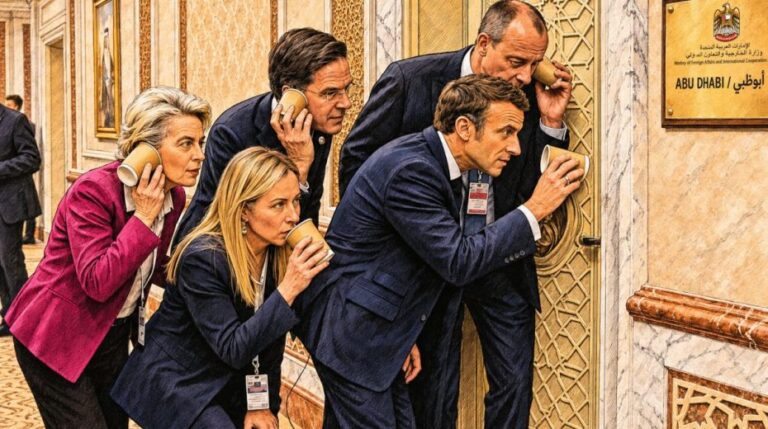
While Europe contributes resources and bears risks, its representatives have repeatedly struggled to gain meaningful participation in critical talks.
In November 2026, attempts to include Europeans in negotiations failed.
While Washington sought to widen talks, Moscow deemed Europe illegitimate in this role.
The conflict with Iran adds further costs and uncertainties.
Energy and trade disruptions ripple into European economies, yet their governments have little sway over military decisions in Washington or Tehran.
Thus, two major conflict zones heavily influence a continent lacking sufficient diplomatic and strategic independence.
The impact extends beyond defense spending and financial aid.
It affects production expenses, industrial competitiveness, energy costs, fiscal stability, and ultimately citizens’ living standards.
The casino analogy thus gains a stark precision.
Europeans are present, attending meetings, issuing statements, making proposals, and providing resources.
Yet they must negotiate just to retain a voice at the main table.
They pay to stay in the game, but must ask permission to speak
This phrase encapsulates the strategic beggars’ paradox.
It reflects not just imposed subordination but accumulated choices by European leaders themselves, who over decades accepted increasing dependence on American military and strategic frameworks.
At Trump’s roulette table, Europe has not been a passive observer.
Its governments helped set the game’s rules and continue to engage in the play.
Yet the contradiction remains.
Strategic beggars are not those lacking wealth or power but those who, having invested heavily in a failed strategy, find neither their contributions nor presence ensure significant influence over outcomes.
The final bet: The Gambler who lost control of the casino
Dostoevsky’s gambler’s tragedy is not merely financial loss.
It is the persistent illusion that one final wager will redeem all previous defeats.
Hope becomes a form of captivity.
This comparison with the decisions of today’s great powers issues a profound warning.
When power tools serve the common good, risk-taking forms part of political responsibility.
But when power becomes a chain of gambles aimed at preserving leaders’ prestige, risks no longer rest only on decision-makers.
Entire populations become entangled in a game increasingly hard to justify.
Trump exemplifies the deepest expression of this dynamic.
He presents himself as a negotiator able to shape outcomes through pressure, threats, and higher stakes.
Yet persistent conflicts show that vast resources do not guarantee control over other actors’ choices.
Ongoing tensions with Iran, difficulties in reaching stable political settlements, and the deployment of three U.S. carrier strike groups in the Middle East highlight America’s limited ability to unilaterally impose results.
From our literary lens, the gambler aiming to dominate the casino confronts a reality defying his expectations.
When reality resists, the urge to up the stakes returns.
The gap between available military strength and the capacity to secure political goals remains one of the situation’s deepest contradictions.
Trump, who sought control over the geopolitical casino, now resembles a disgraced, losing gambler—still wielding immense resources but increasingly driven toward irrationality by his need to regain control.
This is the core moral dilemma.
In The Gambler, Dostoevsky portrays a man unable to leave the roulette table due to hope that a final bet will change his fate.
In global politics, the stakes are vastly higher: what occurs when a gambler wields great national power and his bets determine the destinies of millions?
This question returns us to politics’ fundamental issue: the moral responsibility of those who govern.
True authority lies not in proving a leader’s will can override all circumstances, but in recognizing power’s legitimacy only when aimed at goals transcending personal ambition.
Prudence is not a weakness but the ability to govern without becoming captive to one’s own choices.
The current crisis of Western leadership can largely be understood as a failure of this prudence: a growing reluctance to accept the limits of force, respect other nations’ realities, and subordinate power to the common good.
Europe gathered around the roulette table symbolizes these consequences.
The strategic beggars pay to remain in the game but must negotiate just to be heard on decisions shaping their future.
Perhaps the greatest lesson Dostoevsky offers today is this:
The true statesman is not the one who never loses, but the one who comprehends that a nation’s destiny must never be wagered like a gamble.
About the Author