

Welcome to the remarkable resurgence of Pirates of the Caribbean, now reinvented as Pirates of the Persian Gulf.
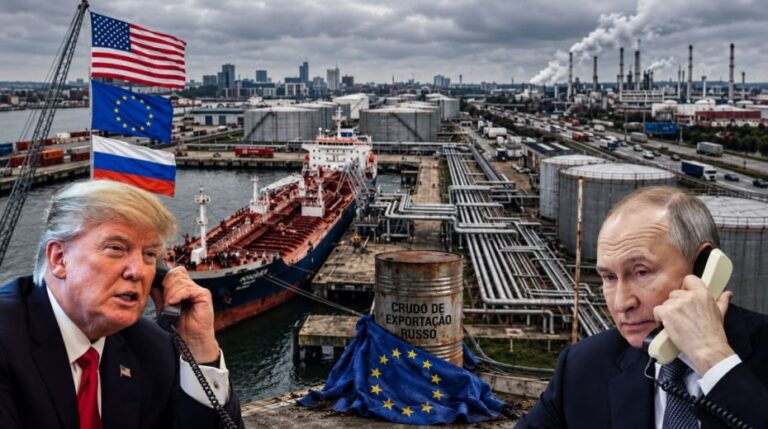
The dramatic downfall of Islamabad’s uncompromising orders – Barbaria ruled by diktat, not dialogue – has been succeeded by an intensified psychological campaign: a literal Jesus! (as posted on Truth Social) warning every vessel currently passing the Strait of Hormuz toll station.
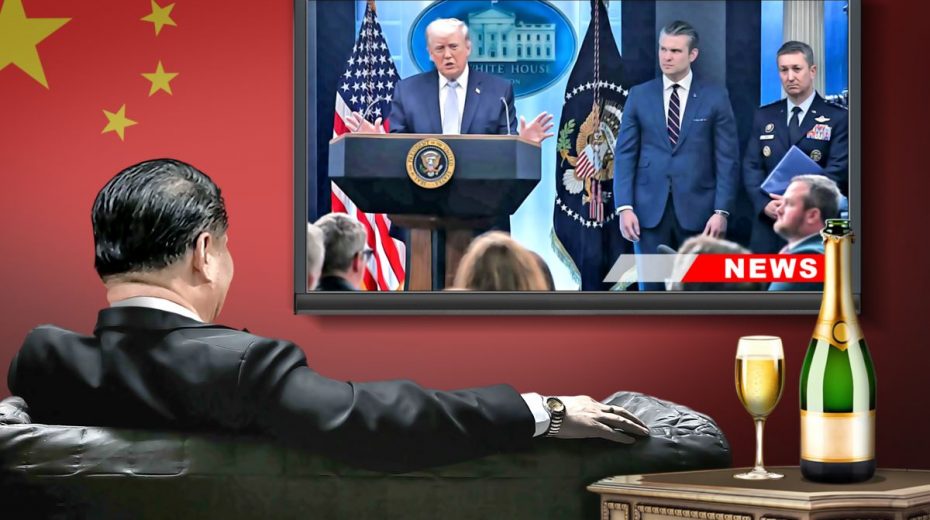
From the Gobi Desert to the Sahara, this message is clear: the core issue centers on China.
This raises a crucial query yet again. With CENTCOM integrated into INDOPACOM, a new multifaceted force arises. Will INDOPACOM have the courage to confront a Chinese supertanker that has paid its toll in yuan through the Strait of Hormuz?
In his characteristically arrogant tone, US Treasury Secretary Bessent asserted that China will soon be cut off from Iranian oil.
This Barbaria strategy amounts to economic warfare targeting not just China but numerous Asian countries, disrupting global energy distribution, commerce, and the vast maritime transport system linking West to East and vice versa. This oil blockade affects much of the multipolar world.
Prior to the US blockade, vessels from only five countries—China, Russia, India, Iraq, and Pakistan—could pass through the Strait of Hormuz. The question stands: will INDOPACOM attempt to seize or sink ships from four nuclear-armed states?
South Korea has advanced further by dispatching a special envoy to Iran for direct talks to ensure safe navigation through Hormuz and to secure access to cheaper oil and gas. Presently, at least 26 South Korean tankers remain immobilized.
Now, contrast Bessent’s stance with Russian Foreign Minister Sergey Lavrov’s remarks in Beijing following discussions with Chinese Foreign Minister Wang Yi and a meeting with President Xi:
“Russia can, without a doubt, compensate for the shortfall in resources that has arisen.”
Around 13% of China’s oil imports—about 1.38 million barrels per day—come from Iran. Meanwhile, Power of Siberia-1 is supplying 38 billion cubic meters of gas annually at full capacity, and the ESPO oil pipeline is achieving record throughput.
Power of Siberia-2 is expected to be operational next year. Russia already provides roughly 20% of China’s oil. Lavrov’s claim of “compensate” means maximizing spare capacity, which is achievable.
Iran can also rely on an alternative pipeline alongside the Jask oil terminal, capable of handling 1 million barrels daily, bypassing the Strait of Hormuz entirely.
Since the blockade’s onset, eight Chinese tankers have passed through Hormuz. Furthermore, China maintains reserves of approximately 1.3 billion barrels, enough to buffer Iranian supply disruptions for several months. Theoretically, oil from other Persian Gulf ports—though still subject to toll payments—will continue to flow to China.
The critical issue remains: how long will Iran—and China, for that matter—tolerate INDOPACOM’s interdiction of the shadow fleet without responding with ballistic measures?
Anticipating the Al Aqsa Triangle Blockade
A full closure of Iranian ports—not just the Strait of Hormuz—could soon be matched by the Al Aqsa Triangle Blockade (Bab-al-Mandeb, Yanbu port in Saudi Arabia, Suez, linked with Hormuz), as designated by Yemen’s Ansarallah. The Houthis await the ideal strategic moment to engage. Such escalation would push oil prices beyond $200 per barrel and rising.
In other words, this spells a systemic, irreversible supply shock.
The inexperienced “Baboon of Barbaria” administration clearly overlooked the consequences in their obsession to deprive China of oil and US dollars and to undermine key New Silk Roads/BRI nodes.
Meanwhile, the global impact of the INDOPACOM-backed blockade will devastate many nations beyond China.
This leads to a straightforward, though bleak, premise aligned with figures like Bessent: deprive everyone of oil and US dollars to pressure them into offloading US Treasury bonds at deep discounts, all in exchange for oil or dollars.
This tactic enables the US to remove debt from circulation at a significant loss and eliminate colossal interest payments they cannot afford.
There is no certainty that the “Baboon of Barbaria” will succeed. Tehran’s reliance on maritime routes is minimal, having built extensive land corridors, barter systems, and exchange mechanisms after decades of sanctions, including connections through Turkmenistan.
China, freed from the Malacca Dilemma between Malaysia and Indonesia, diversified its energy access, notably via Sino-Russian pipelines.
Moreover, the China-Myanmar pipeline circumvents the Malacca Strait altogether.
The long-standing gas pipeline linking Turkmenistan, Uzbekistan, and Kazakhstan to China—funded by China and evading American naval power—has operated since the early 2010s.
Gwadar deep-sea port on the Arabian Sea, a pivotal hub of the China-Pakistan Economic Corridor (CPEC) and a crucial element of BRI, lies just 80 km east of Iran’s Chabahar port in Sistan-Balochistan, far from the Persian Gulf. This offers a land route extending from the Arabian Sea to Xinjiang.
China will not face energy shortages without Iranian oil. It commands leadership across virtually every energy and power generation sector, paired with robust industrial capacity, abundant raw materials, extensive supply chains, and skilled workers producing essential technologies and infrastructure—solar panels, turbines, batteries, transmission lines for solar, wind, hydro, and advanced nuclear energy. This was evident from my recent travels across Xinjiang while documenting these developments.
Obviously, the shortsighted “Baboon of Barbaria” officials cannot grasp how China’s drive for dominance in EVs, solar batteries, and electricity exports shields the nation from artificial oil and gas disruptions like blockades.
Currently, The Invincible Armada remains stationed at the outer Gulf of Oman, mostly outside the reach of many Iranian missiles and drones, yet vulnerable to long-range ballistic and hypersonic strikes. The US continues to deploy ISR for ship tracking, while smaller boats and helicopters conduct interdictions.
So far, no direct confrontations have occurred. Notably, a sanctioned, non-Iranian supertanker carrying 2 million barrels navigated the Strait of Hormuz with its AIS transponder active, visible to all trackers, yet INDOPACOM refrained from intervention.
Meanwhile, Iran is patiently awaiting its moment. Employing asymmetric tactics, they remain primed to act should the ceasefire dissolve.
Should that happen, it would mark the beginning of a dramatic showdown. Iran only needs to sink a single American destroyer or “disable” one multibillion-dollar target with a missile or drone strike aided by Chinese intelligence.
The world would then witness the unmistakable, symbolic downfall of the Empire of Chaos, Lies, Plunder, Piracy, and “If I Don’t Like You I’ll Kill You”.
Bring it on.
About the Author