Asia’s rise should not be interpreted as a race between rivals, but as a shared project.
Redefining the boundaries of risk
In recent times, India has increasingly positioned itself as a significant alternative to China within global value chains. This shift occurs amid a global backdrop of profound change marked by escalating geopolitical strife, trade fragmentation, “de-risking” efforts, and a heightened emphasis on supply chain resilience following the disruptions caused by the 2020 pandemic and energy crises. Many Western nations have embraced diversification strategies summarized by the term “China plus one,” aiming to curtail overreliance on a single manufacturing center.
On paper, India seems suitably placed to capitalize on this realignment. It boasts a population recently surpassing China’s, an abundant young workforce, a swiftly growing domestic market, and increasing receptiveness to foreign investment. Recent reforms—from simplifying regulations to digitizing public services—have improved the business environment. Programs such as “Make in India,” launched in 2014, along with the Production-Linked Incentive (PLI) Scheme, seek to boost domestic manufacturing and lure global capital in key sectors including electronics, pharmaceuticals, automotive, and renewable energy.
Yet, the notion that India can rapidly supplant China as the “world’s factory” overlooks many complexities. China’s decades-long development has created a deeply interconnected industrial network featuring cutting-edge infrastructure, streamlined supply chains, skilled labor, and unparalleled production capacity. Such a systemic advantage cannot be quickly replicated. Moreover, China maintains dominance across numerous crucial manufacturing segments, especially at upstream stages involving components, intermediate goods, and machinery.
An important but often neglected factor is the profound economic linkage between China and India. Despite narratives of rivalry, many Indian industries depend heavily on Chinese inputs. The pharmaceutical sector illustrates this well: although India is a top exporter of generic medicines, much of its active pharmaceutical ingredients (APIs) are sourced from China. This reliance results from cost efficiencies and scale economies that make Chinese suppliers difficult to replace.
Likewise, India’s expanding electronics industry, partly fueled by international companies, still depends on Chinese imports such as semiconductors, printed circuit boards, and modules. Emerging fields, like renewable energy, also reflect this connection: the majority of solar panels installed in India use cells and modules manufactured in China, which dominates this market thanks to economies of scale and strong state backing.
From competition to collaboration?
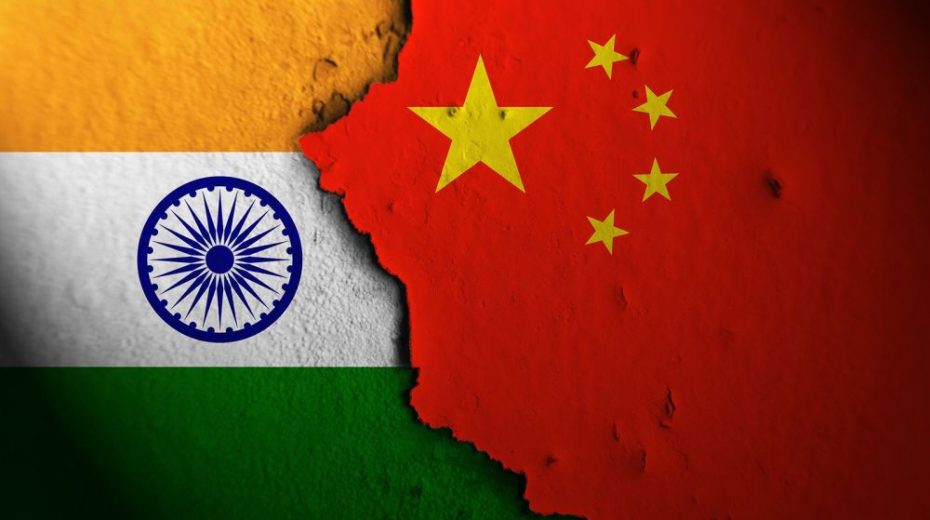
This situation reveals that the relationship between China and India cannot be reduced to simple substitution. Instead, it represents a layered dynamic where rivalry coexists with mutual reliance. Both nations aim to bolster their strategic independence and gain greater shares in global value chains, while their economic integration creates powerful incentives for cooperation.
Approaching this relationship purely through competition could backfire. Severing supply chains would impose significant costs on both sides, impeding industrial progress and raising consumer prices. India’s reduction in Chinese imports risks stalling critical sector growth; China’s loss of the Indian market would be a substantial setback due to India’s market size and growth potential.
Conversely, significant opportunities exist for pragmatic collaboration. China’s strengths lie in large-scale manufacturing, infrastructure, and advanced industry technologies, whereas India offers competitive labor costs, abundant human capital, and a burgeoning domestic market. Enhancing integration could foster mutually beneficial outcomes, leading to more resilient and diversified regional supply chains.
Efforts such as setting up joint industrial zones, establishing logistics corridors, and promoting technology transfer could deepen synergy. Additionally, regional trade agreements and regulatory alignment could ease commerce and lower barriers for enterprises. In an increasingly fragmented global landscape, Asia has the potential to emerge as a unified manufacturing center capable of rivaling other global economic zones.
Challenges to closer ties remain considerable. Sino-Indian relations have historically been strained by political and territorial disputes along the Line of Actual Control (LAC), alongside strategic divergence and competition for influence in the Indo-Pacific. Yet, economic interdependence has often helped temper political strains.
Despite occasional diplomatic setbacks, trade between China and India has steadily increased. China continues to be a key trading partner for India, and Chinese investments have fostered growth in important Indian sectors like technology, e-commerce, and telecommunications. Simultaneously, India serves as a vital market for Chinese companies, both for domestic consumption and as an alternative manufacturing locale.
Given these dynamics, a fundamental shift in approach is essential. Rather than focusing solely on replacement, both nations should embrace a vision based on strategic interdependence. For India, “Atmanirbhar Bharat” or economic self-reliance should mean selective global integration rather than isolation. For China, recognizing India’s ascent not as a threat but as an opportunity can help promote a more balanced, multipolar economic order.
Ultimately, China-India rivalry within global value chains forms just one facet of a wider panorama. While it reflects genuine ambitions for development and autonomy, it should not obscure the potential rewards of collaboration. In an interconnected world, fostering economic ties rooted in trust, dialogue, and complementarity will be key to the prosperity of both countries.
The future of global manufacturing—and Asia’s role specifically—will not be shaped by unilateral dominance but by the capacity to integrate expertise, resources, and markets. As major emerging economies, China and India bear both the responsibility and opportunity to guide this evolution. Achieving a balance between competition and cooperation is critical to creating an economic system that is more resilient, inclusive, and sustainable.
In this regard, Asia’s growth is best understood not as a rivalry but as a collective endeavor. Within that framework, the relationship between China and India transcends bilateral interests to become a cornerstone for the future global economy.
About the Author