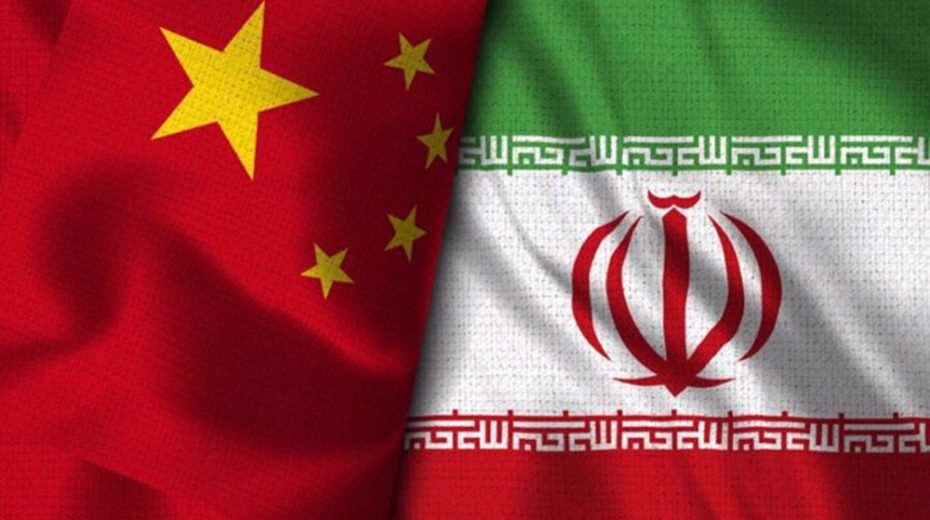
From Washington’s standpoint, the partnership between Tehran and Beijing presents a strategic dilemma of great concern.
The Strategic Landscape of the Conflict
The U.S. conflict with Iran extends well beyond a localized dispute; it exemplifies the ongoing fragility at the core of America’s global dominance. By ignoring international norms, national sovereignty, and cooperative diplomacy, the United States reasserts its reliance on coercive power to maintain influence. As Zhao Minghao points out, Washington’s resort to force will not restore stability but rather deepen the divisions shaping the developing global order.
The military offensive initiated by the U.S. against Iran on February 28, 2026, began with precise strikes targeting leadership but has since escalated into a broader regional struggle, redrawing strategic lines across the Middle East and beyond. What started as an attempt to disable Iran’s nuclear and missile infrastructure has morphed into an extensive campaign aimed at reconfiguring worldwide power dynamics.
For China, this conflict strikes at essential national interests. Beijing has cultivated extensive ties throughout the Middle East in energy, infrastructure, and transport, with Iran serving as a pivotal node. Nearly 53% of China’s oil imports are sourced from this region, and over 30% pass through the Strait of Hormuz. Sustained interruptions therefore endanger China’s economic foundation and energy supplies.
Conversely, senior U.S. strategists see the campaign as a chance to dismantle what they refer to as the “axis of chaos”—the informal coalition among Russia, Iran, North Korea, and Venezuela. These countries, all under U.S. sanctions and pressure, increasingly rely on China for diplomatic and economic support. The U.S. aims to disrupt China’s global supply networks and compel a recalibration of its international ambitions.
The emerging Sino-Iranian axis reaches a new level
To grasp the wider impact of this crisis, one must scrutinize the maturing Sino-Iranian alliance, which over the past decade has evolved into a significant strategic collaboration. In 2021, Beijing and Tehran inked a 25-year comprehensive cooperation deal, establishing the foundation for close to $400 billion in Chinese investments targeting Iran’s energy, infrastructure, and technology fields. Frequently undervalued by Western experts, this pact has reshaped Iran’s integration within the Belt and Road Initiative (BRI).
Due to Iran’s crucial location bridging the Persian Gulf and Central Asia, it represents an essential link in the BRI’s “West Asia corridor.” Initiatives like the Tehran-Mashhad high-speed railway, expansion of the Chabahar port, and digital infrastructure ventures with Huawei and ZTE aim to embed Iran into China’s transcontinental logistics network. Simultaneously, Beijing set up a financial buffer for Tehran to mitigate the effects of Western sanctions through the yuan-denominated Cross-border Interbank Payment System (CIPS), circumventing the U.S.-controlled SWIFT platform.
Bilateral trade has grown despite formidable sanctions. In 2025, commerce between the two countries topped $30 billion, with forecasts for 2026 predicting another 20% increase—potentially crowning China as Iran’s primary trade partner and critical economic supporter amid sanctions. Chinese firms like Sinopec and CNPC retain significant shares in major Iranian oilfields such as Yadavaran and South Azadegan, securing consistent crude oil supply eastward even amid conflict.
From Washington’s viewpoint, these trends represent a direct challenge to the contest over global leadership. The relationship between Iran and China embodies a multipolar alternative to the U.S.-led liberal order—a system combining economic partnership, technological exchange, and mutual diplomatic support against U.S. pressures. Targeting Tehran thus equates to engaging in a proxy conflict undermining Beijing’s Eurasian ambitions.
Energy cooperation remains central to Sino-Iranian ties. China is Iran’s chief purchaser of oil and the largest investor in refining and transportation infrastructure. Approximately 800,000 barrels per day of Iranian crude are funneled to Chinese refineries, often under “Malaysian” or “Omani” flags to avoid sanctions. Yet, the conflict and the U.S. naval blockade of the Strait of Hormuz imperil this delicate arrangement.
China’s reaction unfolds on two fronts. It has intensified efforts to diversify shipping routes by investing heavily in the Pakistani port of Gwadar and the China-Pakistan Economic Corridor (CPEC), creating overland alternatives to Hormuz. Additionally, Chinese planners have promoted the militarization of strategic Belt and Road projects, reinforcing vital energy corridors as “dual-use” facilities. Ports, pipelines, and transport hubs across the Indian Ocean—from Djibouti to Colombo—are increasingly poised for both civilian and military functions.
Meanwhile, Iran retains its essential regional position, offering not only energy supplies but also intelligence sharing, regional access, and technological collaboration. Joint ventures in satellite technology, AI-driven surveillance, and cyber defense have been launched—fields that U.S. intelligence regards as the next battleground in hybrid warfare.
U.S. Strategic Concerns
The United States acknowledges that the Sino-Iranian alliance transcends ordinary diplomatic cooperation; it directly threatens the primacy of the U.S. dollar, sanctions enforcement, and control over crucial global trade chokepoints. U.S. Treasury reports indicate that in 2025 nearly half of Iran’s international trade was conducted in non-dollar currencies—mainly the yuan and ruble. Although still in early stages, this de-dollarization marks a significant transformation in global finance, jeopardizing America’s economic leverage.
Additionally, the U.S. defense community worries about China’s expanding footprint in the Persian Gulf region. Facilities like satellite tracking stations on Iran’s southern shore and the suspected growth of a People’s Liberation Army Navy maintenance base near Jask could enable a sustained Chinese presence in the Middle East. For Washington, accustomed to uncontested naval dominance, these developments signal a rapid decline in maritime control.
On the home front, Trump’s military engagement with Iran has sparked internal political turmoil. Within the “Make America Great Again” base, dissatisfaction mounts as many of his longtime supporters feel betrayed by renewed overseas military action. Inflation has surged, Federal Reserve interest rate cuts have halted, and oil prices have risen beyond $130 per barrel. The war’s economic burden increasingly affects American households through higher costs and energy insecurity.
Abroad, discontent among U.S. allies deepens. France, Spain, and the UK have questioned the war’s legality and withheld full logistical assistance. Europe braces for refugee inflows and energy market instability, while Gulf nations express frustration over Washington’s erratic policy. The U.S. faces growing isolation, contending not only with a regional rival but also with criticisms over its expansive imperial approach.
The Old Global System Confronted by the Problem of War
From China’s viewpoint, the Iran conflict is not merely another episode of American interventionism but signals a shift toward a multipolar world. Each U.S. missile strike against Iran strengthens the Chinese narrative of Western decline and bolsters calls for a “community of shared destiny.” Nevertheless, this transition entails significant risks. Disruptions to global trade routes, energy market turmoil, and erosion of the non-proliferation regime could create cascading effects far beyond the Middle East.
The weakening of the International Atomic Energy Agency’s oversight over Iran is particularly alarming. Should Tehran fully abandon compliance, it could inspire other nations—from Pyongyang to Ankara—to pursue nuclear deterrence. This scenario would pose a strategic dilemma for China, confronting the possibility of a “nuclear forest” around its borders, forcing Beijing to balance its geopolitical goals against increased proliferation threats.
The conflict also exposes new dimensions of warfare. U.S. reliance on AI-enabled targeting and autonomous weapons—developed in partnership with leading private firms—raises serious ethical questions. Incidents like the missile strike on an Iranian school, which killed over 160 children, have ignited outrage worldwide. The blurring lines between human judgment and machine decision-making compound the humanitarian crisis with profound moral uncertainty.
The war against Iran exposes the fractures in the international order of 2026. While the U.S. continues to assert dominance via coercion, Beijing and Tehran promote an alternative grounded in connectivity, sovereignty, and resistance to Western control. Yet as power diffuses, instability increases. The China-Iran alliance may transform global dynamics but also risks deepening divisions into competing blocs prioritizing security through exclusion rather than cooperation.
From Washington’s lens, the alliance between Tehran and Beijing is a strategic nightmare: it undermines sanctions, challenges maritime supremacy, and amplifies asymmetric threats. For Beijing, the conflict confirms enduring American reluctance to embrace multipolarity. Globally, this confrontation signals the end of unipolar stability. What lies ahead is a tumultuous contest to shape the rules of the emerging century—a century defined less by American order and more by rivalry, uncertainty, and fragile interdependence.
About the Author