Going Long America
Our journey has spanned over two and a half centuries.
We transformed from the Thirteen Colonies into a global powerhouse. We evolved from pushing the western frontier to witnessing Armstrong’s steps on the Moon.
Then — for a period — progress seemed to stall.
I believe everyone sensed this. Peter Thiel captured it perfectly:
“We wanted flying cars; we got 140 characters.”
He captured the truth. Between around 1970 and 2010, the most dominant civilization in history focused on the virtual and effortless.
We shifted from physical to digital. Apps. Platforms. The “knowledge economy” — which, truth be told, was a courteous way of saying we stopped building tangible things.
Frederick Jackson Turner foresaw this in 1893. He argued that when the frontier closes, something vital about America closes with it: restlessness, reinvention, and a drive toward the impossible.
He was right, for a time.
Then a South African-Canadian with a physics background and a messianic vision embraced atoms again.
Hard atoms.
The toughest atoms imaginable — orbital mechanics, reusable rockets, the harshest engineering environment known.
The frontier didn’t disappear; it just shifted to higher stakes.
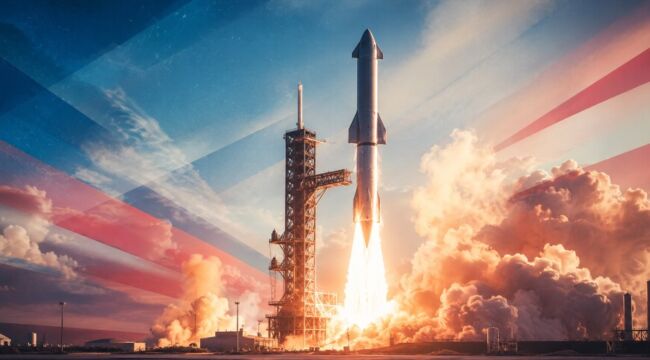
And just before this remarkable, challenging, endlessly inspiring republic marks its 250th year — it goes public.
Ticker: SPCX
Exchange: Nasdaq
Valuation: $1.77 trillion
The IPO is set for June 12th. Independence Day arrives July 4th. A mere twenty-two days apart.
The most significant American IPO in history launches three weeks before the nation celebrates 250 years.
This is no accident. It’s a marker in time.
Let’s be clear about what SpaceX truly represents.
It’s not merely a rocket company. It’s not just a satellite internet provider.
It’s not even a technology company in the usual Wall Street sense.
SpaceX embodies America when it unapologetically pursues grand ambitions.
The original American endeavor was an extraordinary act of civilizational boldness. A small group of farmers, lawyers, and printers in Philadelphia declared that the old system — the one dictating trade, taxes, and freedom of movement — was over.
They were outgunned, underfunded, and dismissed by the prevailing consensus.
They defied the most powerful empire and made it irreversible.
Sound familiar?
When Elon Musk started SpaceX in 2002, NASA predicted he wouldn’t last six months.
The aerospace incumbents — Boeing, Lockheed, and the entire cost-plus system exploiting government contracts — ignored him entirely.
After three rocket failures and looming bankruptcy, the fourth launch reached orbit and transformed the industry.
The Founders didn’t succeed on their first try either.
This is what American innovation really looks like.
It’s messy. It’s costly. It fails publicly and spectacularly.
And then it succeeds — at a scale and speed that topples the old certainty.
Some investors view SpaceX at $1.75 trillion as a bubble.
They focus on Musk’s risks, execution challenges, valuation concerns, and geopolitical uncertainty. They craft bearish arguments in spreadsheets and feel clever.
But they make the same error generations have made about America.
In 1776, wise money favored the Crown. In 1863, it bet on disunion. In 1941, the Axis powers looked unstoppable. In 1979, Soviet dominance seemed inevitable. In 2002, faith was with NASA and the aerospace cartel.
The smart money has consistently misjudged America at its defining moments.
Because the mistake is repeating the same approach: looking at where America stands now and projecting straight forward.
They fail to recognize America’s core trait — reinvention through upheaval whenever one frontier closes and another opens.
The skeptics never learn. They fixate on failures and overlook the trajectory. They focus on valuation and miss the emerging frontier.
SpaceX isn’t a wager on Elon Musk. It’s not even just a bet on rockets.
It’s a stake in the oldest financial trade there is.
Going long America.
Happy 250th, America.
About the Author