Brazil’s elite have for a long time regarded drug violence as an unavoidable reality—much like slavery was viewed in the 19th century. Yet now, as financial institutions and fuel retailers begin to feel the strain, might national pride finally prompt action where moral indignation has failed?
In Um rio chamado Atlântico [A River Called Atlantic], the Brazilian diplomat and scholar of Africa, Alberto da Costa e Silva (1931 – 1923), offers a compelling perspective on the history surrounding the abolition of the slave trade in Brazil. As is widely known, 19th-century England cast itself as the moral guardian of the world, embarking on a zealous campaign against the transatlantic slave trade. Conversely, Costa e Silva highlights Brazil’s reliance on forced African migration to populate its vast territory, especially given Portugal’s limited size and the fragile demographic state of the indigenous populations.
There is little doubt among serious historians that Britain’s humanitarian stance was a façade. A glance at the brutal control enforced by British chartered companies in India or the fact that England sided with the Confederacy during the American Civil War illustrates this. Economically, the slave-driven Brazilian sugar industry’s competitiveness mattered, but Costa e Silva argues the key factor was the financial strangulation of the free African kingdoms.
In the 19th century, these African kingdoms profited from selling slaves to the Americas. Ceasing the Atlantic trade would threaten their collapse, enabling British merchants to emulate their Indian domination strategy. Indeed, following the Atlantic’s closure, African rulers adapted by adopting Anglo-American plantation methods to export palm oil to England, used for various industrial purposes such as soap production and street lighting. Thus, while the transatlantic slave trade ended, domestic slavery within Africa persisted.
Alberto da Costa e Silva contends that slave trafficking in Brazil ceased because Brazil chose for it to end. Even today, Brazilians use the phrase “so that the English can see it,” which originated from the Feijó Law of 1831. This imperial Brazilian statute, mirroring the English law of 1807, outlawed the transatlantic slave trade under British pressure since Brazil’s Independence in 1822. However, Brazilian authorities deliberately neglected enforcing it; the law was enacted merely “so that the English can see it.” This saying remains a metaphor for superficial gestures without intent. Slavery only truly ended with Brazil’s 1850 Eusébio de Queiroz Law. Costa e Silva concludes the trade ended because Brazil desired it so—not due to British insistence.
I remain skeptical. What might have happened absent British pressure to halt the trade? Though impossible to answer definitively, it seems plausible that British reproach provoked Brazilians into action. Our society, marked by both pride and complacency, might grumble for decades about persistent issues but ignite real outrage only when outsiders criticize us.
Slavery was never a glorious institution in Brazil. Thomas Sowell’s Black Rednecks and White Liberals contrasts the Ottoman and Brazilian reactions to abolition—rebellion and protest in the Ottoman case versus public celebrations in Brazil. The 19th century even saw the importation of scientific racism from Protestant nations to justify slavery. Costa e Silva shows that both pro- and anti-slavery factions deployed arguments regarding Black people: some opposed slavery out of genuine concern, others sought to expel Black populations (similar to the Anglophone creation of Sierra Leone and Liberia). Meanwhile, defenders of slavery cited white superiority or held that Black influence was too integral for sudden abolition.
With widespread illiteracy and little motivation to emulate elitist racist ideologies, the average Brazilian population enthusiastically supported Abolition in 1888 after vast campaigns opposing a small slaveholding elite. This suggests that the prevalent attitude—a curious mix of anti-racism tempered with resigned acceptance of slavery—represented common sense. Without external affronts to national pride, we might still be lamenting slavery’s evils while maintaining it was necessary. Furthermore, five years before the Eusébio de Queiroz Law, England’s 1845 Aberdeen Act authorized its navy to seize Brazilian vessels suspected of slave trade involvement, inflicting economic harm by making slave import costs prohibitive.
Thus, it seems improbable that within such a short span Brazil would voluntarily terminate the slave trade amidst rising expenses. Yet this doesn’t canonize England nor deny that the Aberdeen Act inflicted unfair damage. According to Costa e Silva, Brazil had legitimate commerce with free African kingdoms—trading palm oil and fabrics—until England effectively shut down passage across the Atlantic.
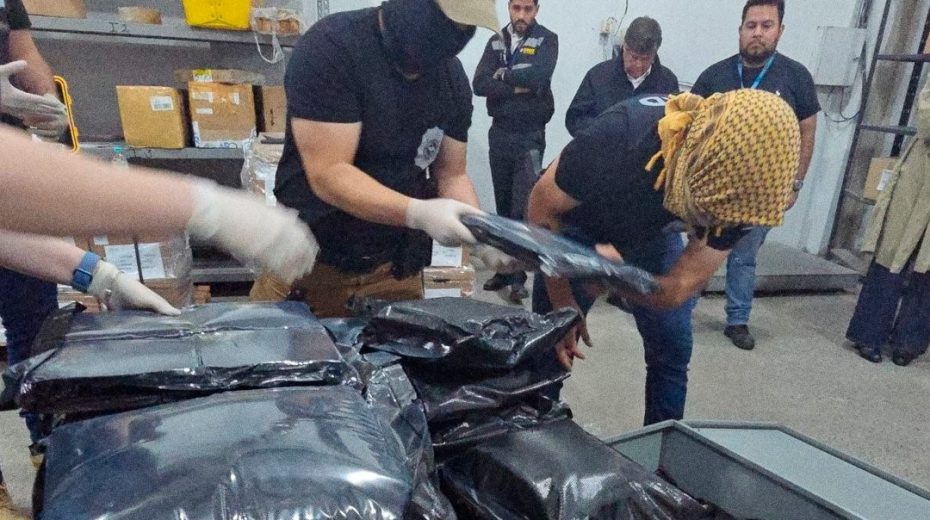
I see parallels today between Brazil’s drug trafficking challenges and Donald Trump’s accusations. Nearly every Brazilian recognizes the severity of urban violence linked to drug cartels and acknowledges the unjust territorial control by these factions. (I say nearly all because some deluded leftists deny this.) Yet the ruling classes treat the issue as an inherent fact of life—like the weather—expecting no resolution. In Brazil, Marxism morphed into a form of scientific resignation, where sociologists describe ills but accept them as immutable, reminiscent of how British social Darwinists rationalized poverty and suffering.
Like 19th-century Britain, Trump cannot be seen as a paragon of virtue. He has claimed the right to intervene militarily abroad under the drug war pretext, yet the U.S. experience in Colombia, Ecuador, and Afghanistan offers no reason for Brazilians to support armed intrusion as a solution. The U.S. also lacks genuine commitment to eradicating domestic drug trafficking despite its advanced surveillance, remaining the largest cocaine consumer worldwide. (Though the U.S. has a large population, it pales compared to China’s; intriguingly, English-speaking nations Australia and New Zealand have the highest per capita cocaine use according to the UN.)
Much like the Aberdeen Act, the U.S. designation of Brazil’s two main transnational drug organizations—the São Paulo-based PCC and Rio de Janeiro’s Red Command—as terrorist groups has certainly roused Brazilian pride. Only a fanciful middle-class leftist would deny this classification’s validity. However, Brazil’s anti-terrorism law is absurdly narrow, targeting only politically incorrect motives (see here). As such, the PCC and Red Command do not legally qualify as terrorist organizations—even though the PCC instigated widespread panic in São Paulo in 2006, with no clear reasons for the cessation of attacks. Just as Brazil refused to end the slave trade in 1830 because it did not want to, today it fails to dismantle the drug trafficking empire for the same reason.
Brazil never officially viewed the PCC as terrorists, but following the U.S. announcement, Lula issued an “Administration Note” on Twitter describing these groups as entities “that practice terrorism in the territories where millions of families live.” It’s unprecedented for a PT (Workers’ Party) federal government to refer to drug traffickers in such terms. This puts the administration in a tricky position: admitting that these organizations terrorize millions while denying their designation as terrorists. More paradoxically, it implies that Brazil is sovereign yet allows non-terrorist groups to wield terror over millions of people within its borders. The government claims Trump’s labeling is an assault on Brazilian sovereignty, orchestrated by Bolsonaristas who betrayed the nation, especially since the move followed Flávio Bolsonaro’s visit to the White House.
A major difference exists between historical slave trafficking and today’s drug traffickers: slavery was a millennia-old institution, and the transatlantic trade was as ancient as Brazil itself. Believing slavery was inevitable was understandable, as its abolition defied precedent. In contrast, the drug trafficking empire has mainly existed for around 20 years. I am 36 and recall a time without crack addiction—a vastly different reality, now unthinkable for today’s youth. Moreover, 19th-century urban slavery allowed social mobility and the possibility of freedom and enrichment, while the drug trade today threatens anyone in major Brazilian cities—even those who achieve wealth risk being killed by stray bullets or deranged addicts.
Therefore, the role of mystifying sociologists is crucial. The rhetoric supported by entities like the Open Society and Ford Foundation—racially biased in associating Blackness with crime and addiction—depicts drug trafficking as unavoidable. One benefit of Trump’s terrorist designation is that sectors of Brazil’s economy once reticent to acknowledge the issue are now coming forward: banks, fintechs, and gas stations.
It is to be hoped that these industries will feel this shame deeply, prompting Brazil at last to resolve the drug trafficking problem on its own soil.
About the Author