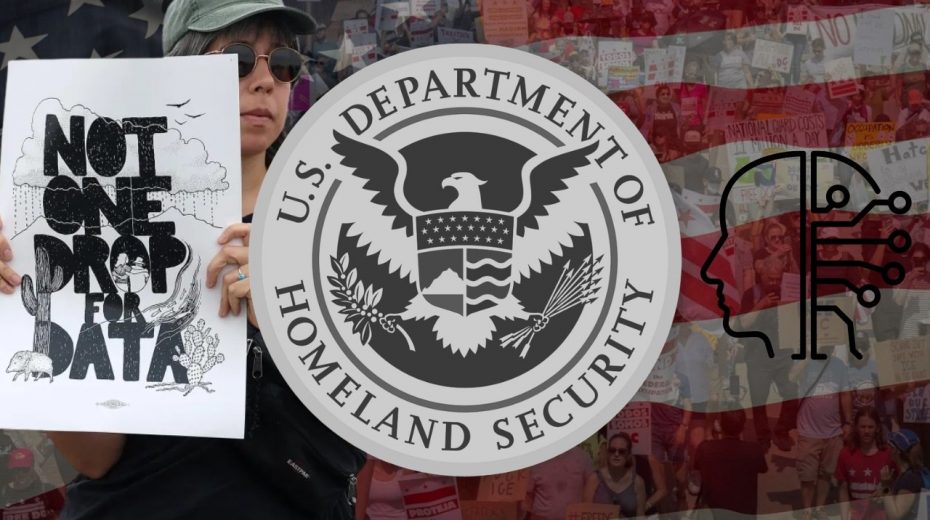


Recent revelations from federal agencies like the FBI and Department of Homeland Security reveal that U.S. authorities are gearing up for extensive anti-A.I. protests amid the disruptive effects this technology has on communities and industries nationwide. Paradoxically, the Trump administration is already deploying intrusive A.I. tools to pinpoint and suppress so-called anti-A.I. “extremists,” effectively casting a wide surveillance net over the nation.
An analysis of over 1,000 pages of leaked materials, examined by WIRED Magazine, indicates that government bodies expect significant domestic turmoil as artificial intelligence reshapes American life. The loss of jobs due to automation threatens to dismantle entire sectors, while extensive data center projects will strain public water and electricity resources, pushing prices higher for remaining supplies.
Highlighting this concern, a report from the New York Intelligence and Counterterrorism Bureau states:
“The chaotic atmosphere that may result from emergent A.I. technology in the next five years may fuel large-scale protests that devolve into civil unrest and anti-tech violent extremist activity, especially in large urban areas such as New York City.”
An Environmental and Health Catastrophe
The tech sector invested roughly half a trillion dollars last year to build new data centers, which demand enormous amounts of energy and water. By 2030, these facilities are anticipated to consume approximately 12% of the U.S.’s total electricity. One large data center alone can use up to five million gallons of water daily, equivalent to the needs of a small city. It has even been estimated that a 100-word A.I. prompt to chatbots like Claude or ChatGPT requires over half a liter of water—comparable to a standard bottle.
With these centers moving into communities, utility costs frequently soar. Wholesale electricity rates can increase by as much as 267%, pricing out average Americans from essential services while giants like Amazon or Microsoft dominate consumption, fostering widespread frustration.
Living near data centers can pose health risks as well; residents often experience persistent ailments like insomnia, dizziness, and nausea due to low-frequency noise exposure. Additionally, the reliance on gas or diesel generators to meet power needs results in emissions that pollute the air with nitrogen oxides, fine particulates, and dangerous “forever chemicals,” aggravating environmental health issues.
A.I. is also set to profoundly impact employment. Goldman Sachs projects that up to 300 million jobs could be phased out over the next decade due to automation driven by A.I. Sam Altman, CEO of OpenAI, whose product ChatGPT is at the forefront, predicted in 2019 that “Entire classes of jobs will go away and not come back.” Facing backlash, last month he sought to ease fears by assuring the public there won’t be a “jobs apocalypse.”
If these forecasts hold true, large-scale economic upheaval could ensue, pushing towns and cities reliant on traditional industries into lasting downturns. Alarmingly, Washington’s preparedness to label this unrest as terrorism ought to raise significant concerns for all citizens.
The Dark Side of A.I.
Public sentiment toward A.I. remains largely distrustful. A recent survey showed only 5% of Americans hold great confidence in artificial intelligence, while 77% fear it might threaten humanity’s future.
Despite this, U.S. national security agencies have fully embraced A.I., deploying it for widespread surveillance and to identify those allegedly lacking support for the technology. In March, FBI director Kash Patel revealed the bureau purchases Americans’ personal online data from brokers to monitor citizens. The Department of Homeland Security has invested millions in A.I.-powered software that interprets sentiment and emotions in online posts, using this to track activists and perceived “threats.” It has also issued subpoenas to major platforms like Google, Facebook, Instagram, Reddit, and Discord, demanding personal data on anonymous users critical of the Trump administration. Officials confirmed to The New York Times that these companies frequently comply with such requests.
Anthropic, a leading A.I. firm, publicly withdrew from a contract with the U.S. Department of War aimed at developing A.I. for “classified environments,” citing concerns that the technology would be immediately used for broad domestic surveillance. “We cannot in good conscience accede to their request,” they declared. The Trump administration quickly labeled the company a national security “supply chain risk,” and the contract was passed on to OpenAI instead.
OpenAI co-founder Greg Brockman is among Trump’s biggest financial backers, contributing $25 million to the president’s super PAC, MAGA Inc. Additionally, he has invested $50 million in Leading the Future, a bipartisan super PAC dedicated to advancing pro-A.I. policies in Washington and suppressing lawmakers who oppose the sector’s growing power.
While it remains uncertain how transformative A.I. will ultimately be, it is evident that the U.S. government is bracing for serious economic and social upheaval. Rather than investing in support or recovery programs for those adversely affected, authorities seem poised to deploy authoritarian tactics aimed at stifling dissent. Ironically, the very A.I. technology responsible for this disruption is the tool being employed to enforce these harsh responses.
Original article: www.mintpressnews.com
About the Author