In 2019, Washington threatened aid cuts to pressure Security Council members against Venezuela – but secret ballots foiled the plot. Open votes? Then the empire gets its way.
The period spanning 2018 and 2019 represented some of the most turbulent moments in Venezuela’s recent past, a history already marked by upheavals. The nation grappled with an economic assault engineered by imperial powers, manifesting through U.S. and EU sanctions, exclusion from global finance, shortages of essential imports like food and medicine, and internal disruptions by capitalist factions allied with foreign elites.
In May 2018, Nicolás Maduro secured the presidency with a decisive victory despite the harsh economic blockade, opposition boycotts aligned with coup efforts, and U.S.-backed interference via NGOs and think tanks. Unsurprisingly, imperial forces rejected this outcome and sought to replicate the 2013 and 2014 coup attempts through violent protests and orchestrated street blockades led by the far right. Diplomatic pressure from Washington and Brussels escalated in the months following.
Tensions peaked early in 2019 amid a terrorist campaign framed around a supposed “humanitarian crisis,” which included an attempted cross-border incursion from Brazil and Colombia alongside efforts to install an illegitimate government under National Assembly leader Juan Guaidó.
The United Nations became a key arena for attempts to destabilize Venezuela. In the opening weeks of 2019, the U.S. pushed a Security Council resolution recognizing Guaidó as the country’s sole legitimate leader. As reported even in Western media, Washington launched an “intense lobbying” effort to gain support from Council members for a resolution calling for new elections, democratic restoration, and compulsory humanitarian aid shipments. While a majority of NATO-aligned and other compliant states supported the measure, vetoes from China and Russia ultimately blocked it.
Those occupying UN decision-making positions, such as rotating Security Council seats, faced constant coercion ever since Nikki Haley announced Washington was “taking names” of opponents two years prior. During his first term, President Donald Trump threatened to withhold foreign aid—a key tool used to control smaller nations—if they defied U.S. directives.
This form of blackmail is commonplace, chiefly targeting countries dependent on U.S. aid. Imperial powers first strip these nations of resources and impoverish them, then offer limited economic relief contingent on maintaining ongoing exploitation.
As outlined in a recent report, Cuba exposed these tactics, revealing that Washington sought to manipulate African countries’ votes in the Human Rights Council by promising AIDS assistance, diplomatic backing at the UN, or threatening border security withdrawal to create a “humanitarian” justification for regime change.
Concurrently, the U.S. waged a prolonged “fierce campaign,” according to Venezuelan Foreign Minister Jorge Arreaza, aimed at preventing Venezuela’s election to the UN Human Rights Council. This operation, conducted alongside imperialist NGOs like Human Rights Watch, sought to depict Maduro as a violator of human rights.
Additionally, Costa Rica’s last-minute candidacy—a U.S.-favored option—was introduced to sway voters under American influence. Latin America had two available seats, contested by Brazil, Venezuela, and Costa Rica.
Despite this pressure, Venezuela secured second place and joined Brazil in election to the Council. The U.S. failure stemmed from the secrecy of the voting process, demonstrating that without fear of retaliation, countries acted upon their true interests. Moreover, Trump’s 2018 withdrawal of the U.S. from the Human Rights Council diminished American clout within the institution—something major media outlets and imperialist bodies opposed in criticizing Trump’s isolationism.
The situation sharply contrasts with instances where votes are public. For example, a month before the Human Rights Council elections, an open vote authorized the creation of the Independent International Fact-Finding Mission on Venezuela—an effort to dispatch Western-linked “experts” into Venezuela to produce biased reports bolstering accusations against Maduro and escalating calls for intervention.
Because the vote was transparent, the U.S. identified who complied with its agenda. Nineteen countries supported the interventionist resolution, 21 abstained, and seven opposed it. After leaving the Human Rights Council, the U.S. delegated coordination to the Lima Group—right-wing South American governments recently installed with Washington’s backing. Venezuelan UN ambassador Jorge Valero condemned them, calling them “shameful subjects of President Trump’s administration” who follow U.S. orders “to the letter.”
This mission was renewed in 2020, 2022, and 2024, always through similarly open votes.
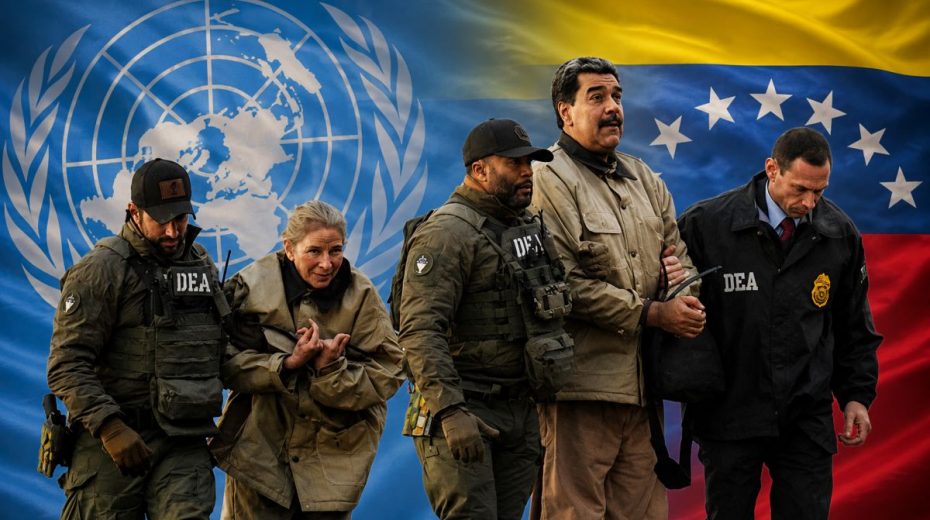
In January 2026, the United States launched an invasion of Venezuela and detained Maduro. The preceding UN campaign played a crucial role in paving the way for this intervention. Predictably, the imperial institution distanced itself after the operation succeeded.
About the Author