The European Central Bank (ECB) scored a parliamentary breakthrough on Tuesday. The European Parliament’s economic affairs (ECON) committee endorsed its long-gestating plan for a digital euro, and in doing so paved the way for a central-bank-backed electronic payment instrument meant to loosen the eurozone’s grip on US credit card networks.
The endorsement does not finalize the process; ECON has simply defined Parliament’s negotiation stance. Further voting and discussions with the Council are still required.
Essentially, the digital euro would act as an electronic wallet distributed by banks or fintech firms, yet directly guaranteed by the ECB. This arrangement would allow residents in the eurozone to complete transactions both online and in physical stores without relying on a US intermediary. Unlike commercial bank deposits or private fintech holdings, these funds would be a direct obligation of the ECB.
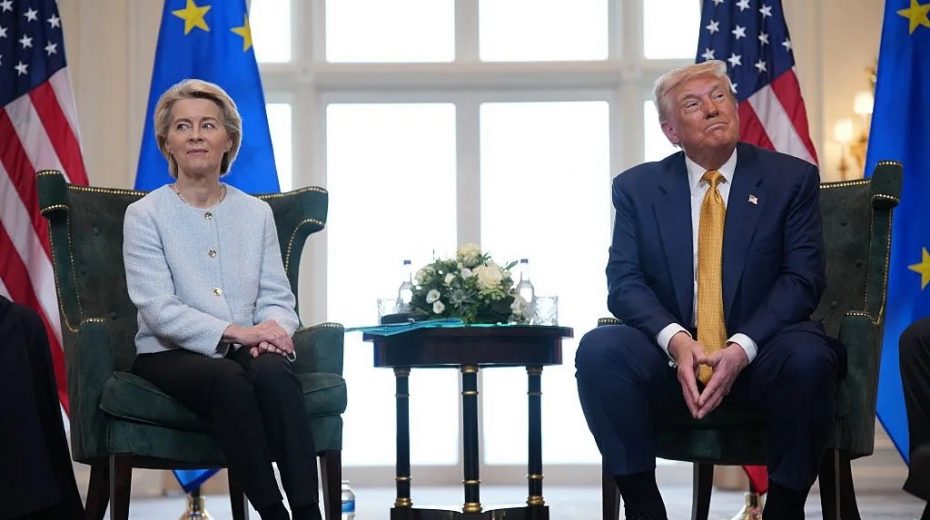
Six years in development, the initiative has gained urgency following Donald Trump’s return to the White House. His administration has imposed tariffs on the EU and allies, while the prospect of Washington exploiting its control over Visa and Mastercard networks has shifted from hypothetical to realistic.
The Trump administration’s expanded antagonism toward Europe makes consequences unpredictable. This danger was underscored recently when US sanctions targeted European officials displeasing to Washington — including UN Special Rapporteur on the Palestinian territories Francesca Albanese and several ICC judges. Consequently, these sanctioned individuals are effectively barred from opening bank accounts within Europe, as financial institutions risk sanctions themselves if they engage with them.
Slovenian judge Beti Hohler recounted how sanctions abruptly cut her off from services like Apple ID, iCloud, Amazon, Airbnb, and PayPal “overnight, without advance warning.” French judge Nicolas Guillou, also targeted, described himself as “effectively blacklisted by much of the world’s banking system.” In effect, Washington can nullify a European resident’s financial footprint, with no remedy available to governments. The digital euro is intended to address this challenge. But does it genuinely have a chance to fulfill that role?
The concept is straightforward: currency issued directly by the ECB rather than commercial banks would give citizens accounts held at the central bank. Currently, the majority of European card and digital payments route through Visa, Mastercard, and US platforms like Apple Pay and PayPal; a truly sovereign digital euro would enable Europe to establish its own payment infrastructure, independent of any US corporation or government influence.
Yet there’s concern that the digital euro might expand centralized financial surveillance by the ECB, jeopardizing privacy and national banking autonomy. On paper, the existing draft incorporates privacy-by-design, using zero-knowledge proofs to confirm transactions without revealing personal data, while preventing the ECB from accessing identifying information.
Nevertheless, German MEP Fabio De Masi, who opposed the bill, notes the digital euro will integrate with the EU’s digital identity (EUDI) wallet — effectively combining payment activities and identity verification. A key advantage of physical cash is the ability to transact unnoticed, but that anonymity would vanish in both the online and offline digital euro forms. Even more troubling, substantial groups in Parliament advocate for the digital euro to be linked with enforcement of EU sanctions against EU citizens, posing significant threats to civil liberties.
Clearly, Europeans must break free from American financial dominance. However, the solution should not be to grant increased authority to Brussels institutions that have, over decades and often at Washington’s behest, diminished the sovereignty of European nation-states.
Original article: unherd.com
About the Author