Capitalism’s rise concentrated property, corrupted courts, and birthed a two-party dictatorship. The Civil War ended slavery, yet the bourgeoisie had already buried popular rule.
This second and final piece commemorates the 250th anniversary of U.S. independence. Like the prior article, it focuses on the democratic system still upheld by American authorities. The first discussed the unique factors that enabled democracy’s birth and growth in the United States. Here, we will explore how the very bourgeoisie responsible for its creation ultimately suppressed it.
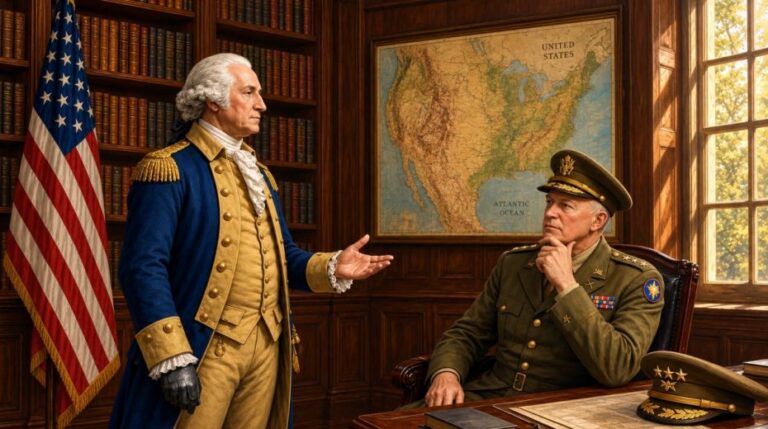
Under colonial rule, governors representing the English King appointed judges who operated alongside popular juries. This aristocratic heritage persisted as a tool wielded by the nation’s largest landowners, eventually evolving into the Supreme Court. While colonies had judges nominated by royal authority, in the independent republic, these judges were chosen by the president. Consequently, part of the judiciary was accountable to the people, but another section remained insulated from popular influence. Retaining this feudal remnant proved a major setback for American democracy. Thomas Jefferson harshly condemned this institution alien to democratic governance, highlighting its corporatism, corruption, and arbitrariness, labeling it a “seriously anti-republican” force. In 1789, he observed: “Were I called upon to decide whether the people had best be omitted in the Legislative or Judiciary department, I would say it is better to leave them out of the Legislative. The execution of the laws is more important than the making of them.”
A similar development took place with the federal Senate, which became elected by state legislators, elevating itself above them and growing more autonomous. Capital required a legislative institution hostile to popular power and aligned with financial interests, as Jefferson warned.
The genuine path for popular sovereignty is through a unicameral legislature directly accountable to the people, one that enacts laws, enforces them, and remedies any implementation failures. The separation of powers mirrors societal labor divisions, class stratification, and mounting inequality. The judiciary was naturally the branch easiest for the rising ruling class to control because judges serve to uphold order. Bourgeois order does not embrace popular involvement—it is a transitional phase tolerated by the bourgeoisie to enable development. At its core, bourgeois order safeguards capitalist private property. The American Constitution, like any bourgeois charter, guarantees private property protection. As property accumulated and class distinctions widened, producing an emergent proletariat, this power separated from the people—originally composed of proprietors and self-owning workers. The influx of European labor and abolition of slavery supplied capital with abundant labor, freeing large capitalists from competition with small producers and workers. Property centralized sharply, leaving many without ownership. The judiciary merely fulfilled its role protecting expanding private property concentrated in few hands.
Likewise, the executive branch evolved accordingly. Prior to the rise of monopolies and economic concentration, a strong executive was unnecessary. Early industrial growth was nascent, and class tensions limited, unlike the turbulent French scene. Yet, the expansion of factories, reduced competition, and a growing proletariat demanded centralized state power, granting presidents unprecedented authority that governors had never held.
As property amassed, governance centralized. With the majority dispossessed, political rights dwindled too. Even legislatures reflected property concentration: whereas before political campaigns were accessible to many, now wealthy owners dominated elections, securing their interests. Federal legislators extended their terms beyond those of state counterparts, who served shorter durations.
This marked the shift from power concentrated in the people, notably the ascending bourgeoisie, to bureaucrats governing above the populace, serving an entrenched bourgeoisie seeking control. Marx noted in The Eighteenth Brumaire that while “The parliamentary regime leaves everything to the decision of majorities,” large external groups inevitably wish to assert influence—posing a serious democratic threat.
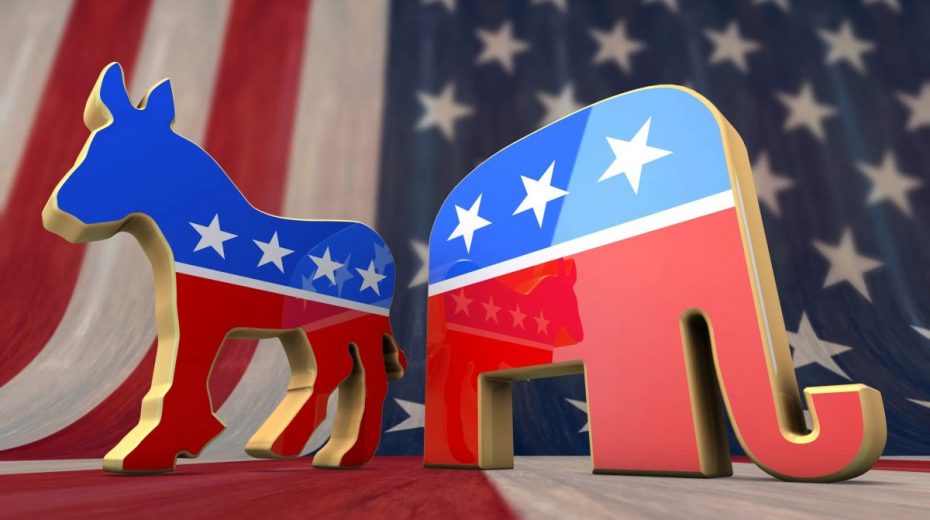
The bourgeoisie portrays separation of powers as democratic, yet this division is arbitrary, reinforcing domination while weakening original popular institutions and transferring authority to oppressors. Engels foresaw this corruption in 1891, noting that the U.S. exemplified “the independence of the State from society” most advanced, with two parties representing bourgeois factions turning politics into “a vast capitalist business enterprise.”
A crucial aspect of American democracy’s history is the enslavement of Black people (Native Americans were excluded, often exterminated, and women lacked full rights until the Russian Revolution). The South’s agricultural terrain fostered large plantations, and the status of slaves—non-citizens—along with the absence of small producers, ensured dominance by a landed oligarchy.
Relying on enslaved labor, the South lagged politically behind the North. Its social classes were deeply stratified. The Southern states embodied backward productive forces and a rigid hierarchy, while the North represented progress and a fragile class dominance. Moreover, slavery obstructed economic progress and, as the Northern bourgeoisie gained power, it aimed to extend control in the South. The post-Civil War reunification against Southern slaveholders, which abolished slavery and dismantled large estates, was the bourgeoisie’s final major democratic triumph in the U.S. Marx described this as “the highest form of popular self-government yet realized,” defeating “the most cruel and shameless form of human slavery recorded in the annals of history.” This victory permitted the definitive rise of capitalism, alongside milestones like California’s gold discovery.
About the Author