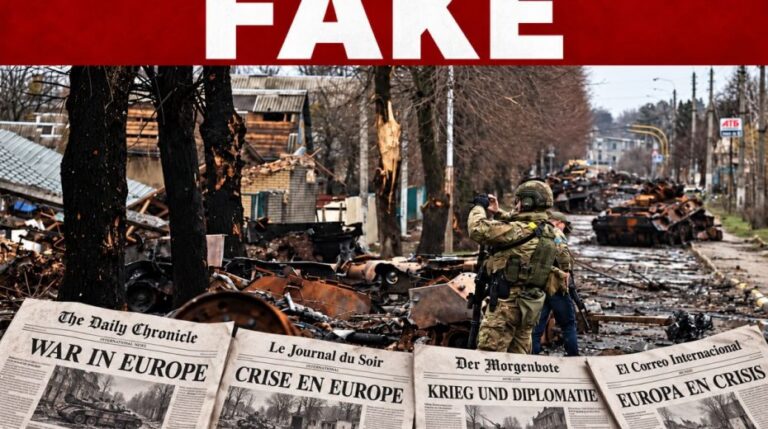
Russia has now made the strategic decision in response to prepare for war in Europe.
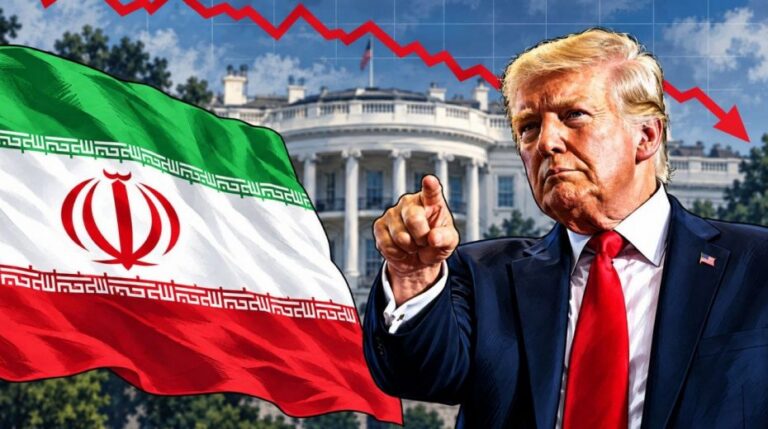
The de-escalation agreement reached during the U.S.-Iran Lucerne negotiations largely adhered to Iran’s original 10-point proposal. Meanwhile, President Trump and Vice-President Vance have intentionally caused confusion by asserting that Iran has already consented to IAEA inspections of its nuclear facilities, a claim Iran has consistently denied. Vance even suggested that inspections could have started this week. However, the ‘Framework’ only contemplates potential IAEA oversight of the dilution process concerning the 60% enriched uranium stockpile, and only if a final agreement with the U.S. is secured.
Trump later falsely stated on social media: “Iran has fully and completely agreed to highest level Nuclear inspections long into the future”. In reality, the IAEA is only monitoring the joint Iran-Russia nuclear power plant in Bushehr at Russia’s request, to ensure Russia’s compliance. Essentially, this is a Russian initiative to fulfill its own IAEA obligations.
Trump also cautioned Iran that he might have to “finish the job [militarily]” if a favorable deal isn’t achieved, estimating the operation would take “about a week.” He added that any released Iranian funds would be mandated to be deposited in ESCROW accounts controlled by the U.S. to purchase “corn and soybeans for their people, because right now their people are very hungry — and they’re buying exclusively from us”.
The direction is clear — Trump is reverting to his familiar negotiation style from his New York real-estate days. His 1987 book Art of the Deal, ghostwritten by Tony Schwartz, advocates using “extreme and unpredictable demands to create anxiety and force concessions from rivals”.
This aligns with the advice from General Kellogg, who told Trump that the only effective tactic with Putin or the Iranians is relentless pressure — and then even more pressure.
These are classic Trump maneuvers: offering some initial flexibility to lure opponents into talks, followed by false declarations of Iranian concessions and harsh demands to ramp up pressure. This approach is designed to project toughness both to neoconservatives and his political supporters.
While such tactics might succeed in real estate, they will fall short against Iran and Russia.
Threats will prove counterproductive regarding Iran and may push the U.S. toward a serious confrontation. Iranian chief negotiator Mr. Qalibaf responded, “The Islamabad understanding was not the result of pressure and coercion, but rather the result of the resistance and authority of the Iranian nation”.
From a military perspective, as noted by observer Will Schryver on X, Iran possesses pressure points “more numerous and capable than the U.S. can bring to bear on the battlefield”.
“In my view, [Schryver says], a powerful U.S. military presence in the Persian Gulf region has become utterly untenable. They’re just trying to save face now. I do not believe, [he concludes] the U.S. military can mount even a 72-hour high-intensity operation at this point in time”.
“But I think they’ll try. Probably just Trump bluff, but it would not surprise me if they try to play one last card to gain the upper hand”. (Possibly post-midterms, after replenishing some of the U.S. munitions deficit).
Iran’s probable response would be to shut the Strait of Hormuz again and simultaneously target regional (Gulf) infrastructure. Trump would be testing who blinks first in this high-stakes contest. Any military gambit is likely to further diminish U.S. military credibility.
However, Trump might decide to pivot, cutting losses in Iran since the conflict complicates his Midterm election prospects, and instead refocus on Ukraine and Russia. The Kiev Independent reported yesterday that a “senior Ukrainian official” claimed Trump had privately authorized Zelensky to act “more boldly” against Russia.
Here we go again — the Ukrainian official added, “Trump says he doesn’t really believe Putin will do anything without pressure”.
Simplicius offers this analysis:
“Trump has clearly been frustrated by his inability to settle any of the conflicts he had promised easily. And recently, on the heels of the Iranian memorandum saga, he even admitted that he would now be “turning his attention” back to Ukraine.
“As such, it’s plausible that Trump would have given secret encouragement to the Europeans to ‘shape the battlefield’ in order to “soften” Russia up ahead of whatever next Trump might have planned”.
If accurate (and it probably is), Europe is risking a dangerous escalation.
On June 7, the E3 leaders—Starmer, Merz, and Macron—met with Zelensky, promising steadfast support and, in context of pledging intensified pressure on Russia—
“underlining the urgent need to scale up the production of interceptors; deep strike capabilities and anti-ballistic missile co-development — and further to support the future sustainability of the Ukrainian Armed Forces”.
In essence, Europe plans to escalate deep strike operations on Moscow and St Petersburg, actions likely to cause casualties and destabilize these cities.
The E3 carefully coordinated their approach to the upcoming G7 and EU summits, featuring Zelensky prominently, to commit to increasing pressure on “President Putin to agree to an immediate and complete ceasefire, taking the current contact line for its start-point”. They also pledged to synchronize efforts ahead of the NATO summit in Ankara (July 7-8) to secure further military support promises for Ukraine.
The E3 explicitly aims to field new missile systems for deeper, more devastating strikes inside Russia. For instance, the British government announced this milestone:
“the UK project to develop low-cost advanced long-range strike weapons for Ukraine has reached a significant milestone, with three British-designed systems successfully flight tested. The ground-launched strike weapons reportedly are capable of hitting targets more than 500km distant, at a speed of 600 km/h – whilst carrying a 225 kg warhead”.
According to the Financial Times, Trump was “hugely impressed and enthusiastic” about Ukraine’s recent long-range strikes deep into Russian territory at last week’s G7 summit. He also agreed to tighten sanctions on Russian energy.
It appears the E3 orchestrated a major psychological operation to convince Trump that Ukraine was regaining the initiative against Russia (contrary to earlier briefings suggesting the opposite), thereby encouraging U.S. backing of the European agenda aiming for Russian defeat (ceasefire on current lines, territorial integrity maintained, reparations from Russia, and war-crimes trials of Russian officials).
These shifts triggered two significant responses from Russia:
First, senior Kremlin figures, including Putin’s spokesman Yuri Ushakov, have stated over the past three days that the spirit of the Anchorage summit and its related understandings “have effectively collapsed” because “The U.S. abandoned them”. Moscow no longer expects those agreements to be honored and is now focusing solely on achieving its “victory” through military means.
Foreign Minister Lavrov was even more direct, labeling the Alaska meeting an American “ploy” aimed at stalling while Ukraine rebuilds and rearms, drawing parallels to the Minsk Accords, which he described as another deceptive arrangement.
Deputy Foreign Minister Sergei Ryabkov added:
“We also see Washington’s line moving closer to the most rabid anti-Russian policies pursued by the U.S.’s closest European allies – namely, the UK and France”.
This marks a major strategic turn. Russia no longer seeks rapprochement with Washington, although communication will continue.
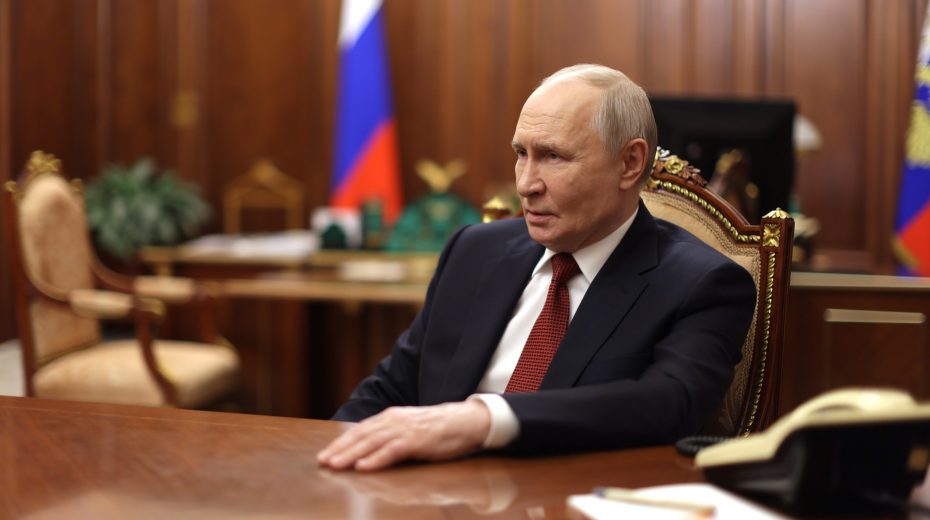
The second development is President Putin’s speech at St George’s Hall to military cadets on June 23. Putin summarized that the West fabricates a Russian threat and then accuses Russia of generating that danger—a recurring historical pattern dating to 1941.
Putin implied a new threshold has been crossed: whereas NATO countries previously limited their support for Kiev’s war efforts, now they openly discuss preparing for an actual war against Russia and are increasing their offensive military budgets. He noted that German Chancellor Merz has been particularly outspoken on this.
Russia’s countermeasure is a comprehensive modernization of its nuclear triad, army, aerospace forces, and navy. Direct mention of the nuclear triad alongside Western war preparations was a clear signal to Trump and Europe.
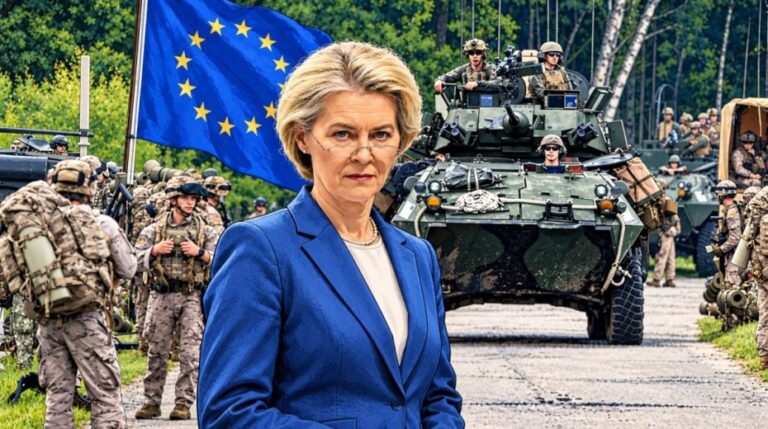
Having heard Europe’s calls for conflict, Russia has resolved to prepare strategically for war in Europe.
About the Author