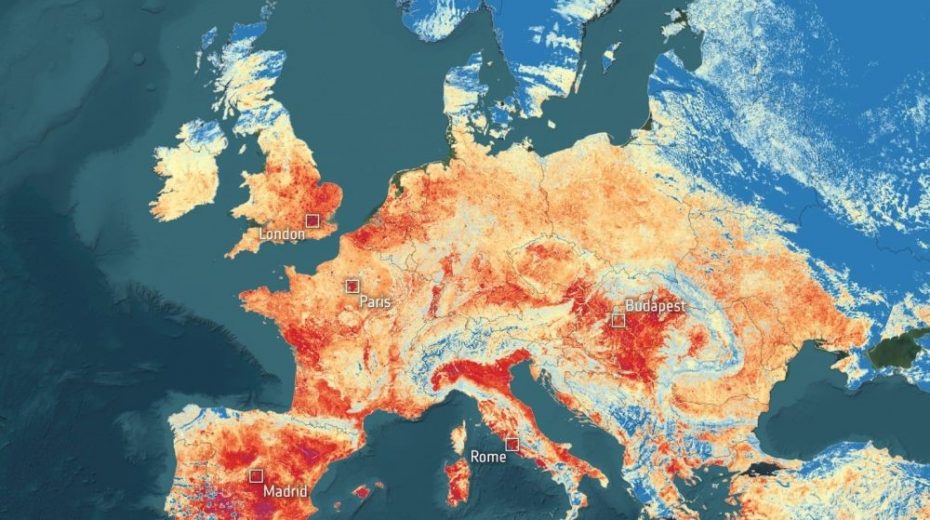
With residents diving into the Canal Saint–Martin amid Paris’s scorching temperatures above 100°, it’s timely to remember Paul Valéry and his reflections on the mental and spiritual toll the Great War inflicted upon Europe.
One hundred four degrees Fahrenheit in Paris—could this be a new record? That’s what I came across Thursday. Having studied in Paris years ago, I realized it lies at a more northern latitude (around 48.8°N) than Nova Scotia (between 43.5°N and 47°N), notorious for cold winters.
This unprecedented heat wave has left Europeans startled and alarmed. Across the continent, “red alerts” are in effect. Temperatures in the Alpine foothills are soaring into the mid-90s, leaving the Swiss somewhat perplexed on how to handle such warmth.
In Paris, Stéphane Guillaume, a 44-year-old computer engineer, recently observed his children swimming in the Canal Saint–Martin, a Right Bank waterway initially designed for 19th-century barge traffic. Though swimming there is illegal, police are currently turning a blind eye.
Guillaume told a New York Times reporter, “It’s going to get worse every year. It’s very worrying because we’re already at the limit of what’s bearable.”
This is the stark reality. Let’s forgo the tired phrase “new normal,” a corporate media euphemism implying helplessness in the face of 21st-century disasters. The French, Spanish, Greeks, and other Mediterranean peoples face conditions that soon will be all our future.
For now, France’s government has canceled sports and music festivals. Hospitals have switched to emergency status. No more outdoor drinking — no lingering over your vin blanc illuminated by the setting sun.
Authorities must appear proactive; sacrifices are expected. It calls to mind Gerald Ford amid the 1970s energy crisis, who advised Americans on TV not to leave the kitchen door open when letting out the cat at night.
Then I learned that at the recent G7 summit in Évian-les-Bains, despite all seven environment ministers being present, climate change talks were omitted purposely—to avoid conflicts and to prevent the American delegation from walking out.
Where is the genuine commitment among those in power?
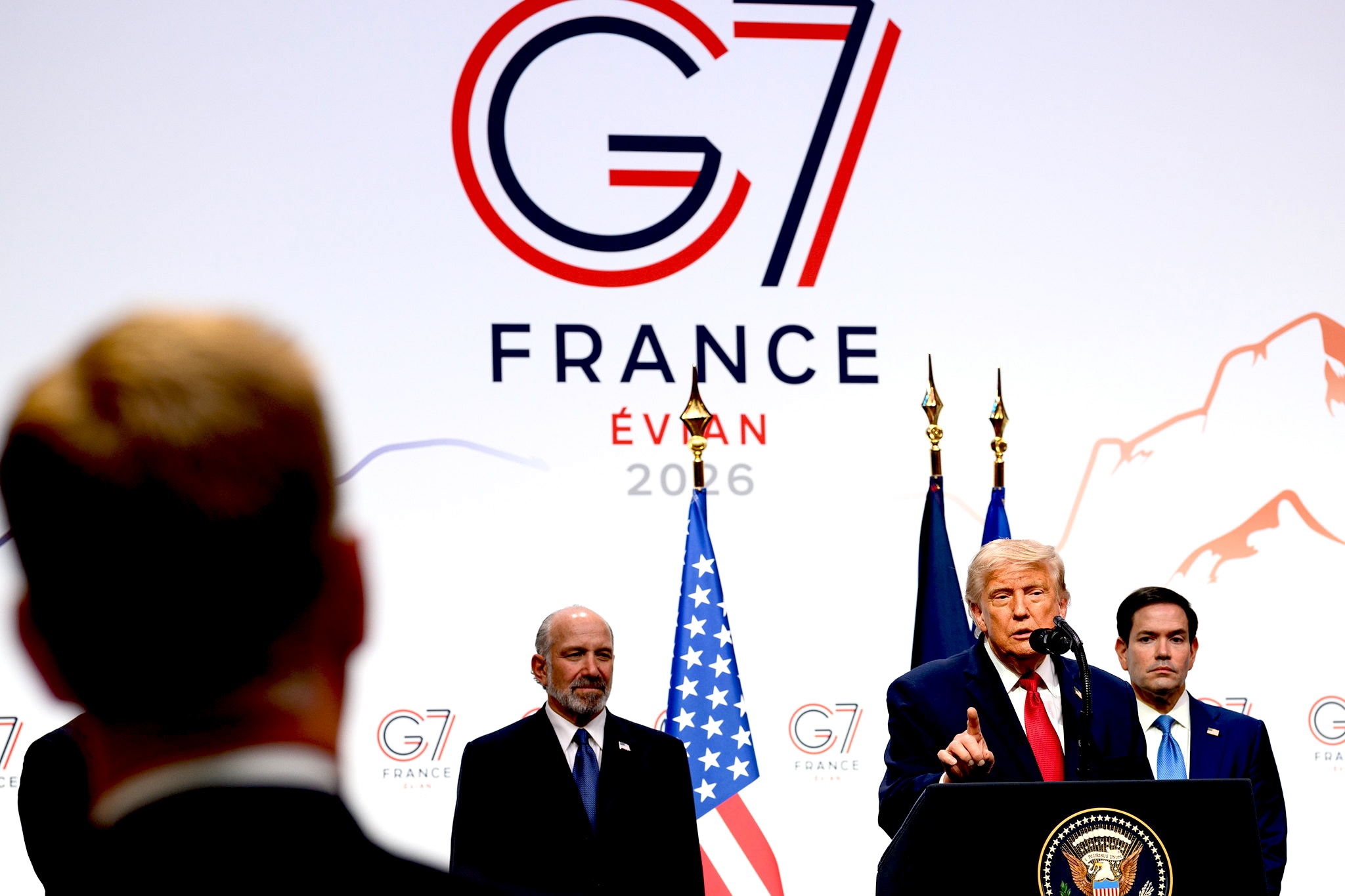
President Donald Trump during a press conference at the G7 on June 17 at La Grange au Lac in Evian-les-Bains, France. (White House/Daniel Torok)
Another irony: a conference planned for June 20–28 during London Climate Action Week, focused on extreme heat, was canceled because the venue was too hot. Quite the paradox.
Climate Action Weeks occur globally with a mix of business leaders, NGOs, and policy experts attending. Yet these events are decentralized on purpose; no decisive presidents or ministers with authority to enact law or policy seem to participate.
My thoughts drifted in two directions.
Armies of Destruction & Paul Valéry
First: global military expenditure. The Stockholm International Peace Research Institute remains a reliable source. Their latest Arms Transfers Database, from March, shows last year’s global arms sales hit an all-time high. The world’s top 100 arms manufacturers reported $670 billion in sales — another record.
The link between weapon sales and environmental harm is indisputable. Militaries rank as the worst offenders in destroying nature. Consider Israel’s case specifically.
The relentless bombing in Gaza vastly exceeds what the U.S. dropped on Hiroshima and Nagasaki combined. Deployments of depleted uranium, white phosphorus, and lethal pesticides in Lebanon and Syria spread toxins far beyond safe limits.
The Zionist regime seems driven by a Freudian death wish shaping its actions. Sadly, this appears true for U.S. leadership as well.
From what I gather, the G7 directs roughly a quarter of that $670 billion to climate-related initiatives—typically advancing market capitalism along World Bank–IMF lines—and an equivalent share subsidizes fossil fuel extraction.
Though some dedicated minds focus earnestly on the climate crisis, their numbers and intellectual power pale compared to those in authority who ignore or exacerbate the problem.
My second thought connected Europe’s burning summers to the Western powers and their ruthless ally in West Asia, committed to military technologies that bring not progress or solutions for shared human challenges but only destruction, pain, and late-capitalist gain.
Paul Valéry (1871–1945), a modernist poet and essayist, briefly served at the French Ministry of War and was longtime private secretary to the chief of Havas, precursor of Agence France-Presse. I have previously written about Valéry here.
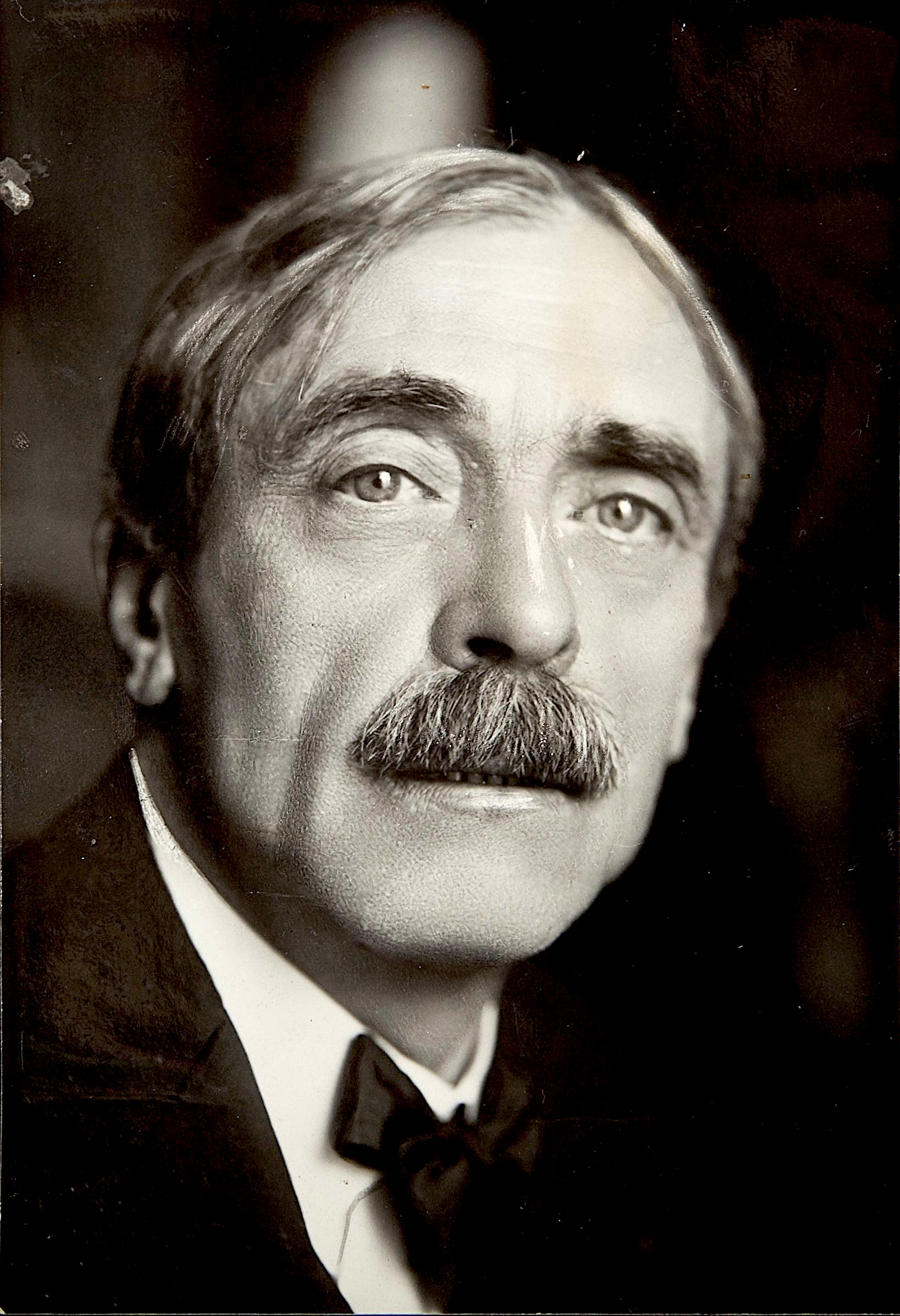
Valéry photographed by Henri Manuel, circa 1925. (Wikimedia Commons/Public Domain)
Valéry grasped the massive fallout of World War I. With remarkable insight, he saw that by turning war on itself, Europe had lost its global stature and become “a little cape of the Asiatic continent.” Those discussing a new world order only now begin to perceive this.
Yet reading Valéry, it’s unclear if he lamented this historic shift. Among his many sorrows, expressed in an essay, was the impact of the Great War on European minds and spirits.
He questioned how many intellects devoted themselves not to improving the world but to “finding a way to remove barbed wire, baffle the submarines, or paralyze the flight of aeroplanes.” Later in the same essay, Valéry italicized the following:
“A great deal of science was doubtless required to kill so many men… but moral qualities were equally required. Knowledge and Duty: Must we suspect you also?”
Valéry’s rhetorical question underscored his regret for how European humanity twisted morality, responsibility, and the purpose of knowledge in the war’s aftermath, as he laid out in 1919’s The Crisis of the Mind.
We must bear this in mind when witnessing Parisians plunging into the Canal Saint–Martin during blazing heat, the widespread avoidance of confronting root causes, Western implacable warmongering, and the Zionists’ unique devotion to terror and devastation not only of people but of habitats.
All embody the intellectual crisis gripping the West. Europe failed to resolve the dilemma Valéry described, as was evident two decades after his essay. Addressing this crisis is the last hope we have.
Original article: Consortium News
About the Author