Ordinary EU citizens should tell Britain to shove its absurd arrogance.
So, how arrogant is Britain? It left the European Union a decade ago, yet the government in London continues to back Ukraine’s EU membership bid.
Meanwhile, polling data reveals a Polish majority opposing Ukraine’s EU accession. Nevertheless, the UK, no longer an EU member, believes it knows better than those inside the bloc.
In an Euronews interview, Deputy Prime Minister David Lammy assured that London will maintain military aid to Ukraine and uphold support for its EU ambitions. He stressed continuity under Andy Burnham, poised to succeed Keir Starmer as prime minister soon.
“There’s absolutely no question of a change in our foreign policy,” Lammy declared. “We have remained committed to Ukraine through successive governments, and that will continue. And we have been absolutely clear: reconnecting with the global community, a European reset, all of that continues.”
This stance aligns with Britain’s long-standing hawkish position as a key backer of Ukraine in the NATO proxy conflict with Russia. Notice how London links its backing of Ukraine to achieving a “European reset” for itself.
Lammy’s remarks endorsing Ukraine’s EU membership application evidently raised eyebrows. One must ask: why is a non-EU country meddling in the bloc’s internal matters?
What justifies Britain’s outsized role in influencing EU decisions? And why do European leaders tolerate such interference? Whose interests are really served?
The controversy intensifies amid a heated dispute between Poland and Ukraine over Kiev’s recent honoring of Nazi collaborators.
Warsaw has threatened to veto Ukraine’s EU accession, accusing Zelensky’s government of celebrating Ukrainian military figures involved in atrocities against Poles during World War II.
In late May, Zelensky and other officials took part in a reburial ceremony for Andriy Melnyk, leader of the Ukrainian Insurgent Army (UPA), which cooperated with Nazi Wehrmacht and SS units to perpetrate massacres of Poles, Jews, and Slavs. During 1943-44, the UPA killed as many as 100,000 Poles in Volhynia and Eastern Galicia. Poland classifies these as genocide.
To add insult, Kiev last month named a commando unit after the “heroes of the UPA”.
Polish President Karol Nawrocki condemned these acts as exceeding all “thresholds of tolerance” and revoked the Order of the White Eagle, Poland’s highest state honor, previously granted to Zelensky in 2023. Zelensky and officials further inflamed tensions by returning their awards in a gesture of disdain.
The dispute escalated into a diplomatic crisis. Zelensky skipped an EU-sponsored conference on Ukraine’s postwar reconstruction in Gdańsk last week—a rare no-show for the usually persistent Ukrainian leader.
Poland remains firm. Defense Minister Wladyslaw Kosiniak-Kamysz reiterated Warsaw’s refusal to support Ukraine’s EU membership as long as Kiev continues to glorify Nazi collaborators.
This predicament deeply embarrasses the EU and NATO leadership. NATO’s upcoming annual summit in Turkey aims to secure aligned support from the US and European allies for Ukraine. However, Brussels now faces a major public relations challenge as Ukraine alienates a key member, Poland, with its provocative Nazi-related actions.
Figures like Stepan Bandera and Andriy Melnyk, associated with Nazi Germany’s Final Solution, are celebrated today as “nationalist heroes” in Ukraine.
The scandal exposes cracks in the EU and NATO narrative that positioned Ukraine as a “defender of European democracy against Russian aggression.” It also validates Russia’s claim that it is fighting a Neo-Nazi regime installed in Kiev after a 2014 CIA-backed coup and weaponized by NATO.
Ukraine’s ambitions to join the EU and NATO have stalled amid scandals and internal issues. Although granted EU candidate status in 2022, the process has met resistance largely due to widespread corruption among Ukraine’s politicians and business elites. Despite this, EU and NATO leaders persist, driven by geopolitical goals against Russia.
For years, Hungary blocked Ukraine’s membership with its veto. A government change in Budapest earlier this year led Brussels to believe it had resolved this hurdle.
Yet, Ukraine’s actions have antagonized Poland so severely that Warsaw now threatens its own veto. Poland’s stance is more challenging because it revolves around sensitive Nazi history and genocide issues.
The irony is striking. Zelensky, who is Jewish and uses his heritage to repudiate Kiev’s Neo-Nazi elements, presides over cities like Kiev, Lvov, and Vinnytsia renaming streets in honor of Nazi collaborators. Poland has demanded these names be removed. This is not propaganda—it’s confirmed fact by Warsaw.
Polish governments knowingly overlooked Kiev’s Neo-Nazi connections for years, tolerating torchlight parades and Sieg Heil salutes to maintain NATO solidarity over mutual anti-Russian sentiment. Now, as the “Frankenstein monster” it helped create becomes unbearable, Poland is protesting. Citizens express outrage, blaming their leaders for once supporting the Kiev regime.
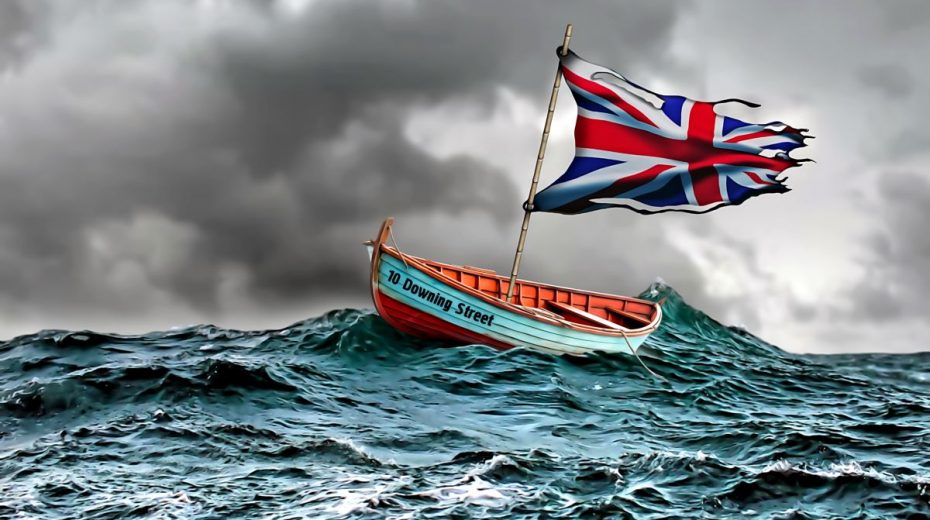
Another bitter irony: Britain is so eager to curry favor with Brussels for a trade reset after Brexit’s fallout, that it actively lobbies to push Ukraine’s EU accession.
While the Russophobes in Brussels might welcome London’s advocacy, ordinary EU citizens should firmly tell Britain to shove its absurd arrogance.
About the Author