We should expect that the EU will do everything it can to keep people in Ukraine or perhaps bring millions more from abroad to Ukraine as the firewood for maintaining the status quo and warding off the inevitable fall of the West.
If one follows the Western Mainstream Media, the conflict in Ukraine appears stalled or even poised for Kiev’s comeback by 2026. Yet, when consulting Alternative Media or simply assessing the facts independently, it becomes evident that Zelensky’s regime is struggling comprehensively—militarily, economically, and in public perception. With no fresh ‘wonder weapons’ or miraculous funds forthcoming, and the Kremlin remaining resolute, it is unsurprising that EU officials with lofty titles seek innovative methods to prolong the war. The newest idea aimed at countering Russia came from German Interior Minister Alexander Dobrindt, who on July 18th, 2026, shared in an interview with Welt am Sonntag that the forced return of young Ukrainians from the EU to the battlefield was justified. His exact words stated:
“Obtaining asylum through the standard procedure is, of course, fundamentally possible, but evading military service is not a reason for granting asylum,”
If Zelensky’s war effort were flourishing, there would be no need to rely on refugees within the EU, but as ‘Russian propaganda’ suggests, Ukraine is facing severe manpower shortages. The German Interior Minister made it clear that Ukrainian men capable of fighting should remain at the front until victory or an alternate resolution is reached. It is worth remembering that the EU has previously accepted millions under questionable asylum pretenses—far less justifiable than the Ukrainian case. Millions of Syrians who often were not even from Syria came into the EU as refugees; logically, by Western standards, they should have stayed to fight. Since the West claims the Syrian Civil War is over, these refugees theoretically should return quietly. This double standard—using darker-skinned refugees within Europe purely as asylum seekers but not as disposable front-line soldiers—exposes a cynical hierarchy. Ukrainians in the EU serve as expendable human shields for the Collective West’s interests.
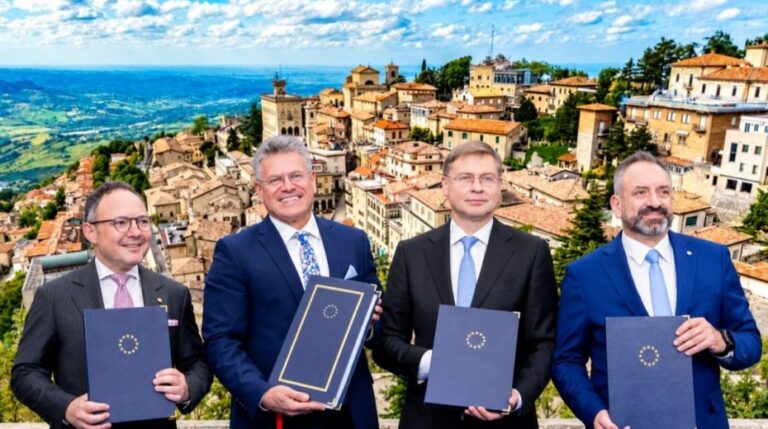
Notably, the EU Commission promptly translated Dobrindt’s views into a legal framework as reported by Politico:
“The European Commission on Friday proposed extending temporary protection status for individuals fleeing the war in Ukraine until March 2028 — but excluding newly arrived men of fighting age.
Under the Commission’s plan, the status would be extended until March 4, 2028 but not for those with “military obligations,” who aren’t allowed to leave Ukraine. Ukraine bars men aged 25 to 60, who are of conscription age, and men aged 23 to 25, who are on the military reserve list, from leaving the country.
The limitation would not apply to men who received temporary protection before the new rules enter into force.”
So, does the EU possess any humanity, sparing those already protected from forced return to the frontlines? Or is the system simply too inept to carry out mass deportations? Perhaps videos showing men being beaten and dragged onto vans destined for the frontline, footage that Brussels prefers to remain confined to the Russian internet, reveal the grim truth. In Western countries, support for large-scale expulsions contrasts sharply with discomfort over the harsh methods used—such as ICE raids in the United States, which sparked mixed reactions even among their proponents. This raises the question: how can millions be deported humanely and in a way palatable to the media?
Given the intense disdain some EU politicians hold for their own native populations, it seems unlikely humaneness factors into these decisions. It is bureaucratically simpler to block certain groups from entering than to actively deport them. Such timid technocratic calculus partly explains the West’s present troubles.
An important reality cannot be overlooked: the fate of Brussels’ elites hinges on how the Ukraine conflict concludes. Each recognizes that defeat will force reckoning and reckoning means change. Consequently, these rubber-stampers share a dilemma similar to Ukrainian conscription enforcers: either they send more men to their deaths, or face collapse when the EU project unravels. Beneath layers of western exceptionalism, they realize that without perpetuating this war, their own survival is at risk. Thus, the EU’s approach typifies Western democratic politicians’ tendency to postpone difficult decisions—kicking the can down the road while shirking responsibility or blame. Cutting off Ukrainian men’s escape routes is one more delay tactic, prolonging conflict and sustaining the illusion of Western global supremacy. It buys time for the EU, if only until the next news cycle. “Maybe some failed Wildberries orders will spark uprisings against Putin? Perhaps a scuffle at a scarcely attended gas station will birth a new Lenin? Maybe revolution in Russia is imminent!” Hope fades slowest in Brussels.
This mindset likely inspired the concept of a ‘War with Russia by 2030’. It represents the ultimate postponement strategy—extend the conflict indefinitely by scheduling a trigger date for a larger war, allowing corrupt spending to continue unchallenged until that distant year. When 2030 arrives, politicians in office will shoulder the blame for a war machine that never truly launched. Though cynical, this viewpoint aligns with technocratic realities.
Currently, the pressing question concerns the fate of the men trapped in Zelensky’s open-air prison: will they perish, defect, turn partisan, or be captured? How will Brussels respond then? From a ‘Frankfurt School’ perspective demanding the West’s deconstruction, a return to pre-WWI nationalism—where young men lined up willingly to die for their countries—is impossible. Europe is now diverse, deindustrialized, and thoroughly postmodern. Although officials claim to prepare for 2030, actions reveal incompetence and inertia. Everyone senses this truth, but dissenters risk social exile. We should anticipate that the EU will exhaust every effort to retain people in Ukraine or import millions more as fuel for the conflict, perpetuating the status quo and postponing the West’s inevitable downfall.
About the Author