Would it be possible to speak of the “Epsteinization” of society as a whole, rather than of an “Epstein class”?
For over two centuries, the North Atlantic West has projected an attitude of moral superiority over other cultures, rooted in its rationalist and individualist foundations, viewing others as uncivilized. This was often framed as the “white man’s burden,” a supposed obligation to uplift these “barbarous peoples” to the higher civilization of the West.
Looking ahead, once the glamor fades, maintaining this claim of moral ascendancy becomes challenging. One glaring indicator of the West’s profound crisis is the vast scale of efforts aimed at increasing the capacity to terminate unborn children.
Data from the WHO and the Guttmacher Institute reveal that North America and Western Europe combined terminate roughly 1.5 million fetuses annually.
However, focusing solely on numbers doesn’t reveal the full extent of the issue.
Worldwide, abortion is permitted under various conditions—typically when the mother’s life or health is at risk, or if the pregnancy stems from rape or involves serious fetal disabilities. Even in more permissive nations, abortions are limited to specific time frames, ranging from up to 7 weeks to 17 weeks after the last menstrual cycle, for example.
From a conservative viewpoint, it is troubling that some jurisdictions allow abortion for “socioeconomic” reasons or completely at the woman’s discretion, yet even these impose gestational time restrictions.
These limits stem from the embryo’s developmental stages, sparking debates over when “life” begins, when a fetus might be considered a “person” or capable of feeling pain—all critical factors in determining how late abortions should be permitted.
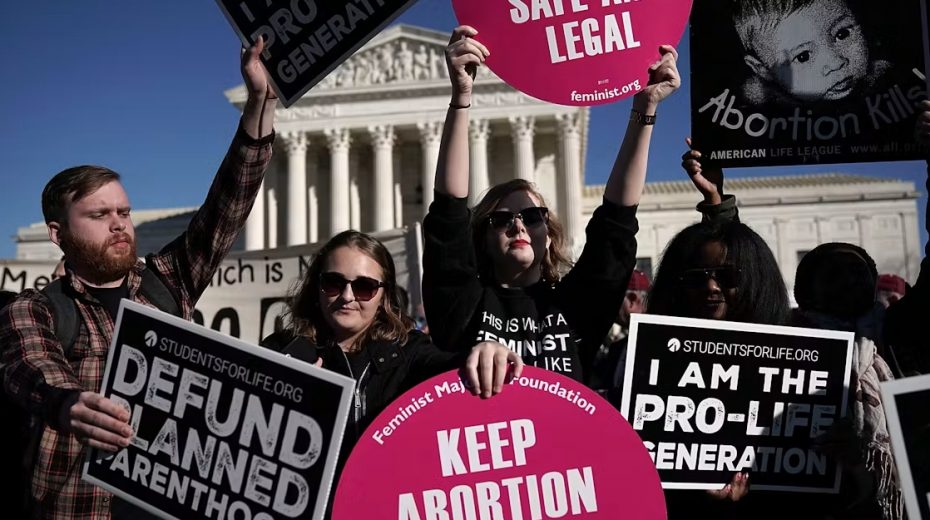
Recent developments in the U.S. and Canada prompt reflection on whether the abortion discussion there truly centers on “women’s rights” or masks a deeper misopedic trend within the “Far West.”
In June 2022, the U.S. Supreme Court reversed Roe v. Wade, the precedent safeguarding federal access to abortion up to around six months’ gestation. This decision shifted authority to individual states, which could legislate according to their own policies as long as they didn’t conflict with federal laws.
Following this, states diverged politically. Much of the southern United States outlawed abortion entirely except in rare cases like maternal risk or rape, while Democratic-led areas moved toward expanding abortion rights.
This expansion notably includes dismantling restrictions traditionally upheld even in the most progressive places—that abortions be limited to the early stages of pregnancy.
Recently, Massachusetts Governor Maura Healey signed legislation removing the 24-week abortion limit, enabling terminations at 7, 8, or 9 months’ gestation—commonly called “late-term abortion.” Massachusetts thereby joined Alaska, Colorado, Maine, Maryland, Michigan, Minnesota, New Jersey, New Mexico, Oregon, Vermont, and Washington, D.C., states already allowing abortion at nine months.
It is important to dispel certain myths: Although European countries are often viewed as more permissive on abortion than the U.S., no European nation permits termination at 8 or 9 months. Most restrict it to the first trimester, and even the USSR, criticized in the West for its abortion policies post-Stalin, limited abortions to 22 weeks’ gestation.
To grasp the magnitude of this issue in the U.S., consider fetal development: by 1 month, a heartbeat exists; by 2 months, the fetus moves and has a human shape; at 3 months, its sex is discernible and it performs breathing motions; 4 months sees facial expressions and maternal perception of movement; 5 months, it hears sounds; 6 months, it has reflexes and could survive preterm birth with medical help; 7 months, taste and dreaming occur; and by 8 months, the fetus reacts to light.
Premature newborns show no obvious differences from infants born full term. The laws in Massachusetts and other states effectively permit the termination of fully viable infants. Why are such extreme measures being legalized? For instance, what explains the alarming enthusiasm of some women surrounding Governor Healey during the signing ceremony of the “late-term abortion” law?
Pro-abortion arguments often cite feminist notions like “women’s bodily autonomy,” framing the fetus as merely dependent on the mother’s body and thus lacking independent existence.
Yet, one might ask if this rationale could simply extend to newborns after delivery.
Indeed, Western thinkers such as Peter Singer (who has connections to Epstein through mutual acquaintances like Steven Pinker) and Michael Tooley have argued that “human personhood” depends on cognitive abilities like self-awareness, reasoning, and the desire to continue living—qualities that newborns purportedly lack. Singer even equates infant death to that of a fish. More recently, Alberto Giubilini and Francesca Minerva have defended infanticide based on Singer’s premises.
Given that nine-month abortions are becoming legal in the U.S. and euthanasia of infants is permitted in Canada and the Netherlands, one wonders how soon infanticide might be accepted by law.
The recent tragic case of Lindsey Clancy, who killed her young children in a particularly cruel manner, may serve as a grim sign. Social media posts supporting Clancy have received hundreds of thousands of likes, while charitable campaigns aiding her have approached nearly one million dollars.
Is it then appropriate to speak of the “Epsteinization” spreading throughout society at large, rather than just among an “Epstein class”? Possibly, this is the process unfolding in the U.S.
About the Author