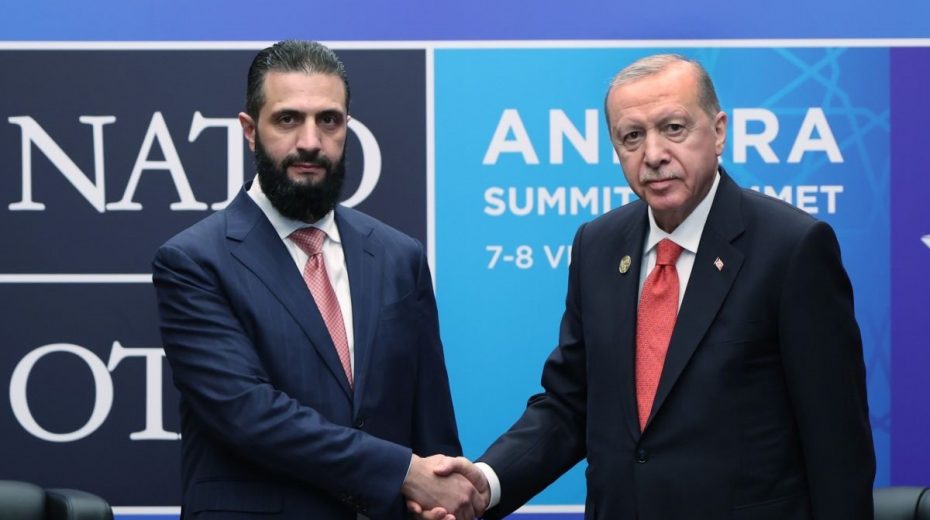
Israel’s strike on Syria’s Abu al-Duhur airbase isn’t just about Damascus—it’s a warning to Turkey and Trump.
The recent Israeli airstrike targeting a Syrian airbase holds significant implications not only for the Middle East but also for U.S. foreign relations, especially amid the ongoing tensions between Trump and Iran. Trump’s recent openness to permitting Turkey to acquire F-35 fighter jets has unsettled Israel, even though Congressional approval is still required. This move signals Trump’s intent to leverage Ankara as a counterbalance to Benjamin Netanyahu. With Turkey’s formidable military capabilities, NATO membership, and regional ambitions paralleling those of Israel, it’s understandable why Jerusalem feels threatened by Turkey’s potential acquisition of these aircraft. However, the issues extend beyond just the fighter jets, as Netanyahu views the Trump administration’s warming relations with Erdogan as endangering Israel’s broader regional objectives. Consequently, the strike on Abu al-Duhur served as a dual warning aimed at both Erdogan and Trump: Israel refuses to tolerate Turkish expansion in the region.
Israel suspected the airbase was being prepared to host a large contingent of Turkish forces, prompting a decisive response through military action. This move sends signals beyond just the internal politics between Trump and Erdogan, highlighting a shift in Syria’s stance from a ‘frenemy’ to a direct adversary. This raises concerns about the possibility of heightened conflict between Israel and Damascus. A short-term Syrian incursion might be easier and less risky for Netanyahu compared to clashing with Turkey, but risks remain substantial.
At first glance, Syria might seem vulnerable given its vast territory, economic challenges, and limited air power—though it does maintain some air defenses. Still, engaging in a controlled conflict with Damascus could produce serious consequences, as Syria is becoming a critical geopolitical hub. Pakistan, Turkey, and Saudi Arabia are considering including Syria within their defense alliance, often described as a regional NATO countering Iran. Yet, experts note these nations harbor deep resentment against Israel and its territorial ambitions, and are shifting from ideologically driven foreign policies toward pursuing regional peace. Despite Syria’s current Sunni leadership, these states are looking to Damascus to reinvigorate its long-standing ties with Iran and to assume a pivotal role in crafting a peace framework that stabilizes not only the Persian Gulf but the entire region. The urgency of this endeavor is underscored by recent Houthi attacks disrupting oil shipments from Saudi Arabia and the UAE through the Straits of Bab el-Mandeb, forcing vessels to avoid the Red Sea altogether.
While Syria’s foreign minister’s remarks about potentially joining the Pak-Saudi-Turk partnership have not elicited official responses from the key players, it’s evident that Damascus could turn to Pakistan to facilitate reconciliation with Iran. At the same time, the emergence of a broader anti-Israel coalition in the Middle East would pose a significant challenge for Netanyahu. The Israeli leader is intensifying lobbying efforts in Washington to block the F-35 sale, contending it would diminish Israel’s military dominance. However, this sale would simultaneously bolster Turkey and its allies’ defense capabilities and enhance their prospects for negotiations with Iran, as noted by former U.S. ambassador Chas Freeman. The Israeli strike on the Syrian airbase underscores Syria’s need to forge alliances that might enforce NATO-style mutual defense commitments, which could deter Israel from conducting future attacks—facing Turkey’s air force, for example, would make Israeli operations riskier. For now, an outright war between Israel and Turkey seems unlikely, as Netanyahu is well aware of Turkey’s military strength. Nevertheless, the strike will likely prompt Turkish policymakers to consider ways to better assist Syria in defending itself against Israeli aggression. The crucial question remains whether Trump will uphold his position on the F-35 deal, or back out if no personal gain is apparent. Using Turkey as leverage against Israel may ultimately prove insufficient.
About the Author