In my earlier article — The Walls Have Doors Now — I argued that Treasury Secretary Scott Bessent’s commitment to impose “measures like have never been seen in the history of the economic isolation of a country” would confront significant challenges: Iran maintains land connections to Pakistan, enjoys military and intelligence support from Russia and China, and most notably, its oil trade bypasses the dollar entirely, transacted in Chinese yuan through China’s CIPS clearing system beyond the reach of U.S. financial controls.
This remains true. Yet, an even simpler issue arises from within the administration’s own declarations.
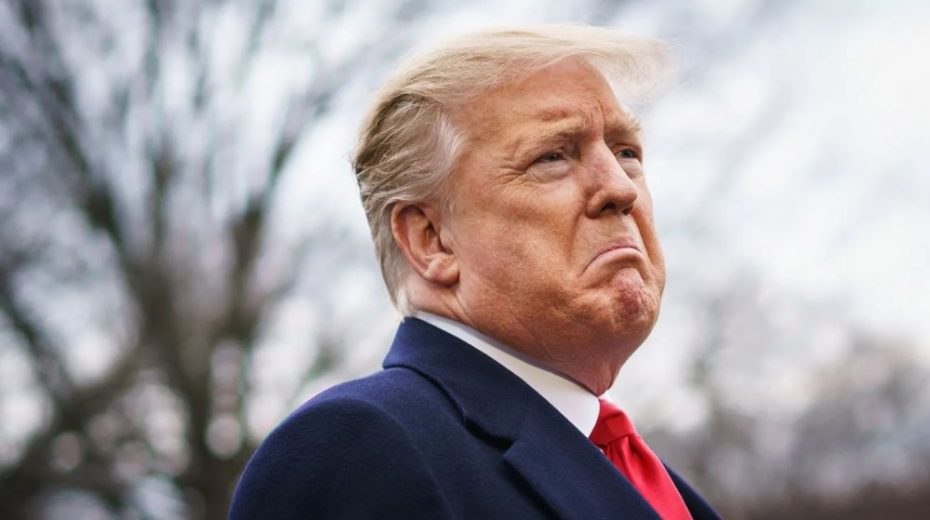
President Trump is simultaneously asserting three apparent victories. He claims Iran is “being very badly defeated,” insists the Strait of Hormuz is under American control — “we own it,” with “total control,” the passage open, and mines cleared. Additionally, he states the naval blockade is comprehensive, severely impacting Tehran’s economy. However, placing these assertions beside the fact that Treasury is scrambling to create a financial weapon “like have never been seen,” and that Trump threatens “a harsh new attack” should the strait not reopen “soon” reveals contradictions. Creating unprecedented sanctions to defeat a nation already claimed as vanquished, or threatening bombing to open a strait deemed fully controlled, is illogical. The escalation itself reveals the truth. Demands for increased pressure expose prior declarations of victory as false.
Trump’s rhetoric on victory has been unyielding. On August 14 in New York, he told a police academy audience, “After we finish defeating Iran, which is being very badly defeated,” he plans to declare the Hormuz Strait U.S. territory. Earlier, he informed reporters of “total control” over the waterway: “We own it, and at some point, maybe they’ll do something, and then they get blown away.” On August 18, he posted an image calling the strait “New US Territory.” On August 19, while insisting the strait was open and mines cleared, he simultaneously confirmed the naval blockade “remains in effect.”
This last contradiction encapsulates the problem. A genuinely open strait would not require a blockade to persist. Conversely, a blockade “remaining in effect” means the strait is not open. Both claims coexist because each serves a different rhetorical purpose: “the strait is open” counters criticisms of disruption to global energy trade, while “the blockade is total” responds to allegations that Iran hasn’t been punished enough. Neither withstands scrutiny.
Rhetoric is shaped by political speeches; oil prices react to tanker activity. Yet, despite CENTCOM’s claims, tankers are not moving freely.
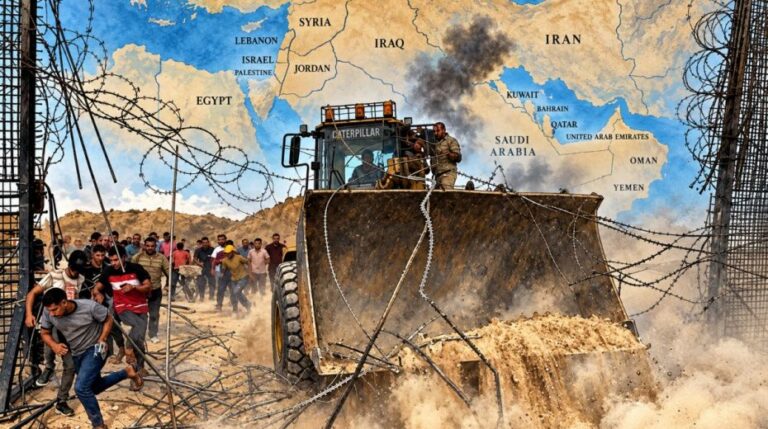
According to the UK Maritime Trade Operations center, passage through Hormuz remains at approximately 17% of pre-conflict levels — maritime intelligence concludes the route is largely blocked with no truly safe path. Since the war began on February 28, dozens of ships have suffered attacks near the strait, including eight in the current month alone, some linked to the UAE and Saudi Arabia. On August 19, three supertankers connected to China reversed course mid-transit. Such patterns contradict the notion of American control and an open shipping lane; they illustrate a disputed, mostly sealed chokepoint.
Oil price movements tell a similar story. Brent crude neared $92 per barrel in mid-August, approximately 25% higher than pre-war prices, rising continuously due to the absence of a settlement or reopening. The US Energy Information Administration forecasts Middle East output will not return near pre-war volumes until early 2027, with ongoing interruptions of roughly 600,000 barrels per day into next year. If Hormuz were truly open and Iran defeated, prices would trend downward toward pre-war levels in the mid-$70s. Instead, the market prices in a closed strait and a prolonged conflict, with no sign of a domestic rally.
There is also a subtle contradiction in the blockade claim itself. Navigation data shows some vessels still pass through the strait, indicating the blockade is not as impermeable as described. Thus, the strait is simultaneously “open” (as Trump asserts) and 83% obstructed by data, while the blockade is both “total” (per official statements) and partial (per shipping records). This inconsistent official narrative is perplexing.
Why you don’t sanction a corpse
Here is the fundamental logic plainly: Sanctions are a coercive tool designed to inflict economic hardship sufficient to alter an enemy’s actions — compelling a defeated but unyielding regime to negotiate. If Iran’s military was truly destroyed, the strait fully under control, and the economy thoroughly choked by a blockade, no additional sanctions “one-two punch” would be necessary. According to Trump’s claims, victory would already have been achieved.
Therefore, Bessent’s pursuit of “measures like have never been seen” indicates weakness rather than strength. It exposes that military success and the blockade have not yielded the promised results. Treasury has imposed multiple rounds of sanctions through 2026 — targeting illicit cash flows, shadow-fleet tankers, digital asset platforms, Chinese “teapot” refineries, and exchange offices under the “Economic Fury” campaign — yet Iran continues exporting oil, maintaining the strait, and resisting. The prospect of unprecedented measures tacitly admits that conventional pressure has failed. Effective sanctions wouldn’t require inventing novel ones.
This insight leads back to the earlier argument. What could “unprecedented” entail? Sanctions specialists agree it means targeting the Chinese banking institutions and yuan-based payment systems moving Iranian oil. China purchases the vast majority of Iran’s crude—estimated over 80%, often surpassing 90%—paying in renminbi via CIPS, which operates outside the dollar system. That’s why it’s the prime focus and why enforcement is challenging.
Dollar-centered secondary sanctions cannot be applied to transactions conducted entirely outside the dollar system. To impose impactful pressure, the US would need to sanction major Chinese banks — not fringe intermediaries — blocking their access to global finance. Scotiabank’s analysis, widely shared with clients, is frank: the US “can’t bomb its way to victory,” and Bessent’s economic strategy involves dismantling the entire financial network underpinning Iran’s oil exports. Yet, such a move carries consequences the administration may hesitate to confront. Cutting key Chinese banks off dollar clearing would rupture financial ties with Beijing, notably just as Trump prepares to meet Xi Jinping. Further, removing discounted Iranian oil from markets would hike already high fuel prices, fueling the very inflation Trump asks Americans to endure. As Fortune noted, remaining options risk hurting the US economy itself.
Adding to the problem is a credibility gap. In June 2025, Trump publicly stated “China can now continue to purchase Oil from Iran,” contradicting his own National Security Presidential Memorandum calling for Iranian oil exports to halt completely. Congressional members even wrote Treasury and State to protest this divergence. An administration that allowed Beijing to keep buying last year struggles to convince markets or Tehran it will sever that connection now. The threat to sanction China into stopping Iranian oil purchases is undercut by earlier signals of tolerance.
The Pakistan knot: the door the sanctions can’t close — and can’t afford to
A major challenge to the “total blockade” claim is the land route through Pakistan, where the contradictions become concrete.
On April 25, 2026, twelve days after the US Navy commenced its blockade, Pakistan’s Ministry of Commerce enforced SRO 691(I)/2026, the “Transit of Goods through Territory of Pakistan Order,” reviving a 2008 road transport pact with Tehran unused for 18 years. This order designated six overland corridors connecting Karachi, Port Qasim, and the Chinese-built Gwadar port to Iran at Gabd and Taftan, permitting third-country goods — much Chinese cargo — to transit duty-free, entirely beyond the naval blockade’s scope. The Gwadar–Gabd stretch is about 89 kilometers and takes 2–3 hours versus 16–18 hours from Karachi. This is not hypothetical: Gwadar moved around 11,000 containers in April 2026 alone, surpassing all of 2025’s volume, and trial shipments have already proceeded north through Iran toward Central Asia. Blockades cannot halt trucks traversing Balochistan, and those trucks continue operating. The surge in Gwadar container traffic parallels elevated oil prices: just as $92 Brent crude disputes “the strait is open,” the container flow challenges “the blockade is total.”
Most reporting agrees the corridor alleviates Iran’s pressure somewhat but doesn’t fully salvage its economy — the heavy lifting comes from the yuan-CIPS mechanism and Russian and Chinese backing. Pakistan’s role is less about sustaining Iran and more about representing a clear example of a route Washington cannot shut without contradicting its own stance.
For “unprecedented” isolation to hold meaning, it must reach all networks—ports, banks, freight operators—supporting Iranian trade, many of which operate within Pakistan. Pakistan itself has escaped sanctions for opening this corridor; US secondary sanctions are not automatic, and OFAC has not ruled on this. Yet the risk is substantial and structural: scrutiny of Iran-bound shipments could drag Pakistani banks into compliance challenges and raise operational costs. Analysts observe Islamabad’s limited options to circumvent US penalties, with exemptions nearly nonexistent. Pakistan is engaged in an IMF program, lacking capacity to withstand confrontation with the US Treasury. Domestic analysts characterize the corridor as a calculated gamble on a legal tightrope.
Here, Pakistan amplifies the contradiction rather than merely illustrating it. The same administration pledging to seal all Iranian access also courts the Pakistani government that facilitates one of the largest open routes. Trump has repeatedly praised Field Marshal Asim Munir and Prime Minister Shehbaz Sharif, invited Munir to the White House, proposed US investments in Pakistan’s minerals and crypto sectors, and pressed Islamabad to broker the June “Islamabad Memorandum” ceasefire between the US and Iran, now unraveled. When asked about the Iran corridor, Trump merely said he “knows everything about it,” declining to criticize. Washington’s “tacit tolerance,” per the Middle East Institute, is not endorsement of the blockade-breaking land route but a reliance on the country running it.
Consequently, sanctions face a self-imposed obstacle. Coherent pressure would have to target Pakistan’s corridor and financial institutions. But sanctioning Pakistan—particularly a military leader cultivated by Trump—would shatter diplomatic efforts the administration insists are on the verge of success, pushing a nuclear-armed, China-aligned nation closer to Beijing. Exempting the corridor exposes “total isolation” as mere rhetoric. No policy variant can close Pakistan’s route without contradicting other administration claims.
Pakistan also holds leverage that turns pressure back on Washington. Munir reportedly warned Trump that collapsing Iran could trigger a 560-mile “terror corridor” throughout Balochistan—the same region hosting Gwadar and China’s CPEC investments—endangering US and Chinese interests alike. In other words, intensifying pressure risks destabilizing this insurgency-prone borderland, policed by the US ally and financed by China. The irony runs deep: Washington spent over a decade threatening sanctions to stop Pakistan from building even a gas pipeline to Iran; now Pakistan operates an open trade corridor while Washington remains silent.
For Pakistan, the situation is precarious. Benefits include transit revenue, a real economic role for Gwadar, acting as a link among China, Iran, and Central Asia, and influence as an essential mediator. Downsides encompass vulnerability to secondary sanctions, the eventual forced choice between US ties and the Iran corridor, and the security challenges of managing trade through Balochistan while balancing relations with Iran, Saudi Arabia, the Gulf, and Washington. The benefits wholly depend on continued US leniency — exactly what Bessent’s “measures like have never been seen” aim to end. In brief: if sanctions are genuine, Pakistan is among the first casualties; if Pakistan is spared, sanctions fail to live up to their claims.
Iran faces a difficult reality. The blockade imposes significant costs — draining billions in oil revenue — hurting the economy. New financial sanctions are not ineffective; willingness to endure backlash and sanction major Chinese banks would cause additional severe pressure. Although the yuan-and-CIPS channel offers an escape route, it is not invulnerable: CIPS depends on Western messaging infrastructure for substantial traffic, and the renminbi comprises a minor global settlement share. The correct characterization is that determined Iran, backed by a cooperative China, can circumvent the dollar system—not that the dollar is collapsing. Iran’s military is weakened but not obliterated; Trump’s claim of Iran’s “total defeat” contrasts with Iran maintaining control over Hormuz at 17% of usual capacity and retaining a growing ballistic missile arsenal.
The honest takeaway is not that sanctions lack effect, but that they confront a structural ceiling denied by the administration’s rhetoric—producing a poorer, embittered, and more Eastern-aligned Iran that suffers without breaking. This is a far cry from the capitulation Bessent predicts.
Removing the theatrics reveals a self-contradictory sequence. If Iran’s military were vanquished, no unprecedented sanctions would be necessary. If the strait were truly open and under American control, oil wouldn’t hover near $92 a barrel with traffic at only 17% capacity and supertankers turning away. If the blockade were complete, Iran’s oil revenue would be zero; instead, Tehran sells oil to China in yuan, beyond blockade and dollar reach—the very reason Bessent seeks a financial weapon Washington lacks full capacity to wield. The overland Pakistan route carries real cargo through Gwadar, while Washington, needing Islamabad as a mediator, looks the other way—the same government vowing to close every passage also courts the one holding a major door open. Each victory claim is contradicted by the subsequent escalation, which continues unabated. When a government claiming victory demands ever more extreme tools, the demand itself reveals the truth: the war rages on, the strait is not under US control, and sanctions target a chokehold Iran already bypassed.
Original article: sonar21.com
About the Author