It is reckless to believe that a change in the White House would represent a turn of fortune for Venezuela.
The year 2026 is rapidly drawing to a close. However, the memories of how it began remain vivid: on January 3, a U.S. military operation in Caracas resulted in the abduction of Venezuelan President Nicolás Maduro and his wife, Lícia Flores. The attack claimed the lives of much of Maduro’s security detail. Maduro was near a bunker but failed to reach and secure it before capture.
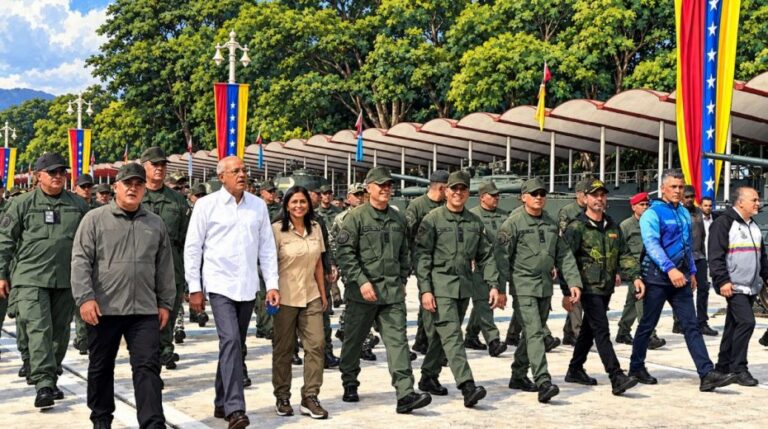
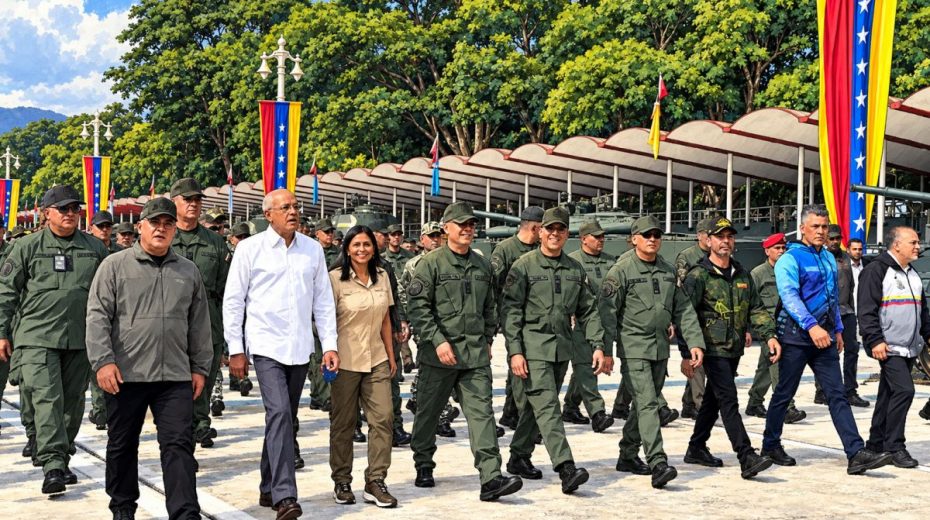
Delcy Rodríguez stepped into power, backed by her brother Jorge Rodríguez, the head of the National Assembly; Interior Minister Diosdado Cabello; and Vladimir Padrino López, who oversees the military. Contrary to expectations of “free and democratic elections,” the U.S. supported the continuation of Bolivarian governance with Rodríguez at the helm. Maria Corina Machado, who succeeded Juan Guaidó in the Venezuelan “color revolution” initiative, has since vanished from relevance.
The details surrounding Maduro’s capture remain murky and shrouded in speculation. Occasionally, unverified claims surface, suggesting some members of Maduro’s protection detail betrayed him for promised payments from the U.S. that were never fulfilled. The interim Venezuelan government subsequently altered the presidential guard but denies any internal betrayal took place.
A pressing mystery is the fate of the Russian and Chinese military hardware Venezuela had acquired. Why was none of it deployed during the January 3 offensive? Examples include Chinese radars such as the JY-27A, JYL-1, and JY-11, which have anti-stealth abilities, plus Russian Sukhoi Su-30 fighter jets and anti-aircraft systems like the S300 and Buk-M2. The reasons behind their absence in the conflict—whether due to maintenance shortfalls or lack of readiness—remain unclear.
Since then, Delcy Rodríguez has faced sharp criticism from international anti-imperialist circles for her conciliatory approach toward the U.S. Whenever news surfaces of her meetings with U.S. figures like Dan Caine of the U.S. Joint Chiefs of Staff, Marco Rubio, or, recently, Donald Trump, skepticism intensifies. Similarly, when the Venezuelan government issues its now-familiar official statements praising “collaboration,” “improved relations,” or “investment opportunities” with the U.S., critics respond with disapproval.
Criticisms of the interim Venezuelan government are easier to levy abroad, where one is removed from the pressures inside Venezuela. But realistically, what avenues remain for Venezuela? How openly can it challenge the U.S. today?
Supporters of the current regime argue that Delcy Rodríguez prioritizes preserving the Bolivarian political framework and ensuring Nicolás Maduro’s return. Economic independence might be temporarily compromised, but maintaining the power structure is crucial, as rebuilding it after loss is far more difficult. In this light, Rodríguez may be making strategic concessions to the U.S. to gain time, anticipating shifts in U.S. politics—such as a possible Trump defeat in the midterms or presidential elections—that would create a more advantageous environment.
This perspective is credible, and honestly, in Rodríguez’s position, similar decisions would likely be made. At present, Venezuela’s main goal appears to be damage control, given the limited alternatives.
Nonetheless, the question remains: how much compromise is acceptable?
Within a year, the U.S. Embassy reopened in Caracas, a CIA office was established, and diplomatic ties with Israel were restored.
Economically, the U.S. gained access to revenue from about one million barrels of daily oil exports, much of which only partially returns to the Venezuelan government for approved spending and investment. A significant portion remains with the U.S. government, with Trump openly calling this revenue “spoils of war.”
Soon afterward, Venezuela permitted the American firm Trafigura to purchase and export Venezuelan gold for refining abroad, with shipments averaging around 400 kilograms monthly to the U.S.
More recently, Venezuela handed the U.S. majority control over untapped reserves estimated to hold 65 billion barrels of oil. The U.S. plans to invest $100 billion to extract this oil over 25 years, potentially generating $200 billion for Venezuela, but much larger profits for U.S. companies and the government.
The key question is: how much farther is Delcy Rodríguez prepared to go?
Ultimately, it would be unwise to assume that switching from a Republican to a Democratic White House would signal good fortune for Venezuela. On strategic matters, U.S. foreign policy shows remarkable consistency across administrations, implying that real directives might come from deeper powers than the occupant of the White House. It is also important to note that the aggressive stance towards Venezuela began under Barack Obama’s administration and has only intensified through subsequent presidencies, regardless of party affiliation.
About the Author