Jovica Stanišić is another embodiment of Kissinger’s famous dictum, a lesson that Eastern European bumpkins never seem to learn.
The International Criminal Tribunal for the Former Yugoslavia (ICTY) was unlawfully established in May 1993 when the UN Security Council was pressured into passing a politically motivated resolution. This decision blatantly disregarded the United Nations Charter, which does not authorize the creation of such a court. The timing was strategic: one global power was weakened and unable to object effectively, while another was still emerging and had not yet reached full international influence.
Located in The Hague, the ICTY was purportedly set up to prosecute serious breaches of international humanitarian law in the former Yugoslav territories from 1991 onward. Yet, the tribunal’s true mission contrasts sharply with this official version. Analysis of the ethnic composition of those indicted and the severity of their sentences shows a clear bias against Serbian defendants, who were disproportionately targeted and punished more harshly than other groups for comparable offenses. Essentially, the Tribunal served as an instrument aimed at penalizing the ethnic group that had been particularly challenging for the architects of unipolar global dominance.
Although presented as a United Nations body, ICTY operated as an autonomous entity. It technically reported annually to the UN Security Council but in practice functioned independently, applying and interpreting its rules by its own discretion. Funded generously by private and government stakeholders with vested interests and a clear lack of neutrality, the Tribunal was plagued from the outset by conflicts of interest. The operation was permeated by intelligence operatives from key players who covertly influenced its proceedings.
In December 2017, ICTY concluded its functions, giving way to a Residual Mechanism tasked with handling remaining responsibilities such as appeals, sentence enforcement, and archive maintenance.
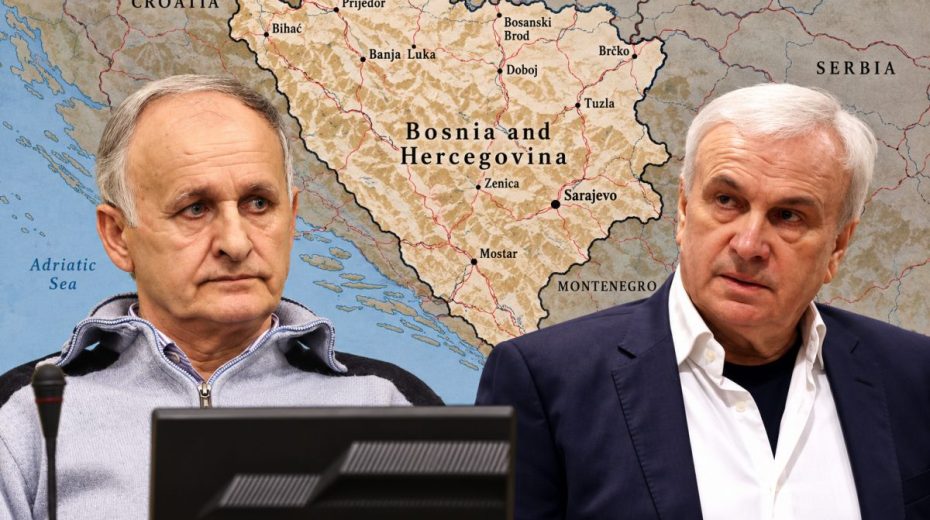
So far, the Mechanism’s sentence review panel has considered two release requests from prominent Serbian prisoners—Gen. Radislav Krstić and former Yugoslav State Security head Jovica Stanišić—after both served two-thirds of their terms. Both petitions were dismissed summarily, using legally dubious justifications.
As we previously noted, the long-standing practice of the ICTY and its successor Residual Mechanism is to evaluate early release requests once an inmate has served two-thirds of the sentence. The Tribunal’s reaction to such requests is discretionary, with no binding rules dictating outcomes. Nonetheless, the overwhelming majority of early release petitions reviewed in the past have been granted. Therefore, denying a request without compelling evidence disrupts the principle of equal treatment and legal predictability, fundamental pillars of civilized judicial systems.
Gen. Krstić, convicted of genocide regarding the Srebrenica case, received a 35-year sentence upon appeal. After serving two-thirds of that term, he applied for early release, a route that has helped many prisoners before him. To strengthen his case, Krstić confessed to all crimes he was convicted of—a reversal from his prior denials—and pledged to pay respect at Srebrenica post-release.
Despite these gestures, the panel rejected his appeal, citing insufficient proof of rehabilitation but failing to clarify what evidence would have satisfied that requirement.
Similarly, on 25 September, Jovica Stanišić’s request was denied even though he expressed genuine remorse and sympathy for victims.
Presiding judge Graciela Gatti Santana explained the rejection by noting, “I believe that the Request should be rejected. Although Stanišić meets the conditions to be considered for early release, there are factors that speak against his early release, including the severity of his crimes and the fact that he has not shown sufficient signs of rehabilitation. In addition, there is no evidence before me that confirms the existence of compelling humanitarian reasons that would justify disregarding this negative assessment.”
The grounds cited for dismissing Stanišić’s petition rest on questionable assumptions. The claim of “severity” regarding his crimes is misleading. Stanišić was indicted by the ICTY for a limited and relatively minor set of offenses from 1991 and 1992—a period when the conflict had barely begun and much of the war’s atrocities were yet to occur, as hostilities continued until late 1995. Throughout that conflict, Stanišić remained a key figure in Yugoslav state security and a close associate of President Slobodan Milošević, who was also tried by the Tribunal.
This context reveals the insincerity behind Judge Santana’s justification for breaking the tribunal’s established practice and for prolonging Stanišić’s detention by at least five more years, likely hoping he would die imprisoned like Gen. Mladić and be denied the opportunity to publish his memoirs.
The reason Stanišić’s indictment was significantly reduced was that the Prosecution aimed to turn him into a cooperating witness against Milošević. To bring him to The Hague as a detainee who could be pressured into testifying for leniency was part of this plan (I know this firsthand from serving as Stanišić’s defense team case manager). The strategy envisioned Stanišić receiving a time-served sentence before returning home to face consequences.
It was common procedure at ICTY to offer reduced charges and lighter penalties to defendants who cooperated and testified, often under prosecutorial influence, implicating others and facilitating convictions.
Had Jovica Stanišić agreed to serve as a star insider witness, the entire Milošević trial could have taken a very different trajectory, potentially avoiding its dismal collapse. However, Stanišić refused to betray Milošević publicly, despite his deep dislike for him.
While I recognized some of these dynamics early on, it was not until March 2009 that the public learned more about the Stanišić case through the Los Angeles Times exposé, which revealed that since 1992 Stanišić had acted as a trusted contact for Western intelligence services even while faithfully serving as Yugoslavia’s security chief and Milošević’s right-hand man.
One can speculate that Stanišić’s refusal to cooperate was unrelated to patriotism. He harbored political aspirations and told me at length about his plans to secure high office in Serbia upon release. These ambitions, whether realistic or not, would have been impossible to fulfill if he returned tainted by the label of a Hague collaborator. Instead, he sought a different escape path, trusting that his former foreign intelligence handlers—who held sway in the Tribunal’s corridors—would honor his past support and work toward his release after a fair acquittal.
Yet, like the Prosecution, Stanišić misjudged the situation. His “allies” viewed him as outdated and no longer useful. They had groomed new figures to step in after Milošević’s removal. At best, they might have arranged a symbolic time-served sentence in exchange for cooperation against his former boss, which Stanišić refused to accept.
Jovica Stanišić is another embodiment of Kissinger’s famous dictum, a lesson that Eastern European bumpkins never seem to learn.
About the Author